If you want a UK 72-hour home plan that genuinely reduces stress, it needs to be simple, realistic, and based on the stuff you’ll actually use.
This guide gives you a complete UK 72-hour home plan for normal homes and flats — built for disruption such as power cuts, water issues, and short supply hiccups, not “doomsday”. No weird gear. No mountains of tins you’ll never eat. Just a calm system you can set up in layers.
If you need to start at the beginning: Prepping UK The Complete System
What a UK 72-hour home plan is and what it isn’t
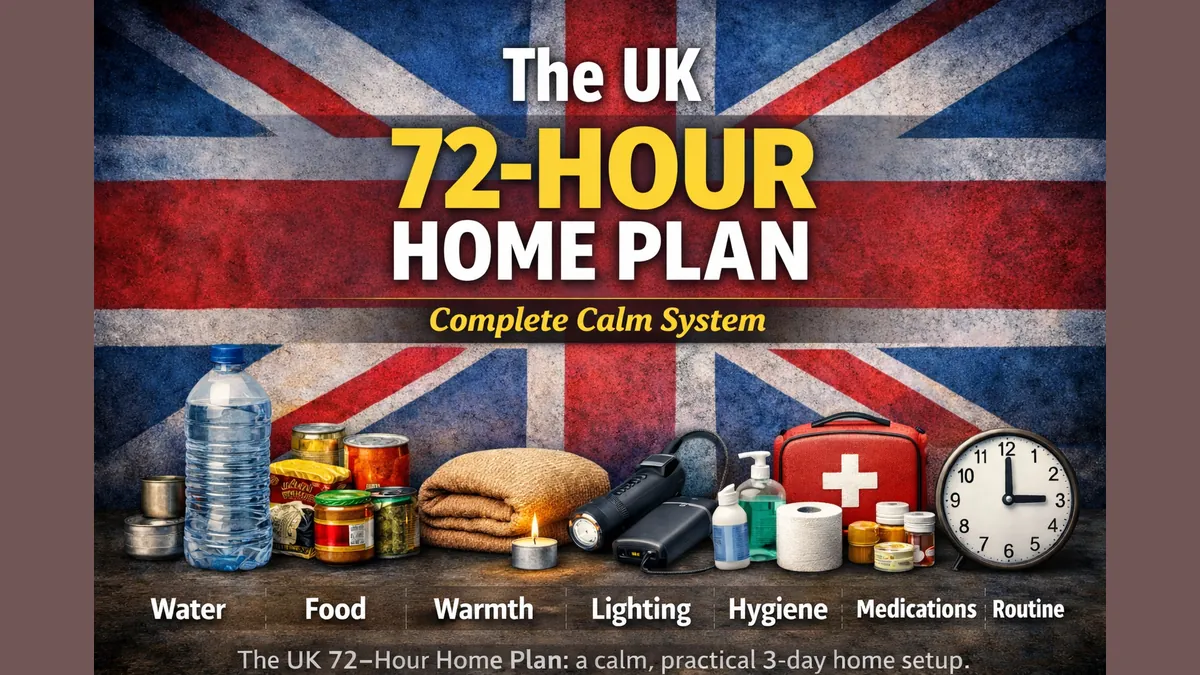
A UK 72-hour home plan is a small buffer that keeps your household comfortable for 3 days if normal life gets wobbly.
It is:
- Enough water to drink and do basic cooking
- Enough food you already eat plus no-cook backups
- A warm room setup if heating goes off
- Light and power to keep phones working
- Hygiene basics so you don’t feel grim by Day 2
- Medication and first aid covered
- A tiny routine so it doesn’t turn into clutter
It is not:
- A shed full of “survival rations”
- A tactical shopping spree
- A plan you only do once and then forget
The calm rule that makes this work
Your UK 72-hour home plan succeeds when:
- It fits your home
- It fits your routine
- It gets topped up automatically
If it needs a weekend of “prep admin” every month, it won’t survive real life.
Step 1 Water is the non-negotiable
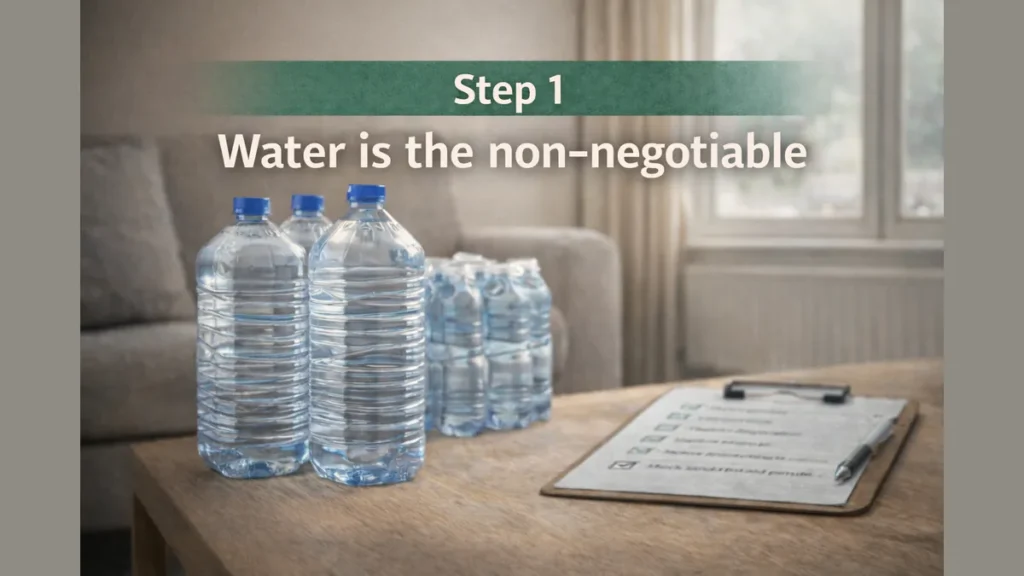
If you only fix one thing in your UK 72-hour home plan, make it water.
The calm target for water
Cover drinking and basic cooking for 3 days. If you’ve got extra space, add a little buffer for washing up and hygiene.
The easiest water setup for normal UK homes
Keep a rotation of supermarket bottled water. Store it where space actually exists — bottom of wardrobes, under beds, behind sofas.
How Much Water Do UK Homes Really Need?
Common UK Water Prepping Mistakes
How Long Does Bottled Water Last in the UK?
Step 2 Food that is boring on purpose
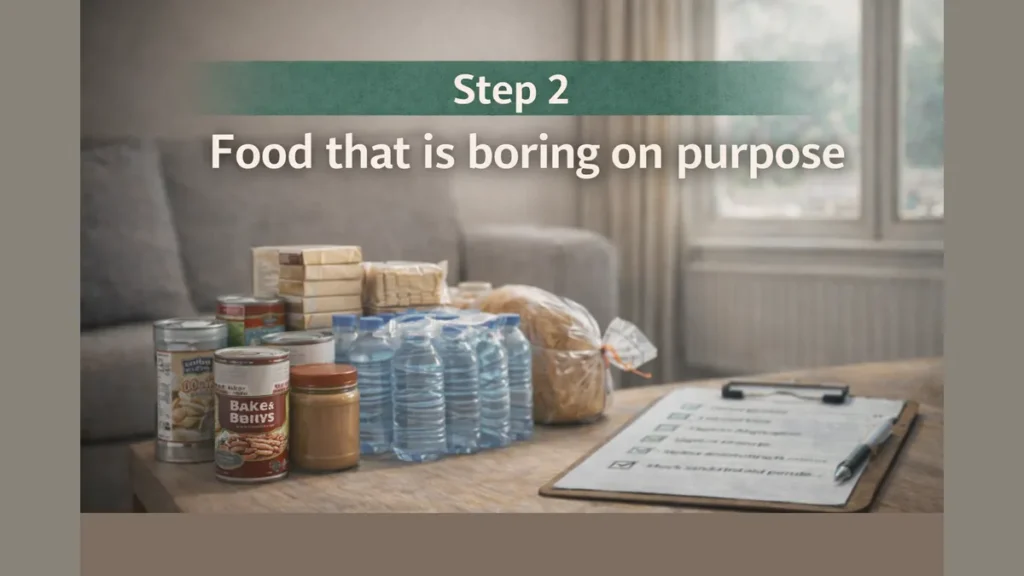
A calm UK 72-hour home plan uses normal food, plus a few no-power options.
Your simple 3-day food baseline
Build around:
- Breakfast you’ll eat without thinking
- Two simple meals per day
- Snacks and hot drinks because morale matters
No-power food options for a power cut
Keep a small set of:
- Ready-to-eat tins or packets you don’t mind cold
- Long-life items you can eat straight or with kettle water
72-Hour Emergency Meals from Any UK Supermarket
Kettle-Only Emergency Meals UK Realistic UK Flat Setup
Why Survival Food Is Unnecessary in the UK
Step 3 Warmth by building one warm room
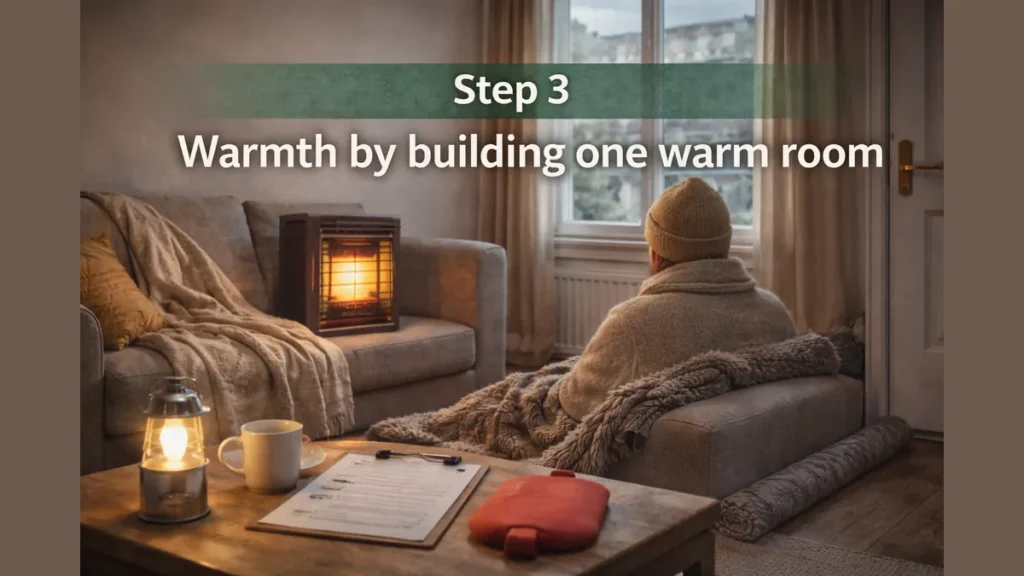
For the UK 72-hour home plan, don’t try to solve winter in one go. Solve one room.
The warm room kit
- Duvets, blankets, throws what you already own
- Thick socks and layers
- A draft-blocking plan using towels and door gaps
- Safe lighting so you can function without stress
How to Stay Warm Safely During a Winter Power Cut UK
Power Cuts and Home Warmth UK
Step 4 Lighting and phone power without overthinking it
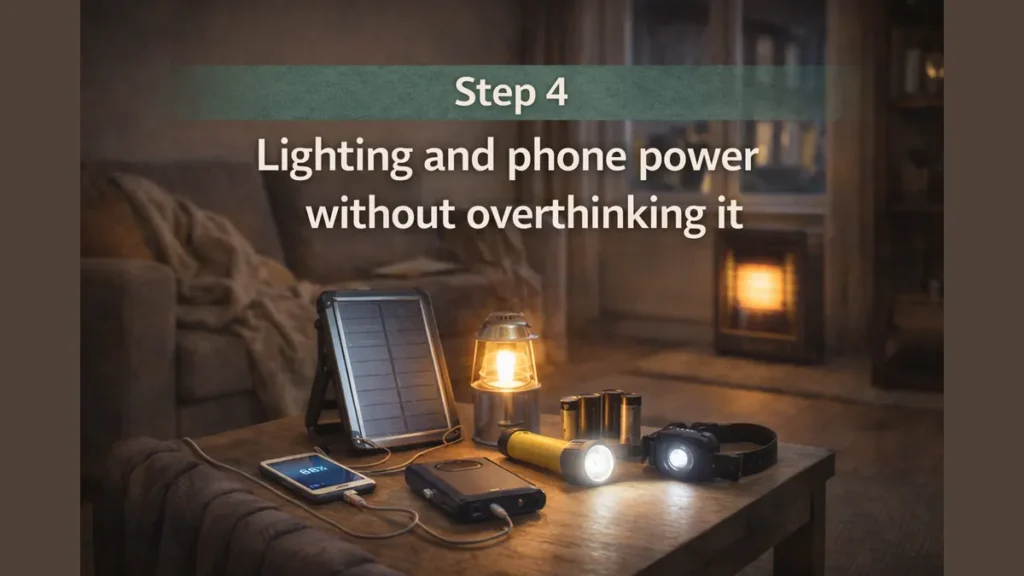
In your UK 72-hour home plan, the goal is not power independence. It’s communication, light, and calm.
Minimum effective lighting and power setup
- One or two torches you can find instantly
- Spare batteries or rechargeables you keep charged
- A power bank that actually holds charge
- A car charger lead often overlooked
Solar Chargers in the UK A Reality Check
Step 5 Hygiene so day two still feels normal
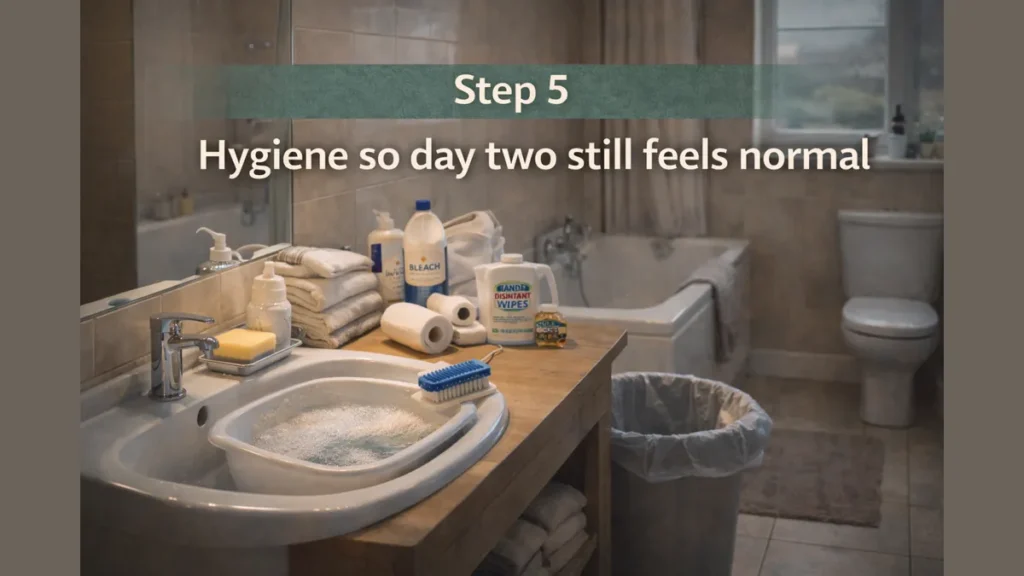
Hygiene is the silent failure point in a UK 72-hour home plan. When people feel gross, everything feels worse.
A calm hygiene pack
- Baby wipes or body wipes
- Bin bags plus a small roll of strong bags
- Hand sanitiser plus soap
- Toilet basics with spares and simple contingencies
- Washing-up basics using a minimal water method
Hygiene During Water or Power Disruption
Hygiene Preparedness UK
Step 6 First aid and medication planning
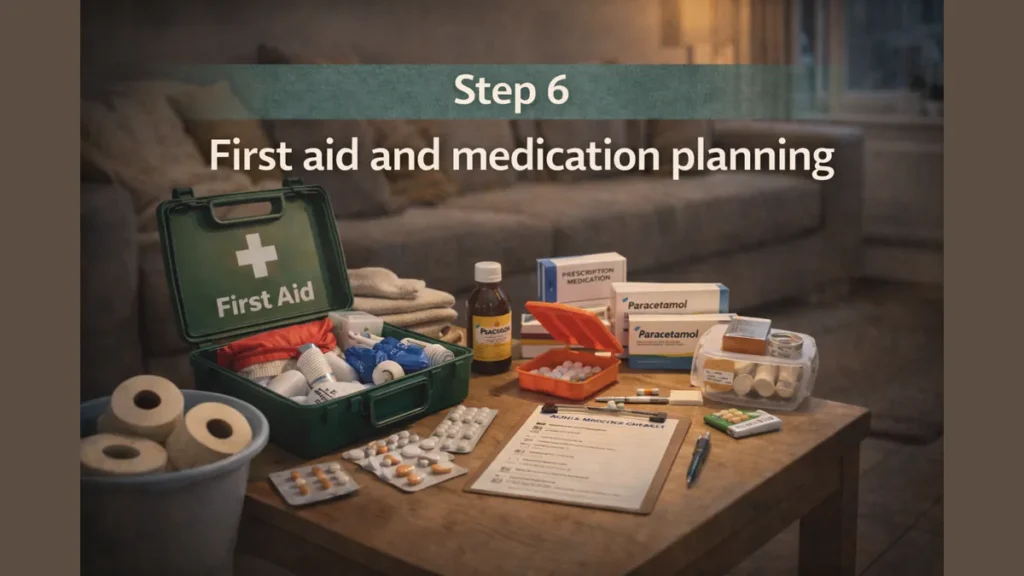
A complete UK 72-hour home plan includes the boring admin that prevents panic.
- Repeat prescriptions and timing
- A small buffer of essentials you already use
- Basic first aid items for normal household injuries
Internal link: Basic First Aid Every UK Home Should Have
Internal link: Emergency Medication Planning in the UK
Internal link: Health Prepping Mistakes That Cause Problems
NHS guidance on medicines and repeat prescriptions
Step 7 The calm routine that keeps your plan done
Here’s how a UK 72-hour home plan stays alive without becoming a hobby.
Weekly in two minutes
- Check bottled water quantity
- Check torch location and battery level
- Check power bank charge
Monthly in ten minutes
- Rotate two or three food items forward into normal meals
- Replace what you used immediately not later
Seasonal in fifteen minutes
Before winter, refresh the warm room plan, make blankets accessible, and review your damp and condensation plan.
Mental Health and Stress During UK Emergencies
Common Mistakes That Break Emergency Food Storage UK Plans
Two UK 72-hour home plan examples you can copy
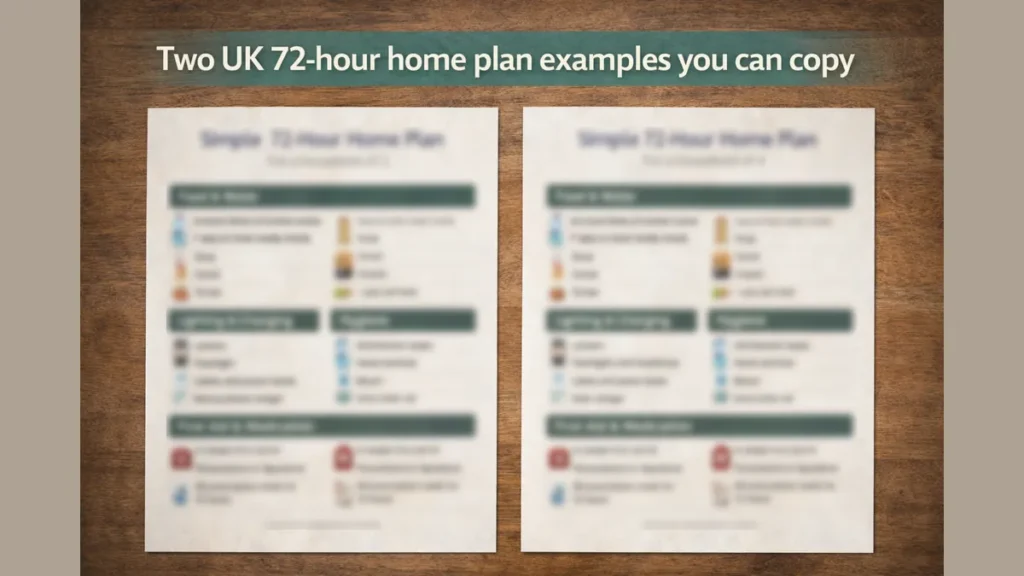
Small flat plan for one or two people
- Bottled water rotation stored under bed
- Six to eight no-cook meals you don’t hate
- Kettle meals plus long-life milk, tea, coffee
- Two torches plus one lantern-style light
- One power bank plus a car charger lead
- Hygiene pack in one small box
Family home plan that stays simple
- Water split across two or three storage spots not one massive stash
- A no-power shelf in the kitchen for grab-and-go tins and packets
- Warm room kit pre-staged with duvets, throws, draft plan
- One labelled drawer for lighting and charging
Emergency Bags for Families vs Singles UK
Mistakes that break a UK 72-hour home plan
- Buying random food you don’t normally eat
- Storing everything in one place you never access
- Relying on gear instead of habits such as rotation and top-ups
- Forgetting hygiene and then feeling awful on Day 2
- Overcomplicating warmth when one warm room wins
For official UK guidance on preparing for emergencies, see GOV.UK.
Internal link: Why Most UK Emergency Plans Fail Before They Start
Quick 72-hour checklist you can copy and paste
Use this as your done list for a UK 72-hour home plan.
Water
- Drinking and basic cooking covered for 3 days
- Stored in realistic spots and rotatable
Food
- Three days of normal meals kept simple
- No-cook backup meals
- Hot drinks and snacks
Warmth
- One warm room plan
- Blankets and duvets accessible
- Draft plan
Light and power
- Torches plus spare batteries or charging plan
- Power bank charged
- Car charging lead
Hygiene
- Wipes, bags, sanitiser
- Simple washing-up plan
Health
- Basic first aid kit
- Medication plan plus buffer where appropriate
FAQ UK 72-hour home plan
What should a UK 72-hour home plan include first
Start your UK 72-hour home plan with water, then add simple food, then warmth and lighting. Hygiene and medication planning come next.
Is a UK 72-hour home plan different for flats and renters
Yes. The best UK 72-hour home plan for renters focuses on bottled water rotation, no-cook food, compact lighting and charging, and a warm room setup that needs no property changes.
Do I need a generator for a UK 72-hour home plan
No. A calm UK 72-hour home plan usually works fine with torches, batteries, and a power bank for phones.
How do I stop a UK 72-hour home plan becoming clutter
Build your UK 72-hour home plan from things you already use, store it where it fits, and rotate a few items monthly so it stays normal.
What is the biggest mistake people make with a UK 72-hour home plan
Overbuying prep food they won’t eat. The strongest UK 72-hour home plan is boring normal meals, rotated, and easy.
Next steps
How Much Water Do UK Homes Really Need?
72 Hour Emergency Meals from Any UK Supermarket
How to Stay Warm Safely During a Winter Power Cut UK