Most UK households don’t need “survival-style rations” or extreme pantry walls to be prepared. The smart approach to emergency food storage uk is simple: store more of what you already eat, in amounts that make sense for your home, and build it gradually without stress.
This hub guide gives you a realistic system for emergency food storage uk—whether you live in a small flat, a rented home, or a busy family house. It’s designed for the most likely disruptions in the UK: delivery delays, short-term illness, bad weather, and power cuts (not doomsday).
Start here (the calm baseline)
👉 [Prepping UK The Complete System]
👉 [Prepping Without Panic UK: A Beginner’s Guide]
👉 [Power Cuts & Home Warmth (UK)]
What “Emergency Food” Actually Means in the UK
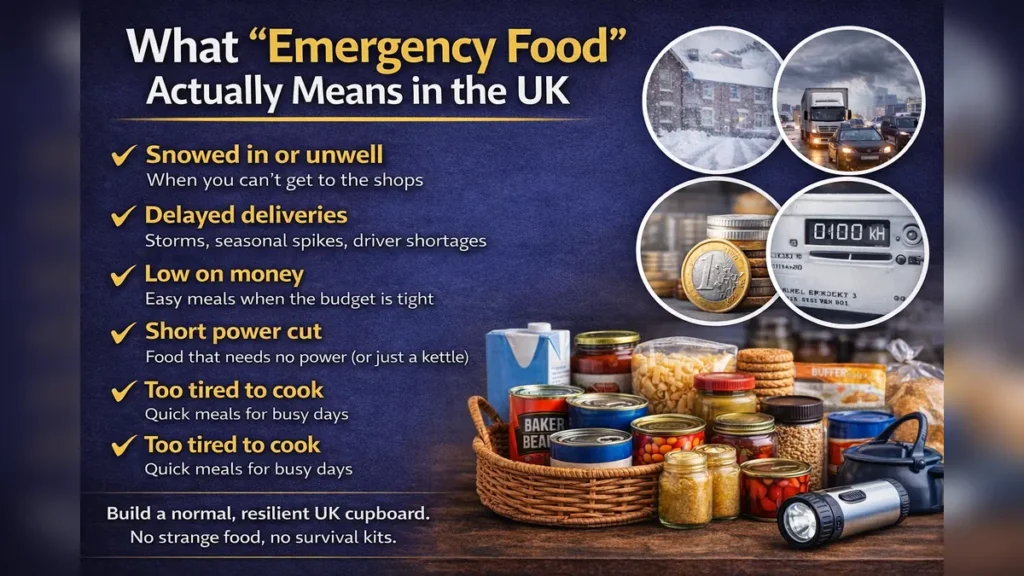
In the UK, “emergency food” usually means normal food you can rely on when life gets awkward:
- You can’t get to the shops (snow/ice, illness, caring responsibilities)
- Deliveries are delayed (storms, seasonal spikes, driver shortages)
- Your budget is tight for a week
- You’ve got a short power cut and need easy meals
- You’re simply too busy or stressed to cook properly for a day or two
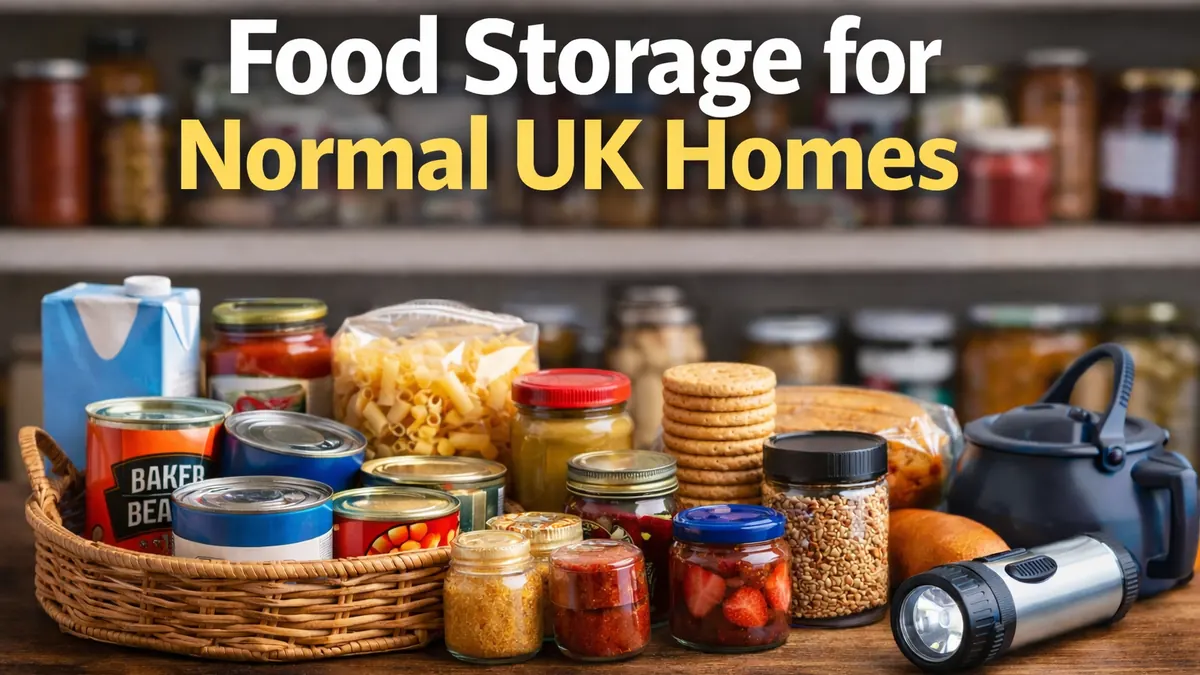
So emergency food storage uk isn’t about buying strange food. It’s about making your normal cupboard more resilient.
👉 [Why Survival Food Is Unnecessary in the UK]
The Calm Rule Store What You Eat
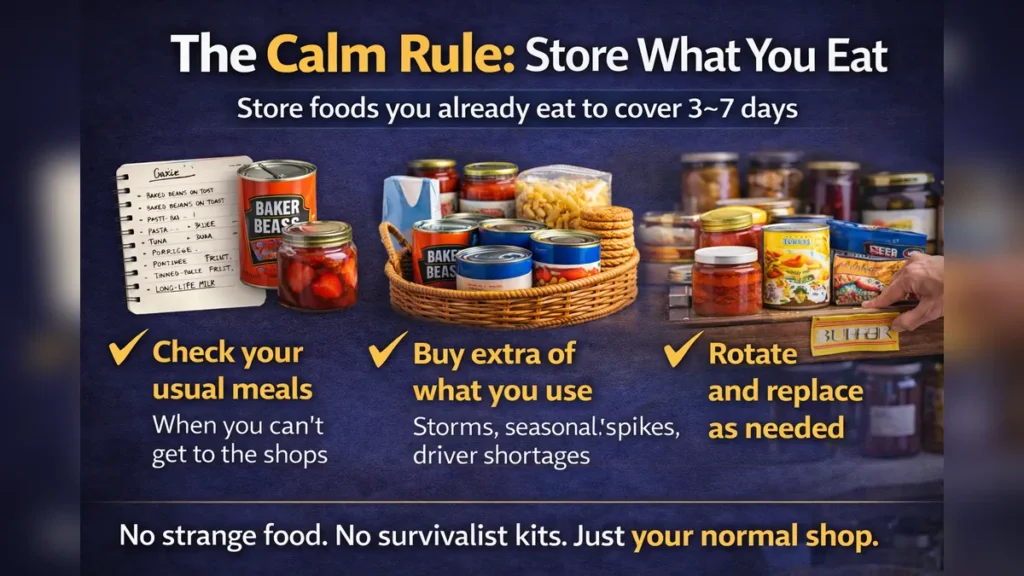
A high-scoring, low-stress emergency food storage uk setup is built on two food types.
Everyday staples
These keep waste low because you already use them:
- Pasta, rice, noodles
- Tinned tomatoes, beans, chickpeas
- Tuna, sardines, tinned fish
- Oats, cereal, long-life milk
- Curry/jar sauces, stock cubes, gravy
- Tea/coffee, sugar, biscuits
Bridging items
Disruption is often tiring, not dramatic. These are the “make it easy” foods:
- Tinned ready meals (chilli, curry, stew)
- Packet rice / microwave pouches (can be warmed in hot water if needed)
- Soup, instant noodles, instant mash
- Crackers, peanut butter, jam
- Long-life juice or squash
A good emergency food storage uk plan includes both—because real-life disruption usually comes with low energy.
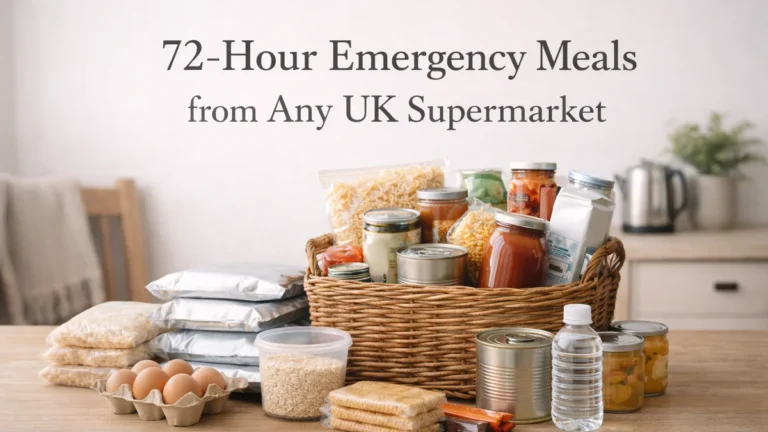
👉 [72-Hour Emergency Meals from Any UK Supermarket]
👉 [Kettle-Only Emergency Meals UK (Realistic UK Flat Setup)]
How Much Emergency Food Storage UK Homes Really Need
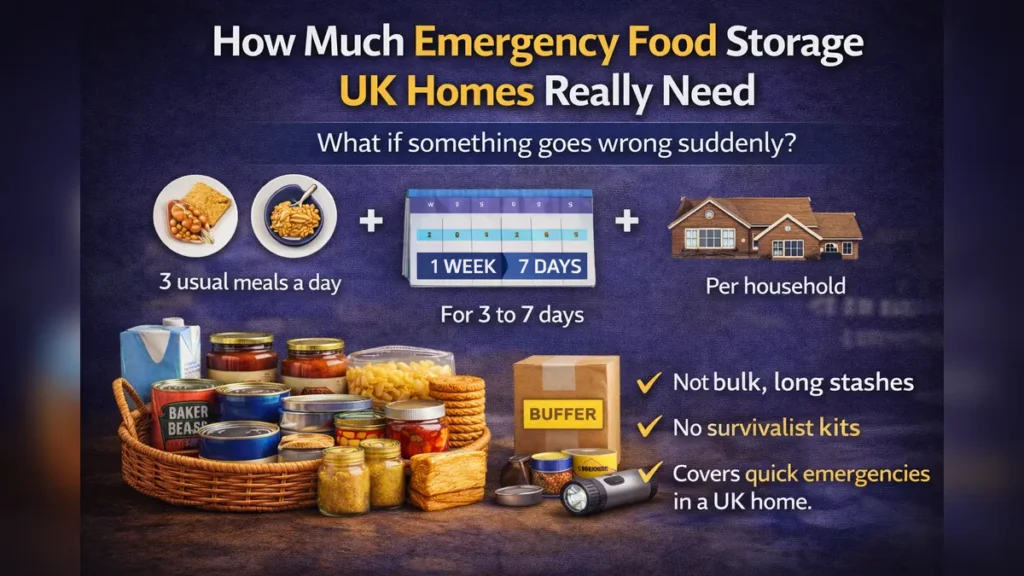
You don’t need one perfect number. Use tiers so emergency food storage uk stays realistic and affordable.
Level 1: 72 hours
This covers short illness, delivery delays, and weather disruptions.
Aim: 3 days of simple breakfasts + lunches + dinners + snacks.
Level 2: 7 days
This is where stress drops because you stop “running out” between shops.
Aim: 7 dinners, 7 breakfasts, flexible lunches.
Level 3: 14 days
This is where your cupboard starts protecting you from price spikes and chaos weeks.
Level 4: 30 days
Only do this if you have space and it won’t create waste.
Rule of thumb: If your storage system causes guilt, clutter, or thrown-away food, it’s not helping. The best emergency food storage uk setup is the one you can maintain.
👉 [Prepping Without Panic UK: A Beginner’s Guide]
The “Normal UK Cupboard” Shopping List
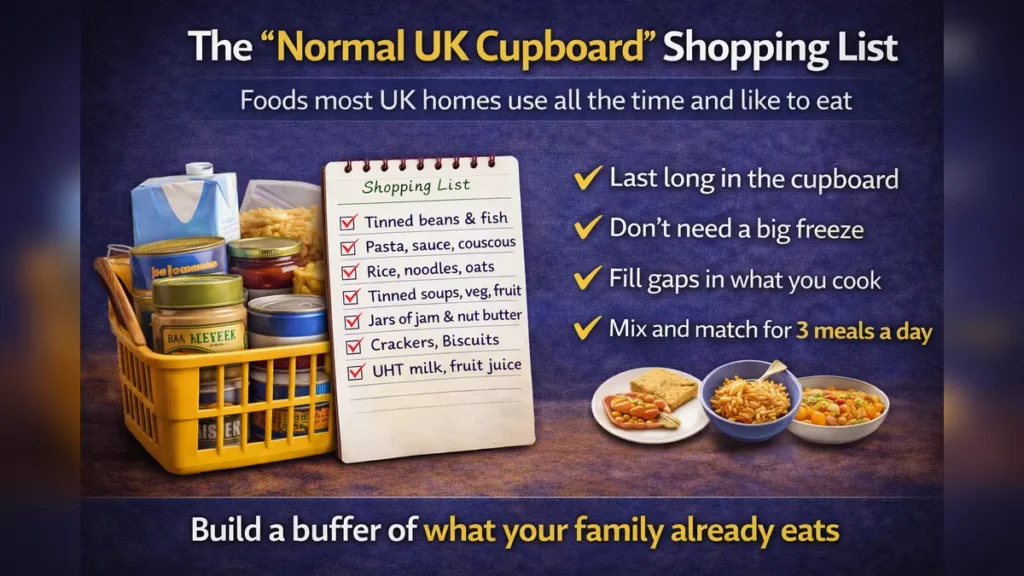
If you want a clean starter list for emergency food storage uk, use this. It’s built around common UK supermarkets and typical tastes.
Carbs
- Pasta (spaghetti/penne)
- Rice (long grain + packet rice)
- Noodles
- Oats
- Wraps or crackers
Protein
- Tuna / sardines / salmon tins
- Baked beans
- Lentils / chickpeas / kidney beans
- Tinned chicken
- Peanut butter
Meal builders
- Tinned tomatoes
- Passata
- Stock cubes
- Jar sauces (curry, bolognese, sweet & sour)
- Herbs/spices you already use
- Cooking oil
Comfort + morale
- Tea/coffee
- Long-life milk
- Biscuits / chocolate
- Squash / long-life juice
This is emergency food storage uk that still feels like a normal home.
How to Start Emergency Food Storage UK in 30 Minutes
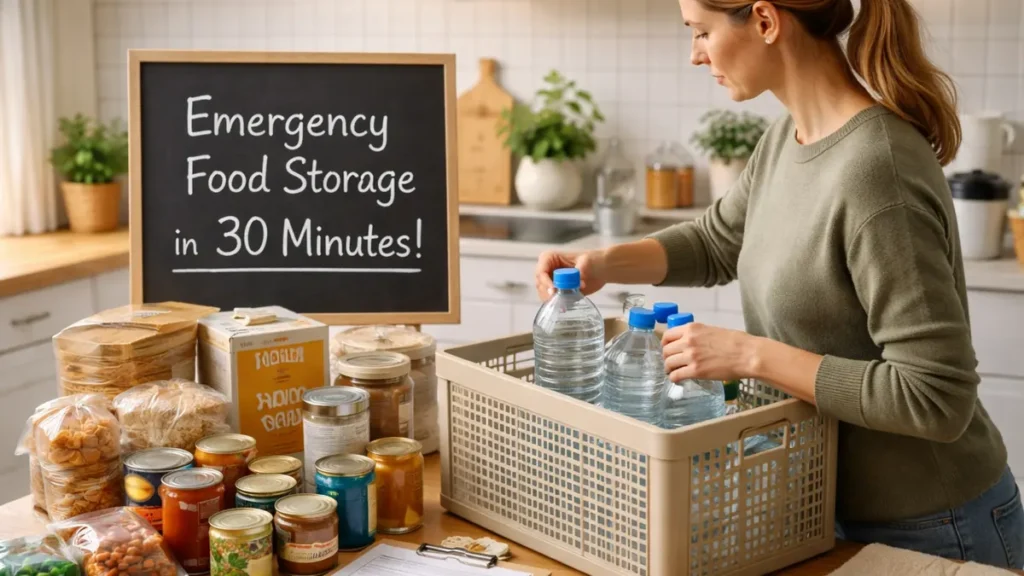
If you do nothing else, do this today.
Write 7 easy dinners your household likes
Examples: pasta + tuna, curry + rice, chilli + wraps, soup + crackers.
Buy 1 extra of each key ingredient next time you shop
Not a big bulk haul—just “one extra”.
Create a single shelf or box called “BUFFER”
That’s your emergency food storage uk zone.
Rotate weekly
When you use something from the buffer, replace it on your next shop.
That’s it. You’ve built a system, not a stash.
Want a plug-and-play version built from one supermarket shop?
Next Read:
👉 [72-Hour Emergency Meals from Any UK Supermarket]
Food Storage for Small Homes and Flats
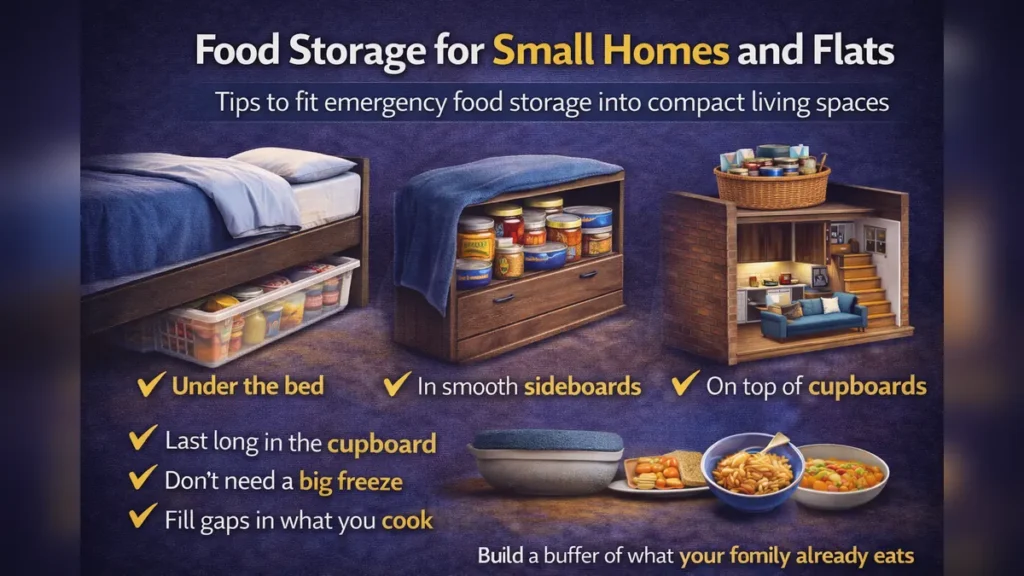
Small spaces can still nail emergency food storage in the UK
You don’t need a pantry room or a garage. Most UK homes don’t have them. What you need is smart storage that stays dry, cool, and easy to rotate—so your “emergency food” is just your normal food, organised a bit better.
Best places to store emergency food in a typical UK home
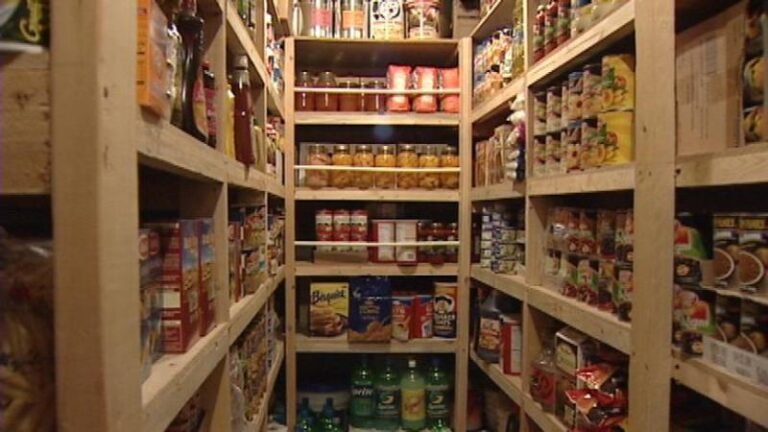
Back of kitchen cupboards
This is the easiest win because it’s already where food lives. Use the “back row” as your buffer.
- Put your spares behind what you use daily
- Group by type: tins together, pasta/rice together, sauces together
- Use a simple rule: eat from the front, refill at the back
UK-friendly examples that store well here: tins of beans, soup, tomatoes, tuna, pasta, rice, jar sauces, UHT milk, cereal.
Under-bed boxes
Under the bed is basically free storage in most homes, especially flats.
- Use lidded, low-profile boxes so it stays clean and dust-free
- Keep it portable so you can pull it out in 30 seconds
- Stick to sealed packets and tins to avoid crumbs and pests
Good under-bed picks: sealed pasta/rice, tins, oats, long-life snacks, tea/coffee, crackers, peanut butter.
Top of wardrobes
High storage is brilliant for backup supplies you don’t need every day.
- Use one box labelled Food buffer
- Keep it light enough to lift safely
- Avoid loose items that can tip or spill
Best for: bulky but stable items like multipacks of noodles, cereal, long-life milk, unopened jars and tins.
Hall cupboard
The hall cupboard is the “boring but useful” zone—great for a tidy, grab-and-go setup.
- Keep one shelf as Emergency food 7 days
- Add a small inventory note on the inside of the door
- Store it near your torches and power banks if you’ve got a power cut box
This is also a great place for a small “no-cook” backup layer: crackers, nut butter, cereal bars, tinned fruit.
Avoid these storage mistakes
A good food buffer fails when it gets damp, hot, or forgotten.
Damp-prone areas
Avoid anywhere that gets condensation or musty. In many UK homes that means:
- near outside walls that feel cold
- under sinks with plumbing
- garages and sheds unless they’re dry and temperature-stable
Near radiators or heat sources
Heat shortens shelf life and can damage packaging.
- don’t store next to radiators
- avoid boiler cupboards if it’s warm in there
- keep away from ovens and behind fridges where it can get hot
Anywhere you forget
If you can’t see it, you won’t rotate it. And then it becomes junk.
- don’t hide it in “random” boxes
- don’t spread it across five places
- keep it in one or two consistent zones so it stays real
Flat-friendly tip
For most flats and small houses, 7 days is the sweet spot. It’s enough to feel calm during power cuts, storms, illness weeks, delivery delays, or a water issue—without turning your home into a stockroom.
Keep it tidy and portable:
- aim for one or two lidded crates
- choose food you actually eat
- rotate naturally with your normal shop
That’s a strong emergency food storage outcome in the UK, and it won’t clutter your life.
Next step
Pick one storage spot right now and build a 72-hour layer using your normal shop this week. Once that’s done, simply repeat what worked until you’ve got your 7-day buffer.
👉 [Emergency Planning for Renters in the UK]
Rotation is the The Secret
to Cheap, No-Waste Emergency Food Storage UK
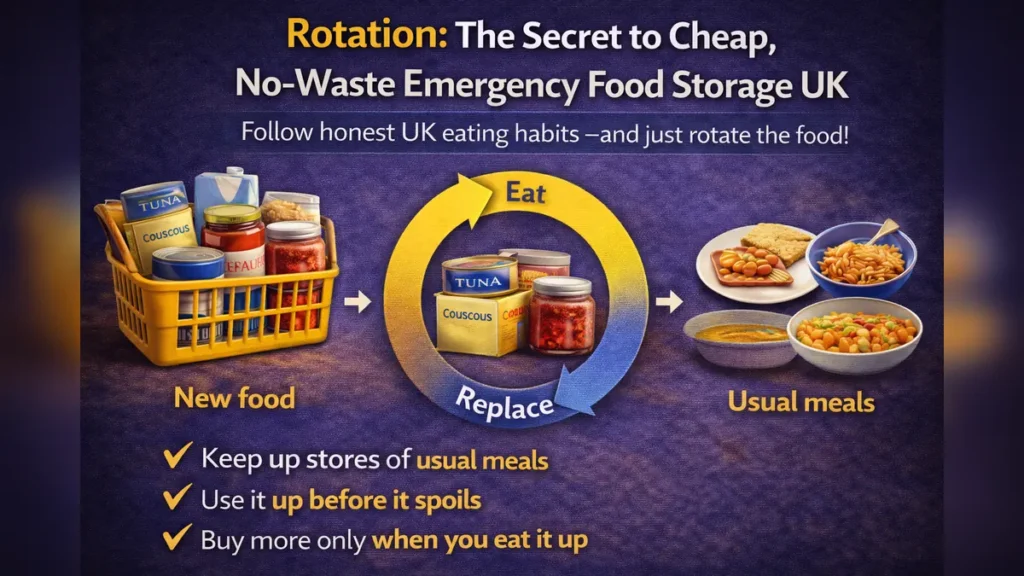
Rotation is the difference between a calm buffer and a dusty “emergency cupboard” nobody touches. Do it right and your emergency food storage becomes normal shopping, but calmer.
The one rule that makes rotation effortless
- Put new items at the back
- Pull older items from the front
That’s it. No spreadsheets. No fancy labels. Just a simple flow that stops waste and keeps your buffer fresh.
The weekly habit that makes it stick
Once a week, do one small thing:
- Plan one dinner that uses the oldest buffer item you’ve got
Think: the oldest tin of chilli, soup, curry sauce, pasta bake jar, or rice pouch.
You’ll barely notice it — but it quietly keeps your whole system working.
Labelling that takes 10 seconds
Grab a Sharpie and keep it in the cupboard.
- Write month and year on the lid or packet when you buy it
Example: 01/26
That’s enough to make “oldest first” obvious at a glance.
Why this matters
Rotation means:
- less waste
- fewer big shops
- no expired mystery tins
- and a buffer that stays ready without feeling like prep
Rotation turns emergency food storage UK into something you do without thinking — and that’s the point.
Next step
Tonight, open your cupboard and do a 2-minute reset: move the newest items to the back and pull two older items to the front. Then pick one of those older items for this week’s easiest dinner.-term.
The simple rotation method
- Put new items at the back
- Pull older items from the front
- Once a week, plan one dinner using the oldest “buffer” item
Labelling that takes 10 seconds
Use a Sharpie: write the month/year you bought it on the lid.
Rotation turns emergency food storage uk into “normal shopping, but calmer.”
“No Power” Food, What Changes During a UK Power Cut?
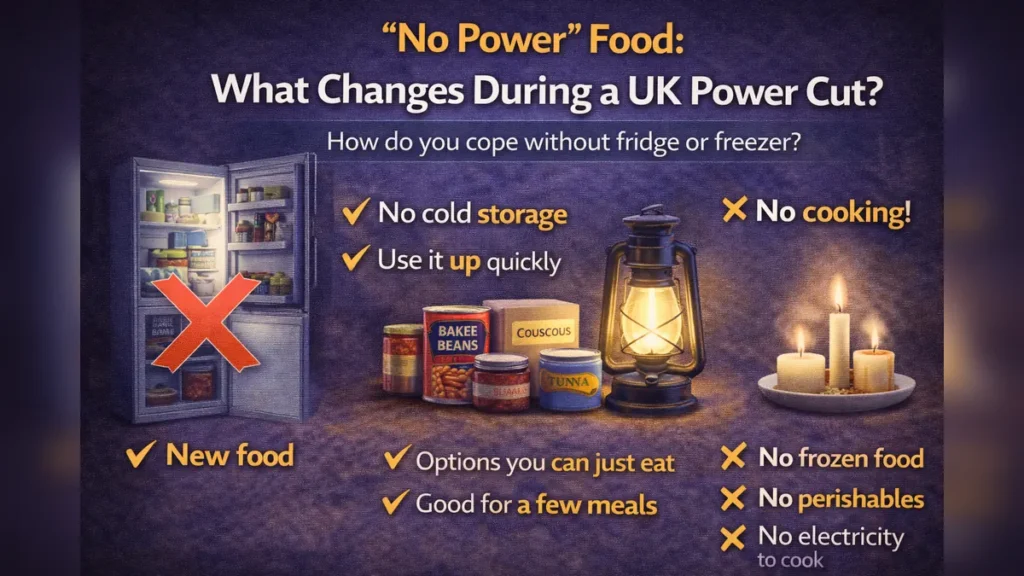
Most UK power cBest power cut friendly foods for UK homes
When the power goes off, the biggest change isn’t the food you own. It’s the food you can actually use.
Fridges and freezers stop being reliable. Ovens and hobs might be useless. Even a microwave is pointless. So the smart move is building a small set of meals that work in three modes:
- No cooking at all
- Kettle only
- Heat if you can
You’re not aiming for gourmet. You’re aiming for calm, filling, familiar food that keeps everyone steady.
The no cook wins you can eat at room temperature
These are the morale-savers. Open, eat, done.
Tinned meals you can eat cold
Look for tins you’d happily eat straight from the can if you had to:
- All-day breakfast tins
- Ravioli and pasta meals
- Beans and sausages
- Tuna or chicken in tins
- Mixed bean salad tins
UK tip: These are everywhere and cheap. Think Tesco, Asda, Aldi, Lidl, Sainsbury’s own brand.
Crackers plus peanut butter
This is one of the best “boring but effective” options:
- Crackers or oatcakes
- Peanut butter or other nut butter
- Optional extras: jam, honey, bananas, chocolate spread
It’s shelf-stable, filling, and feels like a real snack-meal, not “emergency rations”.
Fruit cups and tinned fruit
Easy calories, easy mood boost:
- Fruit cups for grab-and-go
- Tinned peaches, pears, pineapple
- Applesauce pouches for kids
Bonus: add a spoonful to porridge or eat with yoghurt if you have it.
Kettle meals that feel like a proper meal
If you can boil a kettle, you can eat well. These are cheap, compact, and easy.
Instant porridge
One of the best UK power-cut breakfasts:
- Oats sachets or a big bag of oats
- Add hot water
- Boost it with: raisins, honey, peanut butter, cinnamon
Retailers: Aldi and Lidl are great for cheap oats and add-ins.
Noodles and couscous
Fast, warm, satisfying:
- Pot noodles and instant noodles
- Couscous that only needs hot water
- Instant rice pots that use boiling water
Make it better with:
- Tinned fish
- Sweetcorn
- Ready-to-eat lentils
- A drizzle of olive oil or a sachet of sauce
Heat if you can foods
These are great when you do have a safe way to heat food, but don’t rely on them as your only option.
Soup
Soup is comfort in a bowl:
- Tinned soup
- Cup-a-soup sachets
- Lentil and vegetable soups
If you can heat it, brilliant. If you can’t, it still works in a pinch, but most people prefer it warm.
Simple rule for a power cut ready food plan
If you want your emergency food storage UK plan to cover power cuts properly, make sure you’ve got:
- At least 2 to 3 no-cook or kettle meals per person
- A few snacks that double as meals
- Something warm and familiar for morale
You don’t need loads. You just need the right mix.
Next step
Pick three items from the lists above and add them to your next normal shop. Then put them together in one cupboard or box labelled Power cut food so you can grab it fast.uts are short, but you still want options that don’t rely on an oven.
Best power-cut-friendly foods (UK)
- Tinned meals you can eat at room temp
- Crackers + peanut butter
- Fruit cups / tinned fruit
- Instant porridge
- Noodles / couscous (kettle)
- Soup (if you can heat it)
If you want your emergency food storage uk plan to cover power cuts properly, include at least 2–3 no-cook or kettle meals per person.
👉 [Kettle-Only Emergency Meals UK (Realistic UK Flat Setup)]
👉 [Solar Chargers in the UK: A Reality Check]
👉 [Power Cuts & Home Warmth (UK)]
Common Mistakes That Break Emergency Food Storage UK Plans
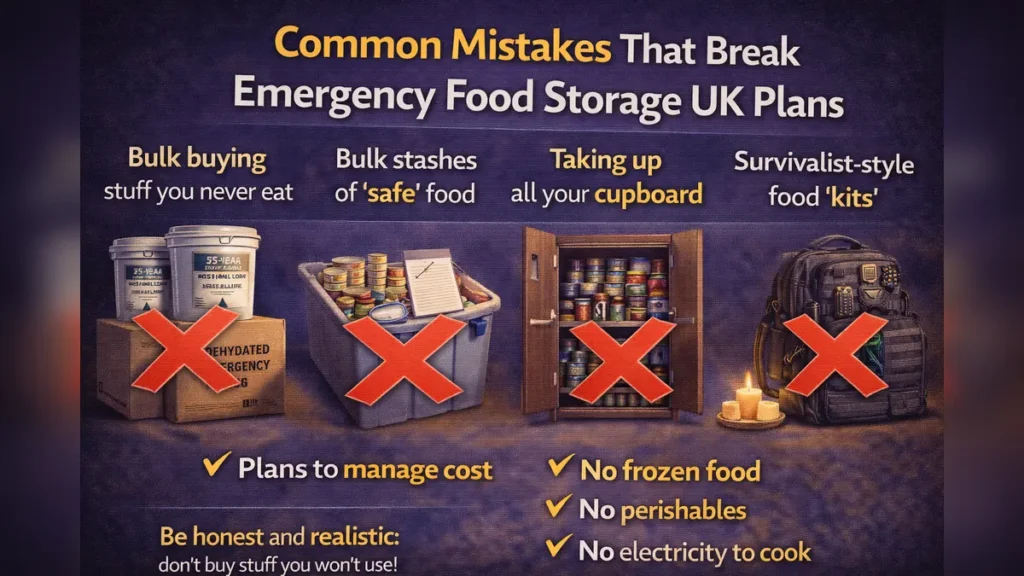
The mistakes that quietly break emergency food storage in the UK
Most emergency food plans don’t fail because people don’t care. They fail because the setup doesn’t fit real life. The good news is these are easy fixes once you know what to watch for.
Buying food you don’t normally eat
If you buy “emergency-only” food you’d never choose on a normal Tuesday, one thing happens: it sits.
- You forget it’s there
- It quietly expires
- You end up binning it or forcing yourself to eat it out of guilt
The calm fix
Build your buffer out of food you already use. Think normal UK cupboard staples:
- pasta, rice, noodles
- tins you actually like (beans, soup, tuna, tomatoes)
- cereal, oats, UHT milk
- jar sauces, pesto, curry sauce
If you wouldn’t happily eat it in a busy week, it’s not a good emergency food storage UK choice.
Going too big, too fast
A big bulk shop feels productive… until you get home and realise you’ve bought a problem.
In a normal UK home, storage is the limiting factor. A £200 haul from Costco or a bulk online order can mean:
- bags stacked in hallways
- cupboards that don’t close
- food shoved “somewhere safe” and then forgotten
The calm fix
Start small and build layers:
- 72-hour layer first using your normal shop
- then extend it into 7 days by repeating what worked
- only bulk-buy once you’ve proven you can store and rotate it
Even £10–£20 extra per weekly shop adds up fast without turning your home into a stockroom.
Forgetting the boring essentials
This one is painfully common: you store the base food… but not what makes it usable.
If you’ve got pasta but no sauce, oil, salt, tea, or breakfast options, you haven’t stored comfort. You’ve stored frustration.
The calm fix
When you add staples, add the “make it work” bits too:
- cooking oil
- salt, pepper, stock cubes
- pasta sauces, tinned tomatoes, curry sauce
- tea/coffee, long-life milk, sugar
- breakfast you’ll actually eat (cereal, oats, jam, peanut butter)
These are cheap, familiar, and they turn “food in a cupboard” into “meals that feel normal”.
Not planning for low-energy days
Disruption doesn’t happen when you’re fresh and organised. It often lands when you’re stressed, cold, tired, or juggling kids and work.
If your emergency food storage UK plan requires effort, cooking skill, or loads of washing up, it won’t get used properly.
The calm fix
Build in “low-energy” options on purpose:
- tins that are ready with minimal prep (soup, chilli, beans)
- quick carbs (microwave rice, noodles, instant mash)
- snacky “meal builders” (crackers, peanut butter, oat bars)
- a few no-cook meals for power cuts (tinned fish + crackers, cereal + UHT milk)
Aim for food that works even when you’re running on fumes.
Next step
Pick one cupboard shelf and build a 72-hour layer using only foods you already eat. Add 3–5 “boring essentials” (oil, salt, sauce, tea/coffee) and you’ve got a plan that actually feels calm.
👉 [72-Hour Emergency Meals from Any UK Supermarket]
A Realistic 7-Day Emergency Food Plan (For 1 Adult)
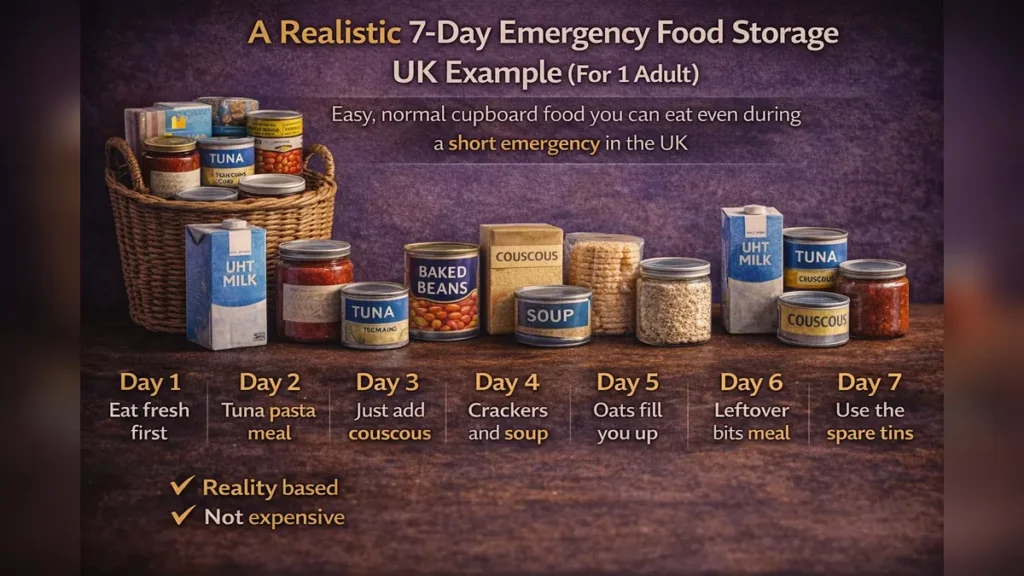
Use this as a template 7-day emergency food storage UK that feels normal
A simple way to build a calm buffer is to plan 7 breakfasts, 7 lunches, and 7 dinners using everyday supermarket staples.
Breakfasts 7
- Oats + long-life milk
- Cereal + long-life milk
- Tea or coffee + biscuits as a backup option
Lunches 7
- Soup + crackers
- Tuna + wraps or crackers
- Beans on toast if power is on
- or beans + crackers if you need a no-cook option
Dinners 7
- Pasta + jar sauce + tinned protein
- tuna, chicken, lentils, or beans
- Curry sauce + rice + chickpeas
- Chilli in a tin + wraps
- Noodles + tinned veg or protein
- Soup + crackers + chocolate (comfort counts)
this is emergency food storage UK that still feels like normal food —
Emergency Food Storage UK for Families
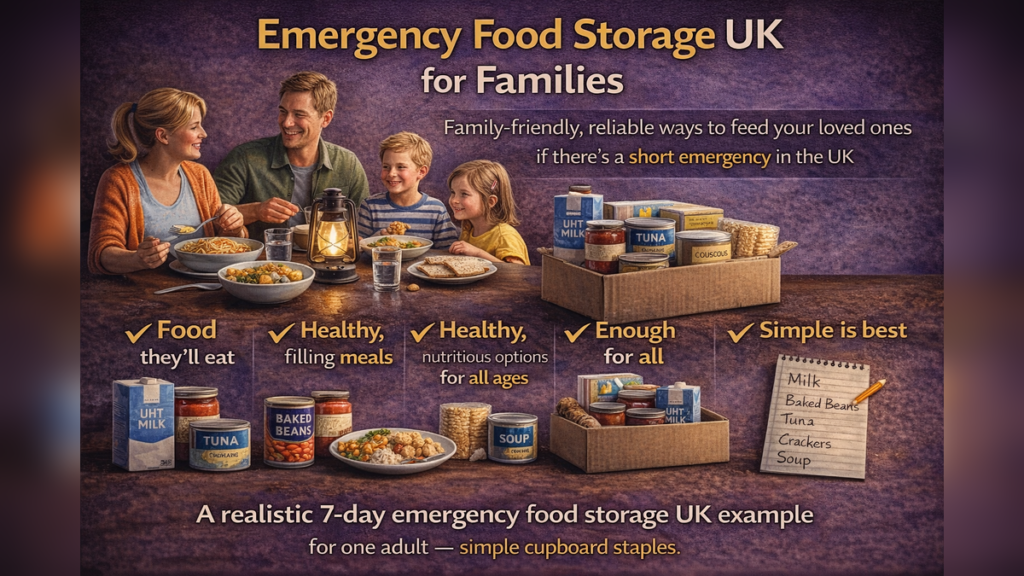
Families burn through food faEasy wins for emergency food storage
This is the bit that makes the whole plan feel effortless.
You don’t need to overhaul your diet or buy weird “survival food”. You just want a few extra, normal items that stop a disruption turning into a miserable week of bland meals and low morale.
Think of these as quick, low-cost upgrades you can add to your usual shop.
Extra snacks that actually get eaten
Snacks are not a luxury in a disruption. They’re a stress reducer.
Easy UK options:
- Crisps, oat bars, cereal bars, flapjacks
- Nuts, dried fruit, trail mix
- Biscuits, rice cakes, crackers
- Chocolate or sweets for a quick mood lift
Retailers to grab these cheaply:
- Aldi and Lidl for multipacks and own-brand bars
- Tesco, Asda, Sainsbury’s for “2 for” deals and clubcard/nectar offers
More breakfast options you can do on autopilot
Breakfast is the easiest meal to keep normal. A stable breakfast routine makes everything feel calmer.
Keep a small rotation of:
- Cereal and long-life milk
- Porridge oats and honey or jam
- Breakfast bars for “no time, no fuss”
- Tea, coffee, sugar, UHT milk
If you want one genuinely useful upgrade, add:
- A couple of jars of instant coffee and a spare box of teabags
Because “no coffee” makes everything feel worse than it needs to.
Familiar sauces and flavour boosters
This is the cheat code for making cupboard food feel like a real meal.
Stock a few of what your household already loves:
- Pasta sauce jars or passata
- Ketchup, mayo, brown sauce
- Soy sauce, sweet chilli, hot sauce
- Stock cubes, gravy granules, seasoning mixes
Even simple things like a jar of pesto or a packet of fajita seasoning can turn “random cupboard food” into something people will actually eat without complaining.
A few treat items for morale
Treats are for the days when you need a psychological lift, not a reward for being prepared.
Pick 3–5 items and keep them as “do not touch unless needed”:
- Hot chocolate
- A nice biscuit tin or multipack
- A couple of sharing chocolate bars
- A small stash of sweets for kids or guests
- A favourite crisp or snack you don’t buy every week
Tip that works:
Put treats in a separate bag or box at the back of a cupboard so they don’t get “accidentally” eaten.
If you have dietary needs, keep it simple
If anyone in your household has allergies, intolerances, sensory needs, or medical diets, the best strategy is boring and reliable:
- Store duplicates of safe foods
- Avoid “clever substitutes” you’ve never tested
Examples:
- Gluten-free pasta, bread substitutes, GF snacks you know they’ll eat
- Dairy-free long-life milk you already use
- Safe cereals, safe sauces, safe staples
In a disruption, you don’t want experiments. You want certainty.
Next step
On your next normal shop, add two extra breakfast items, two familiar sauces, and three snacks your household already likes. That’s enough to feel the difference immediately.
Your Calm, Affordable Checklist
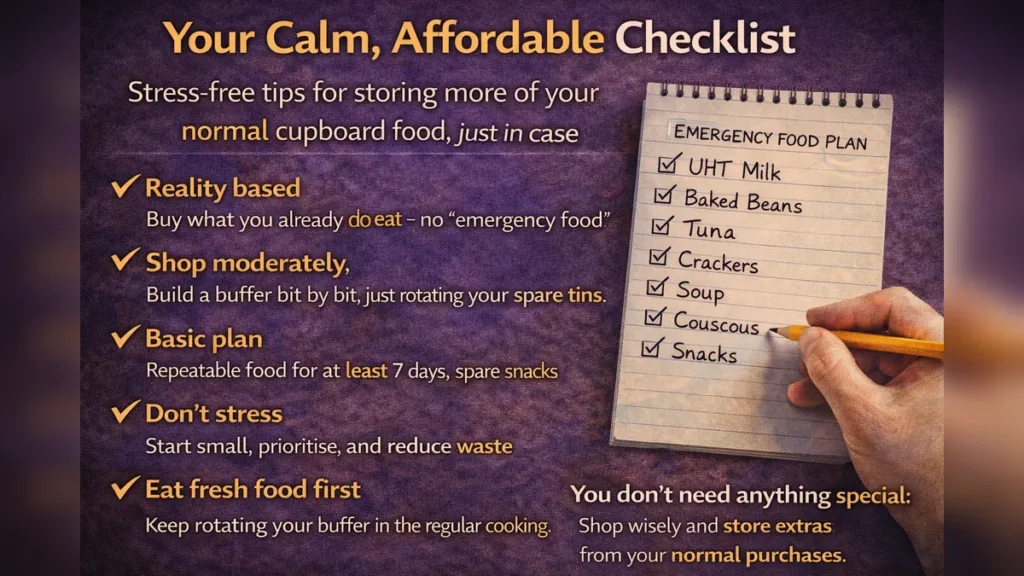
A calm emergency food storage UK plan that actually sticks
Most “emergency food” advice tries to turn you into a different person overnight. You don’t need that. You need a simple system that fits a normal UK kitchen, a normal budget, and a normal weekly shop.
This chapter is the plan.
The goal
Build a quiet buffer of everyday food so a power cut, storm week, delivery delay, or a rough month doesn’t turn into a scramble.
No bulk buys. No weird tins you’ll never eat. Just a cupboard that’s doing a bit of extra work.
Step 1 Choose your target 3 days first then 7 days
Start small so you actually finish.
- Target 3 days of dinners plus a few easy breakfasts and lunches
- Once that feels easy, extend to 7 days by repeating what worked
This is how you avoid the “half a system” problem where you buy loads… and then stop.
Step 2 Write 7 easy dinners you already eat
Before you buy anything, decide what you’re stocking. Keep it boring. Boring is reliable.
Pick meals that use shelf-stable ingredients and don’t rely on fresh stuff.
Examples that work well in UK cupboards
- Pasta + jar sauce + tinned tuna or lentils
- Rice + tinned curry or chilli
- Jacket potatoes + baked beans
- Noodles + tinned chicken soup
- Couscous + tinned veg + chickpeas
- Tin spaghetti hoops + toast
- Tinned stew + microwave rice
If you want a rule: if you’d happily eat it on a tired Tuesday, it belongs in the buffer.
Step 3 Buy one extra per shop not bulk
This is the whole secret. You build your buffer without feeling it.
On your normal shop at Tesco, Aldi, Asda, Lidl, Sainsbury’s, wherever:
- add one extra dinner component each time
- an extra jar sauce
- an extra tin of beans
- an extra pack of pasta
- an extra microwave rice
- an extra soup or tinned meal
You’re not “prepping”. You’re just quietly increasing your pantry depth.
Step 4 Create a buffer shelf or box
Make your system visible and simple.
Choose one spot:
- one shelf in a cupboard
- one under-bed storage box
- one lidded crate at the bottom of a wardrobe
Label it in your head as Buffer. That’s where the extras live.
This stops two things:
- you accidentally eating the buffer without noticing
- the buffer spreading across the kitchen and turning into clutter
Step 5 Add kettle and no-cook meals for morale
When the power is off, the kitchen routine changes. You want a few meals that work even when you’re tired or you can’t cook properly.
Add 2–3 kettle or no-cook meals per person.
Good UK options
- instant porridge pots
- pot noodles or instant noodles
- couscous pots
- cup soups
- crackers + peanut butter
- cereal + UHT milk
- oat bars and fruit pots
You’re not living on these. They’re your “we can still eat” safety net.
Step 6 Rotate weekly with the oldest-forward rule
Rotation is what keeps this cheap and waste-free.
Use one simple rule:
- oldest to the front
- newest to the back
Then each week, use one or two buffer items in normal meals.
If you do this, your “emergency food” never becomes expired junk. It stays normal food.
Step 7 Replace what you use
This keeps the system complete without thinking.
Whenever you use a buffer item:
- put it on your shopping list immediately
- replace it on the next shop
- return it to the back of the buffer shelf
That’s it. Your buffer stays topped up automatically.
What you’ve built
If you follow the steps above, you’ve created a complete, maintainable emergency food storage UK system:
- it starts with 3 days and grows to 7
- it’s based on meals you actually eat
- it builds gradually on a normal budget
- it stores neatly in one place
- it rotates so nothing is wasted
- it replaces itself as you go
No panic. No piles of gear. Just a calmer cupboard.
Next step
Today, do the easiest win: write your 7 easy dinners and add one extra dinner item to your next shop. Then choose a single buffer shelf or box and start building from there.
Next steps:
👉 [Prepping Without Panic UK: A Beginner’s Guide]
👉 [How Much Water Do UK Homes Really Need?]
👉 [72-Hour Emergency Meals from Any UK Supermarket]
Official UK Guidance
For official UK guidance on preparing for emergencies, see GOV.UK
FAQ
What is the best way to start emergency food storage uk on a budget?
Start with a 72-hour buffer and buy “one extra” of normal staples each shop. Build a single labelled buffer shelf and rotate weekly so nothing is wasted.
How many days of emergency food storage uk should I aim for?
Most UK homes get the best benefit from 3–7 days. If you have space and can rotate properly, 14 days is a strong next step. Only go to 30 days if it won’t create waste or stress.
Do I need survival food for emergency food storage uk?
No. For most UK disruptions, supermarket tins, dried staples, and easy meals are more useful, cheaper, and easier to rotate.
What foods work best for emergency food storage uk during power cuts?
Include no-cook and kettle options: crackers, peanut butter, tinned meals, instant porridge, noodles, couscous, and shelf-stable drinks. Keep at least a few meals you can eat without heating.
Where should I store emergency food storage uk in a small flat?
Use kitchen cupboards with risers, sealed under-bed boxes, or top-of-wardrobe storage. Avoid damp areas and keep a single “buffer zone” so rotation stays easy.
How do I rotate emergency food storage uk so it doesn’t expire?
New items go to the back, older items come forward. Plan one meal per week using a buffer item, then replace it on your next shop.
What’s the biggest mistake people make with emergency food storage uk?
Buying food they don’t eat. The best system is “more of what you already use,” plus a few low-effort meals.
Next Read