If you’re searching for power cuts and home warmth uk, you’re in the right place. UK outages are usually short, local, and very manageable — if you have a simple plan for heat, lighting, and comfort.
This pillar guide is your “hub” for staying warm at home during a cut: what to do first, what to avoid, what to buy (and what not to), and which supporting guides to read next. If you feel you need to start at the beginning the Prepping UK The Complete System is for you.
Quick Takeaways (read this first)
- Warm one room, not the whole home. Pick a “warm room” and shut doors.
- Layer + trap heat. Clothing, bedding, rugs, curtains, draft blocking.
- Avoid indoor fuel burning. Most “quick heat” hacks create carbon monoxide risk.
- Light + charging matter. Being warm is easier when you can see and stay connected.
- Plan for the UK reality. Damp, condensation, and cold surfaces are the real problems.
What “Power Cuts and Home Warmth UK” Really Means
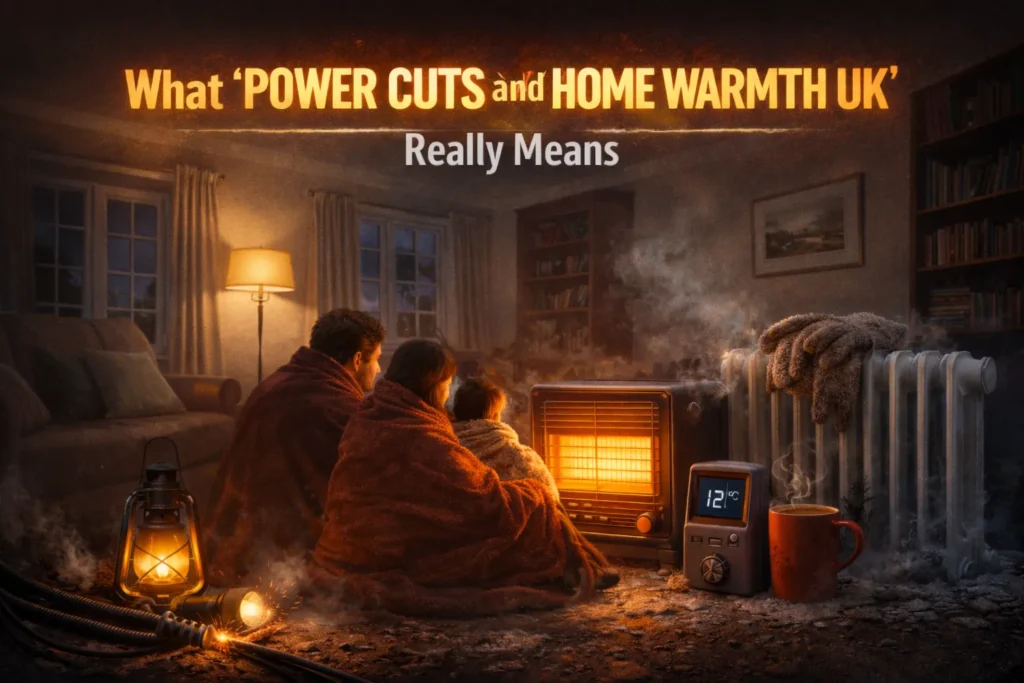
In the UK, home warmth during a power cut is less about heroic survival gear and more about:
- reducing heat loss
- creating a small warm zone
- safe backup heat
- lighting and phone power
- condensation control after the cut
That’s it. Simple wins, calmly done.
Step 1: Your 10-Minute “Warm Room” Setup
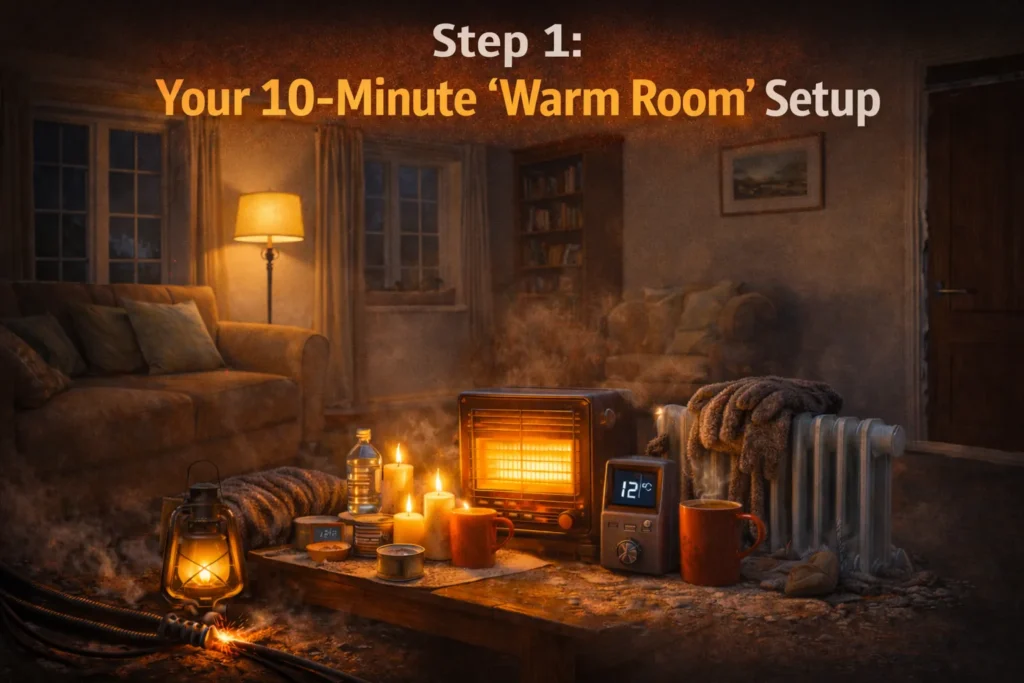
When the power goes off, do this first
Choose your warm room
Pick the smallest practical room where everyone can safely sit.
- Living room is common, but a small bedroom can work even better.
- Avoid rooms with lots of external walls/windows if possible.
Shut it down
- Close doors
- Pull curtains
- Put towels/blankets at drafty gaps
- Put down a rug/throw on cold floors
Build the comfort station
In a basket/box:
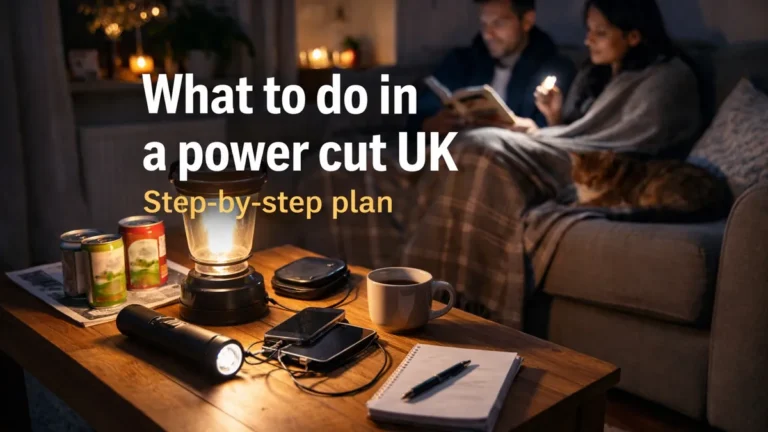
- torch + spare batteries
- power bank + cables
- warm layers + socks
- hot water bottle(s) (for later, if you can heat water safely)
- snacks + water
How to Stay Warm Safely During a Winter Power Cut]
Best Torches for Power Cuts (UK Reality)]
Step 2: Warmth Without Power — The UK “Warmth Ladder”
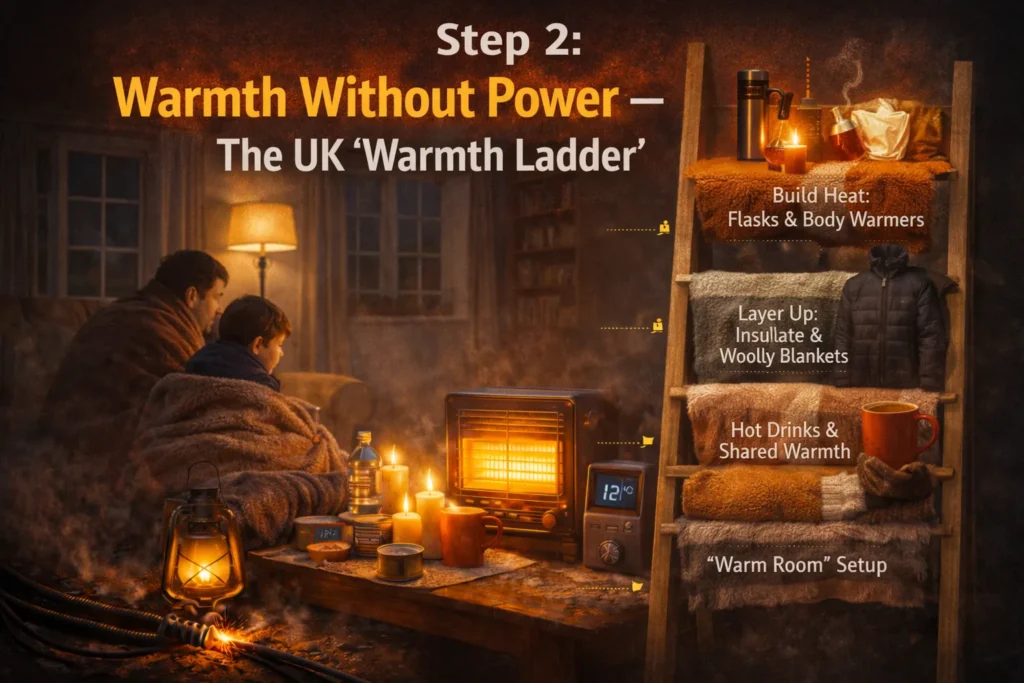
For power cuts and home warmth uk, think in layers of reliability.
Level 1: Clothing and layering
- Base layer
- Mid layer
- Outer layer
- Thick socks + slippers
- Hat/beanie indoors
Tip: Warm your core first. Cold hands/feet improve when your torso is warm.
Level 2: Bedding and shared warmth
- Duvets and throws on the sofa in the warm room
- Sit on a blanket
- Sleep in one room if the cut is overnight
Level 3: Passive heat retention
- Curtains closed early
- Draft blockers at external doors
- Move away from cold external walls
- Use a small tent/blanket “den” for kids
Level 4: Safe supplemental heat
This depends on your home and what you already own — and it must be safe.
Power Cuts and Home Warmth UK
Step 3: What NOT to Do
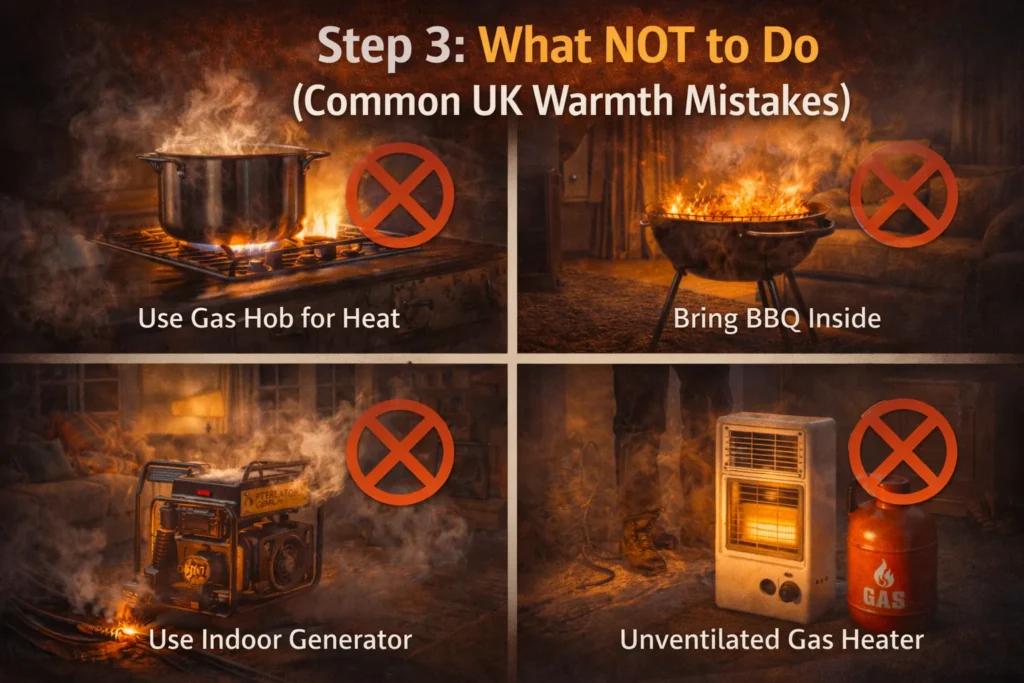
These are the fastest ways people get into trouble during power cuts and home warmth uk situations:
Don’t run BBQs, camping stoves, or grills indoors
It’s not “just for a minute.” Indoor fumes and carbon monoxide risk build fast.
Don’t use candles as your main light
Candles are fine occasionally, but as primary lighting they increase fire risk and make the room feel “smoky” and stressful.
Don’t seal the room with zero ventilation
You want less draft, not no airflow. If you’re using any combustion-based item (even briefly), ventilation becomes non-negotiable.
Don’t chase heat room-to-room
Pick your warm room and commit. Spreading warmth thin is how homes feel colder.
Step 4: Lighting and Power
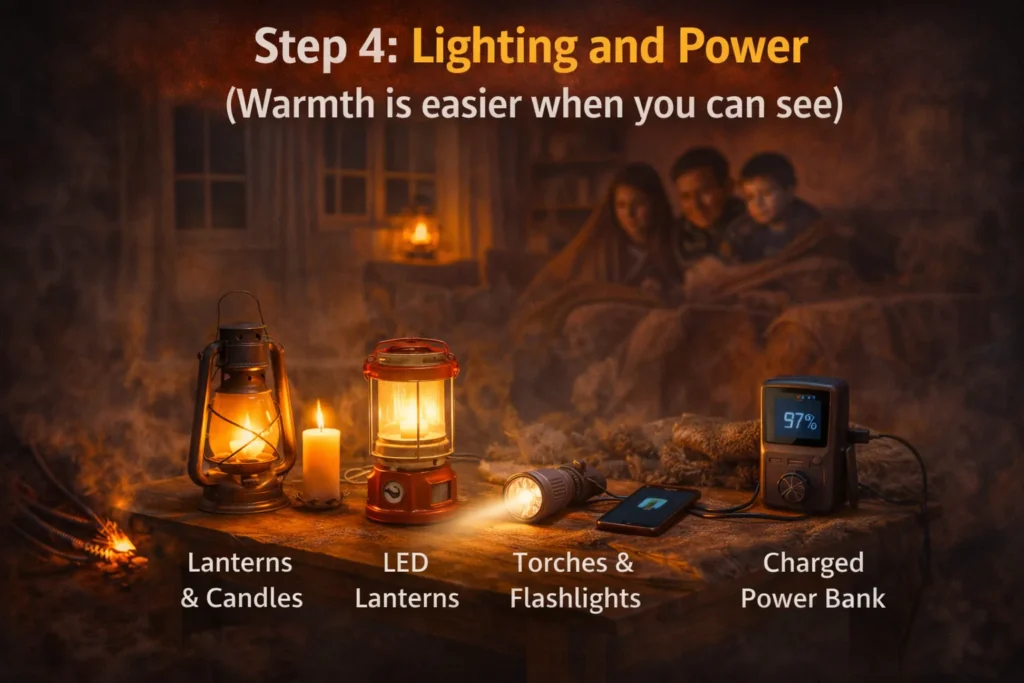
A huge part of power cuts and home warmth uk is staying calm and functional.
Your minimum lighting kit
- 2 torches (one backup)
- 1 lantern (for the warm room)
- spare batteries
[Best Torches for Power Cuts (UK Reality)]
Phone and device charging
- 1–2 power banks per household (rotated/kept topped up)
- keep one cable taped to the power bank so it’s always “ready”
- put a reminder to recharge monthly
[Power & Lighting: Simple Charging Setup for UK Power Cuts]
[Solar Chargers in the UK A Reality Check]
Step 5: Food and Hot Drinks Without Stress
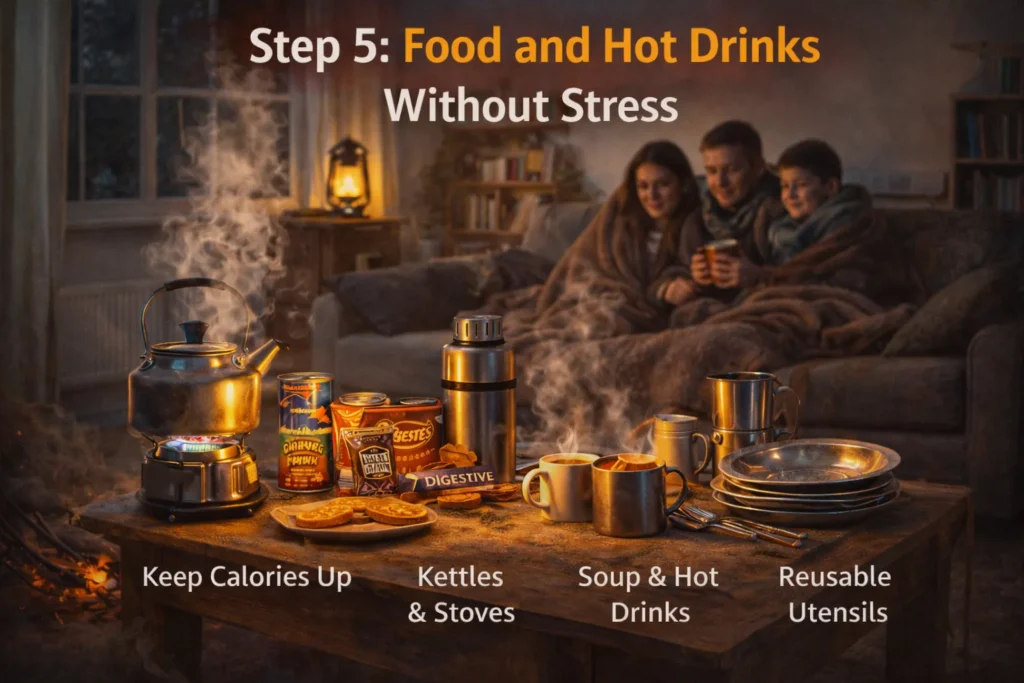
Warmth isn’t only heating — it’s also warm calories and hot drinks (if possible).
The UK-friendly approach
- Kettle-only meals (if you have any power source later)
- No-cook backup meals (if not)
- Thermos/flask kept clean and ready
[Kettle-Only Emergency Meals UK (Realistic UK Flat Setup)]
[72-Hour Emergency Meals from Any UK Supermarket]
Step 6: Condensation and Damp After the Cut
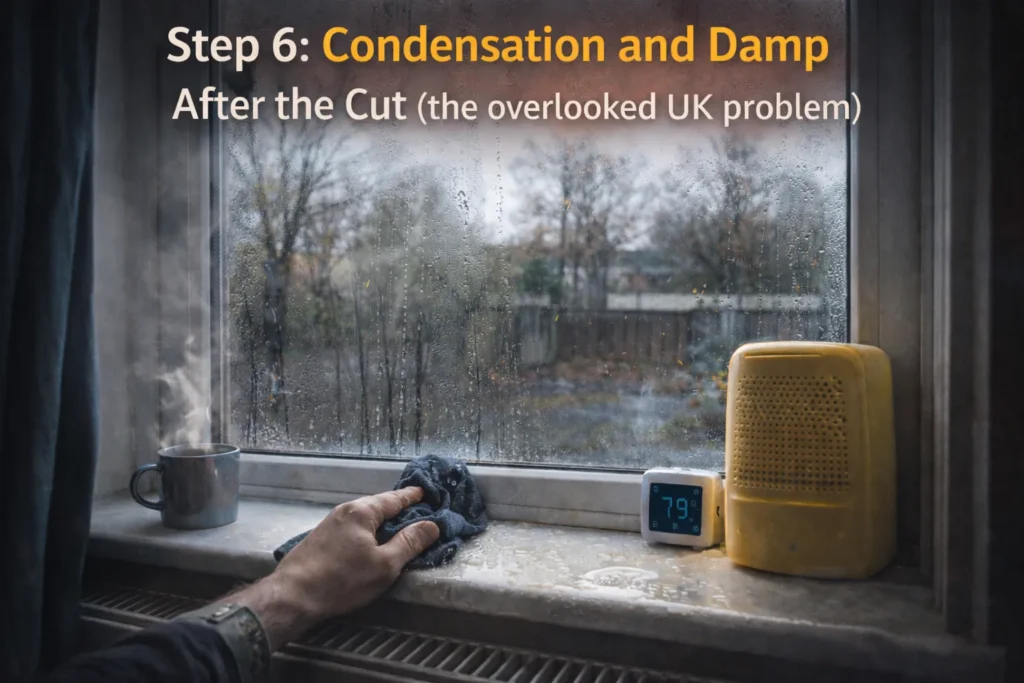
When heating drops, UK homes can get damp fast. After power returns:
- heat the warm room first
- wipe wet windows/sills
- ventilate briefly (10 minutes) once you can safely heat again
- avoid drying loads of laundry indoors during a cold cut
This is part of power cuts and home warmth uk that most guides ignore — but it affects comfort and health.
Health & Hygiene UK
[Health & Hygiene: Health Prepping Mistakes That Cause Problems]
Step 7: Special Situations (UK Reality)
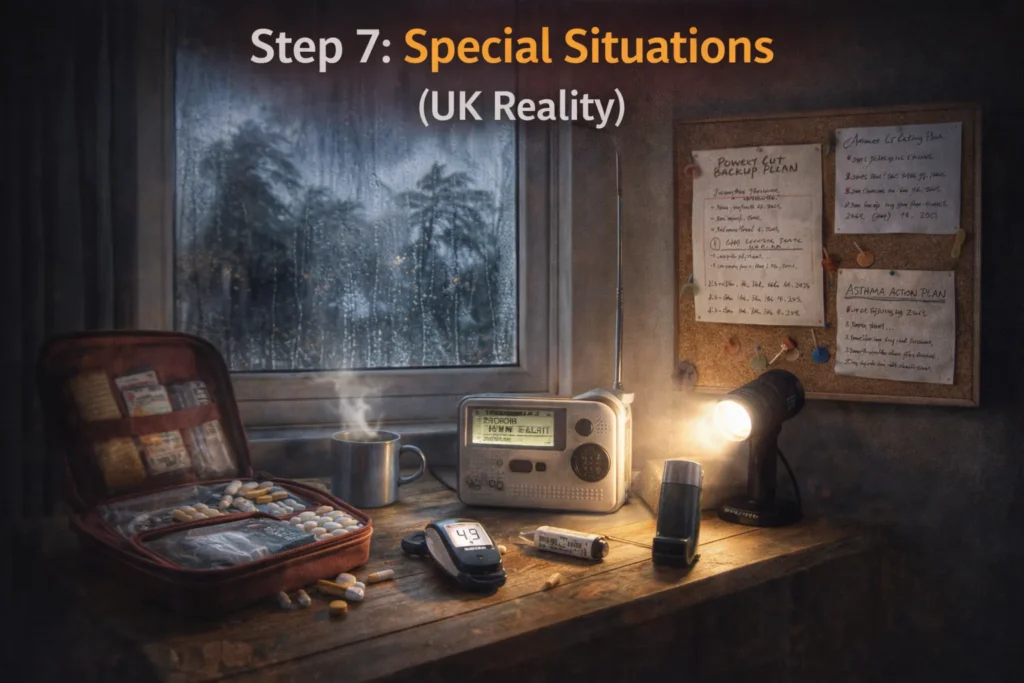
Flats and renters
- Focus on the warm room + portable lighting
- Avoid anything that looks like “modifying the property”
- Keep everything pack-away and discreet
[Emergency Planning for Renters in the UK]
Babies, elderly, and vulnerable households
- Prioritise stable warmth (layers + bedding + warm room)
- Keep regular snacks/hot drinks if possible
- Plan a “go stay with X” option if the home gets too cold overnight
The Simple “Power Cuts and Home Warmth UK” Checklist
Keep this as your practical baseline.
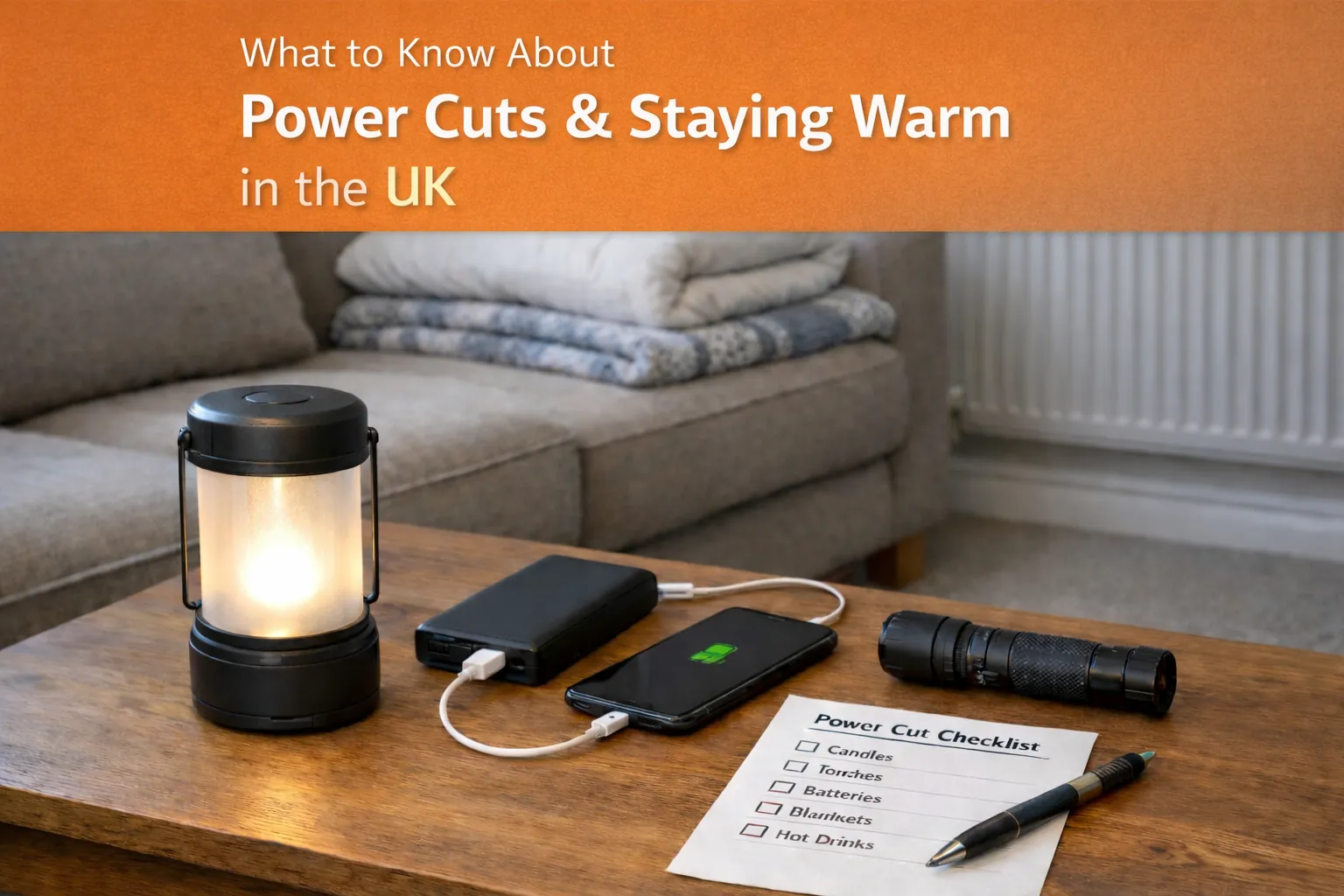
Must-have
- Torch + spare batteries
- Lantern for the main room
- Power bank + cable
- Warm layers + thick socks
- Duvet/throws in an accessible place
- Basic no-cook food + water
- A plan for one warm room
Nice-to-have
- Draft excluders
- Extra throws
- Thermal curtains (long-term)
- Hot water bottles
- A small insulated mat/rug for cold floors
Recommended Reading
Use these to build your full system around power cuts and home warmth uk:
- [How to Stay Warm Safely During a Winter Power Cut]
- [Best Torches for Power Cuts (UK Reality)]
- [Solar Chargers in the UK: A Reality Check]
- [Kettle-Only Emergency Meals UK (Realistic UK Flat Setup)]
- [72-Hour Emergency Meals from Any UK Supermarket]
- [Hygiene During Water or Power Disruption]
- [Mental Health & Stress During UK Emergencies]
.GOV for official prepping advice
FAQ
Question: What’s the safest way to stay warm during a power cut?
Answer: For power cuts and home warmth uk, the safest approach is to heat people, not rooms: warm layers, duvets/blankets, and a single “warm room” with doors shut and curtains closed.
Question: Should I use candles during a power cut?
Answer: Candles can be used carefully for short periods, but they shouldn’t be your main plan. For power cuts and home warmth uk, torches and a lantern are safer and reduce fire risk.
Question: Can I use a camping stove indoors to heat the room?
Answer: No. For power cuts and home warmth uk, avoid indoor fuel-burning options. They can create dangerous fumes and carbon monoxide risk in enclosed spaces.
Question: What’s the minimum kit for power cuts and home warmth UK planning?
Answer: Torch, lantern, spare batteries, a charged power bank, warm layers, duvets/throws, and a one-room plan. That covers warmth, light, and communication.
Question: How do I stop my home feeling damp after the heating goes off?
Answer: When power returns, warm one room first, wipe condensation from windows/sills, and ventilate briefly once safe heat is back. Damp control is a key part of power cuts and home warmth uk in real UK homes.
Question: What if I live in a flat with electric heating only?
Answer: Focus on insulating yourself and creating a warm room: layers, bedding, rugs, and safe lighting. Flats can cool quickly, so power cuts and home warmth uk planning matters even more for renters.