Most UK emergencies don’t look dramatic — they look inconvenient. A stomach bug in the house. A burst pipe. A short power cut. A week where you can’t get to the shops. In all of these, hygiene preparedness uk matters more than most people realise, because hygiene is what stops small problems turning into miserable, expensive ones.
This hub guide is your calm, UK-realistic system for hygiene preparedness uk. No tactical nonsense, no fear. Just practical habits and a simple supply plan that works in flats, rentals, and normal homes.
👉 [Prepping Without Panic UK A Beginner’s Guide]
👉 [How Much Water Do UK Homes Really Need?]
👉 [Power Cuts & Home Warmth (UK)]
What Hygiene Preparedness UK Actually Means
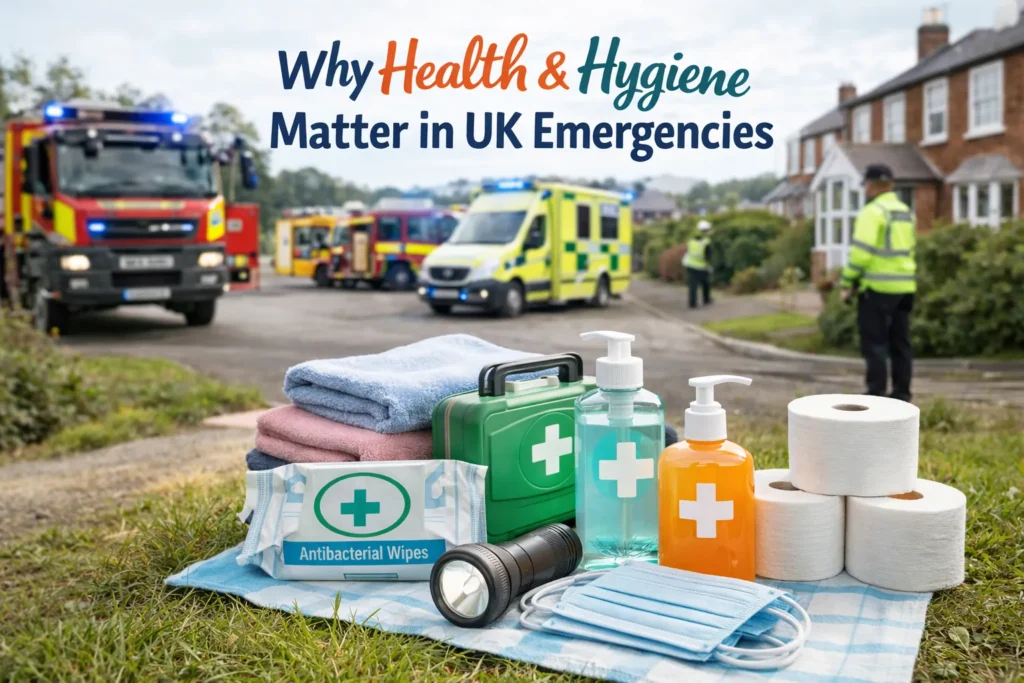
Hygiene preparedness uk means you can keep hands, bodies, surfaces, laundry, and toilets reasonably clean when:
- Water pressure drops or water is temporarily off
- Power is out and routines are disrupted
- Someone is ill and you need infection control at home
- Shops are empty or you can’t leave the house
It’s not about perfection. Hygiene preparedness uk is about lowering risk and keeping morale up when life is messy.
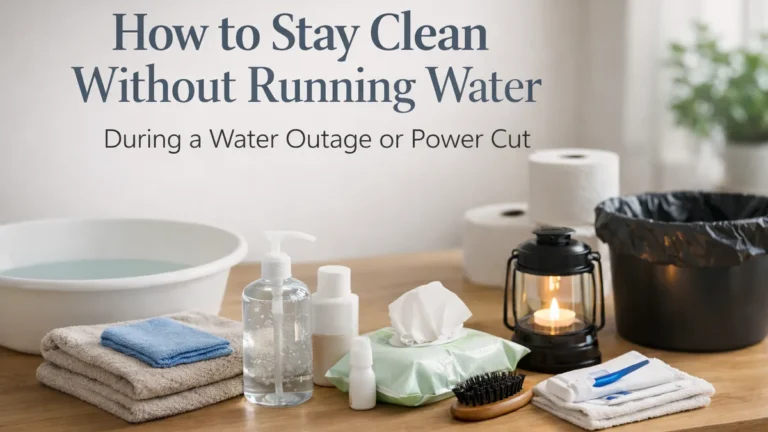
👉 [Hygiene During Water or Power Disruption]
The UK Reality, Hygiene Problems Usually Start With Water and Routine
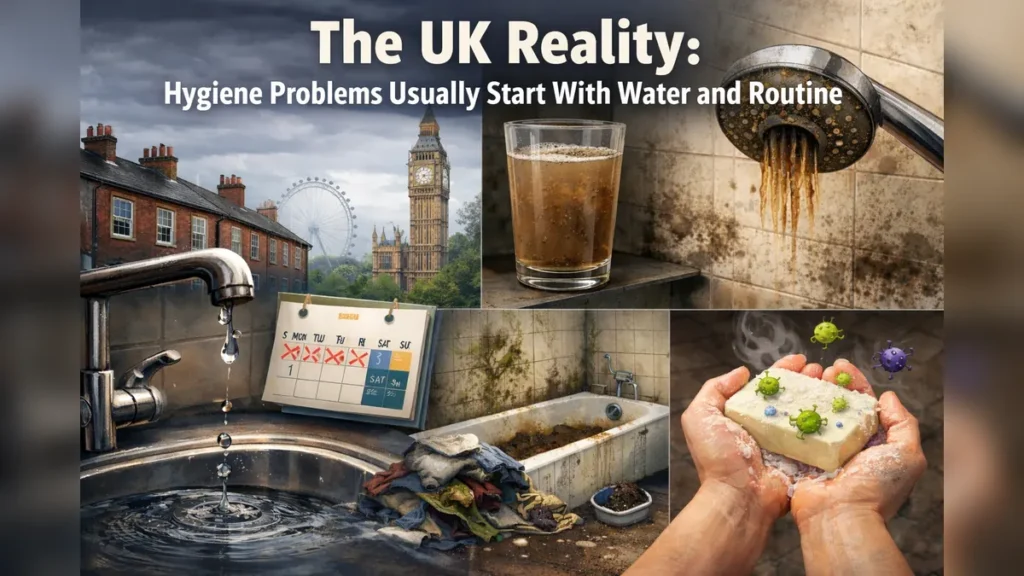
Hygiene collapses when two things happen:
1) You can’t wash normally
No shower, no normal dishwashing, no easy laundry, toilets get awkward.
2) You stop doing the small daily habits
Hand washing gets skipped. Towels don’t get changed. Bins overflow. Dishes pile up. That’s when smells, illness spread, and stress spike.
Hygiene preparedness uk is mostly about keeping the “small habits” possible even during disruption.
The Big Three: What To Protect First
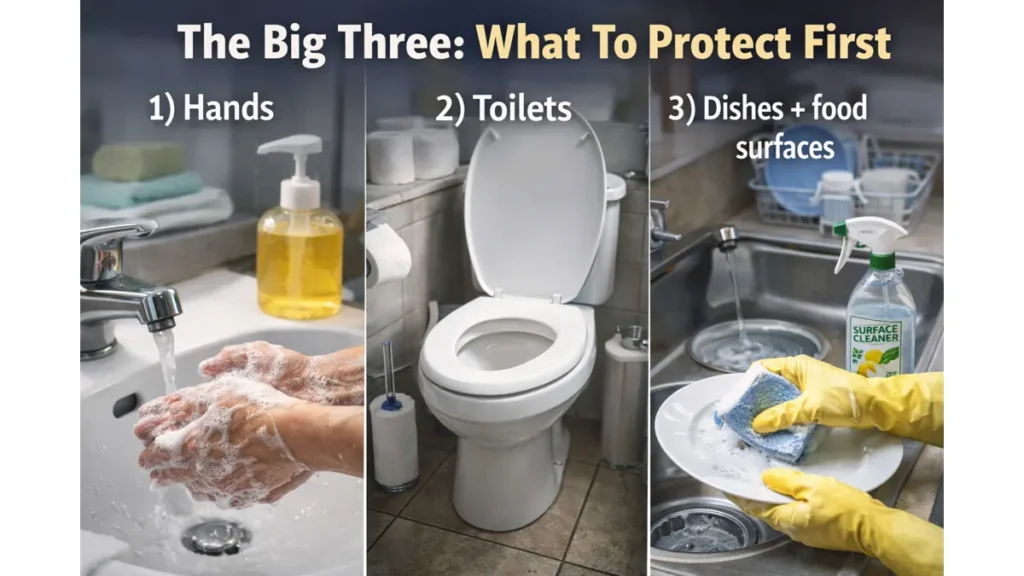
If you do nothing else, build hygiene preparedness uk around:
1) Hands
Clean hands reduce illness spread more than almost anything.
2) Toilets
If toilets become difficult, everything becomes difficult.
3) Dishes + food surfaces
Dirty dishes and contaminated surfaces are a fast route to stomach bugs.
This focus makes hygiene preparedness uk simple and realistic.
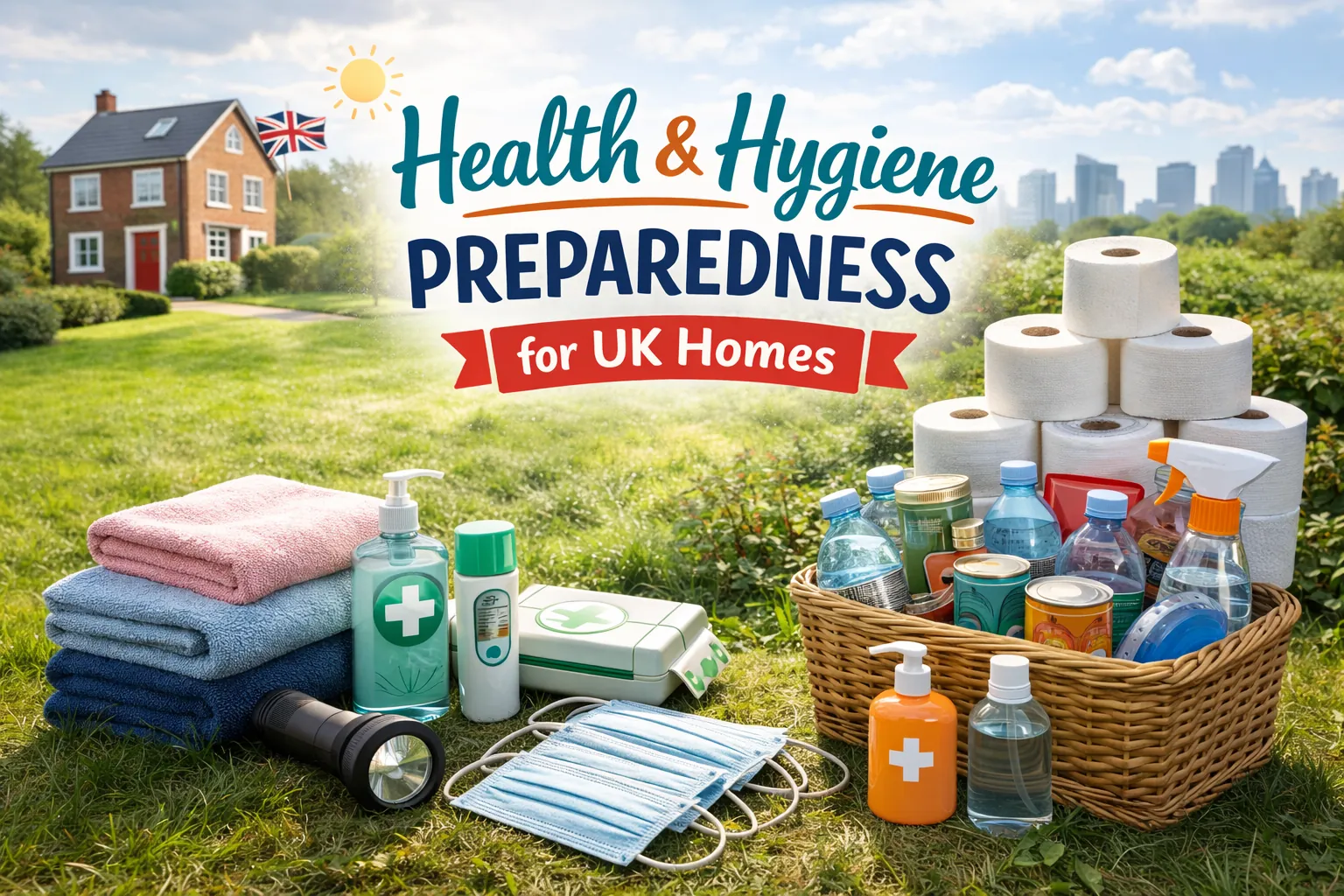
The Calm Hygiene Kit for UK Homes
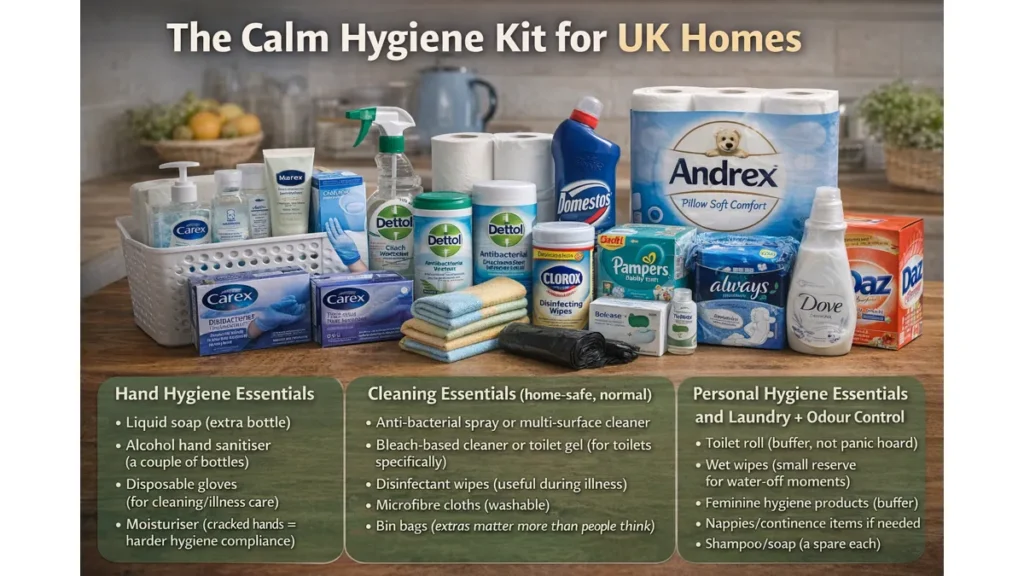
You don’t need a “bug-out” hygiene kit. You need a normal home buffer.
Hand hygiene essentials
- Liquid soap (extra bottle)
- Alcohol hand sanitiser (a couple of bottles)
- Disposable gloves (for cleaning/illness care)
- Moisturiser (cracked hands = harder hygiene compliance)
Cleaning essentials (home-safe, normal)
- Anti-bacterial spray or multi-surface cleaner
- Bleach-based cleaner or toilet gel
- Disinfectant wipes
- Microfibre cloths
- Bin bags
Personal hygiene essentials
- Toilet roll
- Wet wipes
- Feminine hygiene products
- Nappies/continence items if needed
- Shampoo/soap
Laundry + odour control
- Laundry detergent
- Stain remover
- Bicarbonate of soda
- Air freshener isn’t “prep”… but morale counts
That’s a complete hygiene preparedness uk foundation.
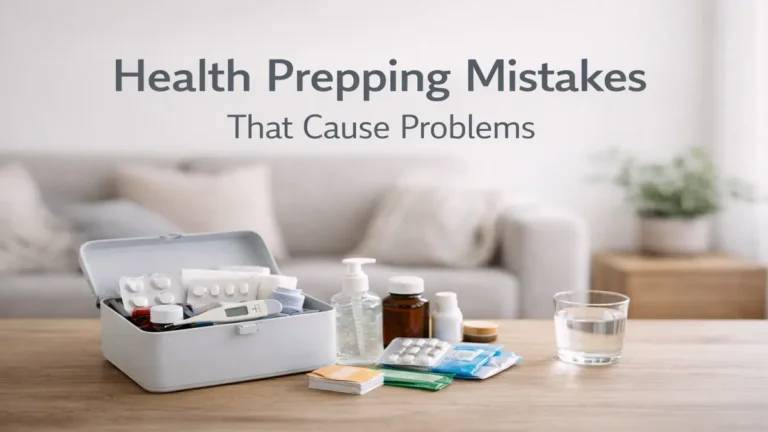
👉 [Health Prepping Mistakes That Cause Problems]
Hygiene Preparedness UK for Illness at Home
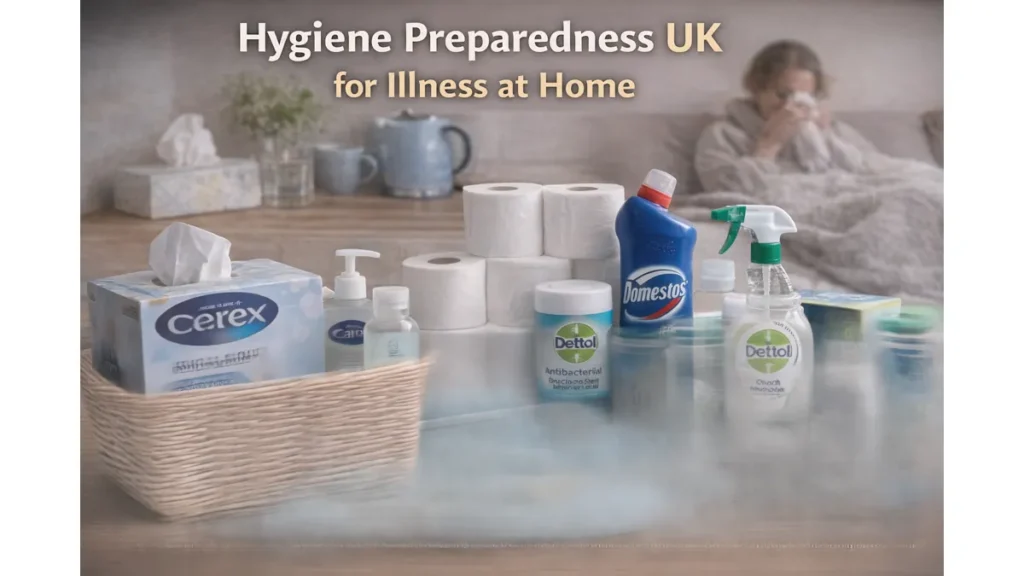
The contain and clean plan when someone’s ill, means hygiene preparedness uk is less about supplies and more about process.
A simple illness routine that works
- One “sick person towel”
- One “illness cleaning cloth”
- A dedicated bin bag near the bed/sofa
- Wipe high-touch surfaces daily door handles, taps, phone screens
- Ventilate rooms briefly
Why this matters
Most household illness spread happens through hands and surfaces. Hygiene preparedness uk is the ability to keep those clean without making the whole house feel like a hospital.
Hygiene Preparedness UK During Water Loss
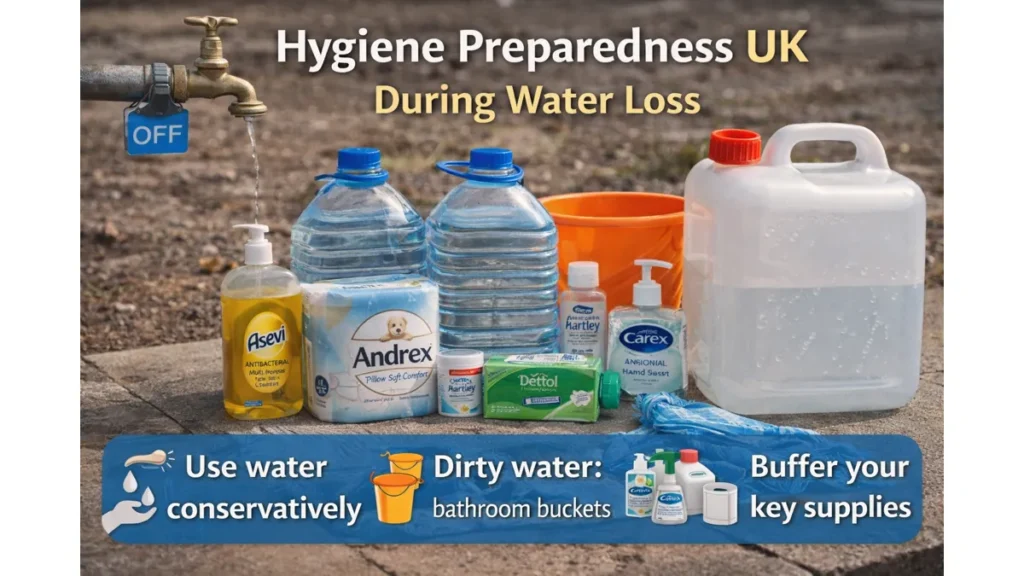
If water is limited, the priority is hands, toilets, and dishes.
Hand washing with limited water
- Use soap + a small bowl of water
- Use sanitiser when appropriate
Dishwashing when water is tight
- Switch to “one-pot” meals
- Use a bowl method: wash → rinse with minimal water
- Use kettle water if needed
Toilets when water is off (UK reality)
In many UK homes, toilets still flush for a while. If water is fully off:
- Keep bin bags and cleaning supplies ready
- Focus on keeping the toilet area clean and odour-managed
This is exactly why hygiene preparedness uk pairs naturally with water planning.
👉 [How Much Water Do UK Homes Really Need?]
👉 [Common UK Water Prepping Mistakes]
Hygiene Preparedness UK During Power Cuts
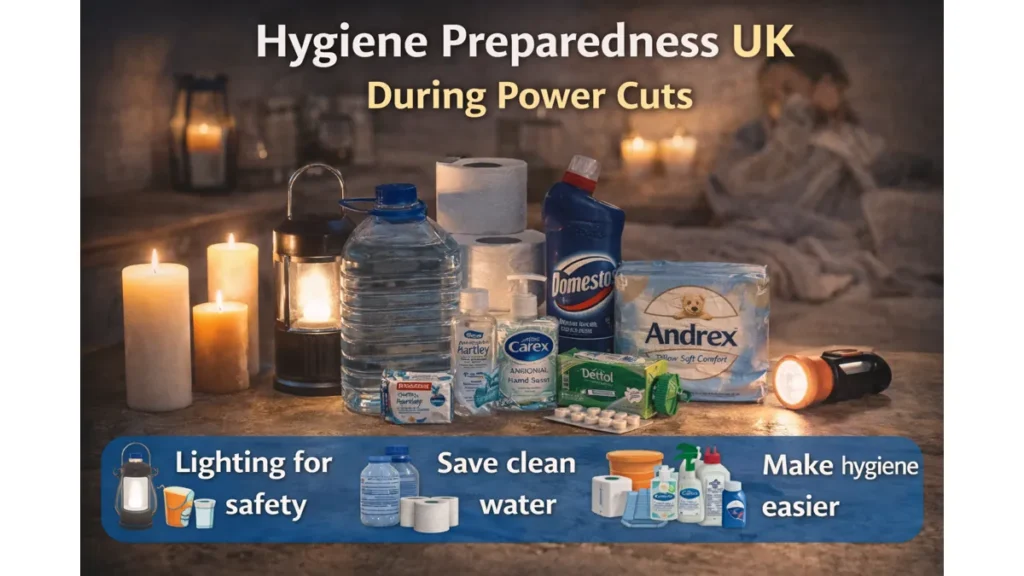
Power cuts change hygiene in sneaky ways:
- You can’t see properly (cleaning gets skipped)
- You avoid washing up (cold water, no light)
- You stop ventilating (condensation and damp creep in)
Hygiene preparedness uk during power cuts is mainly:
- Reliable lighting
- A simple “minimum hygiene routine”
- Keeping damp under control
👉 [Power Cuts & Home Warmth (UK)]
👉 [Condensation and Damp After the Cut]
A Simple Weekly Routine That Makes Hygiene Preparedness UK Automatic
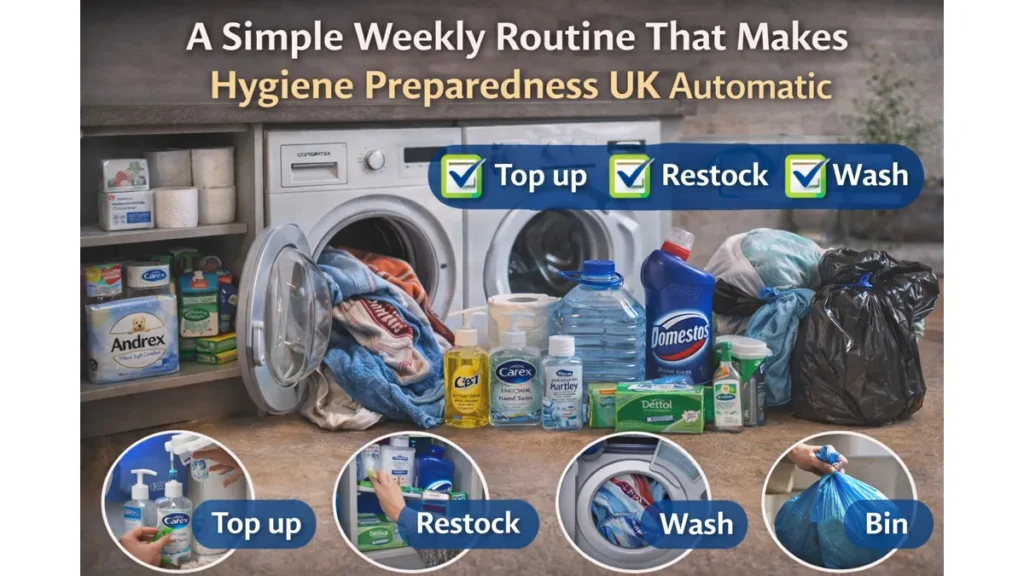
If you want hygiene preparedness uk without thinking about it, do this:
- Weekly top-up list: soap, bin bags, toilet cleaner, sanitiser
- One spare rule: keep one spare of core items (soap, cleaner, detergent)
- Replace-as-you-open: when you open the spare, add it to the shopping list
This turns hygiene preparedness uk into a boring habit — which is the goal.
Hygiene Preparedness UK for Renters and Small Flats
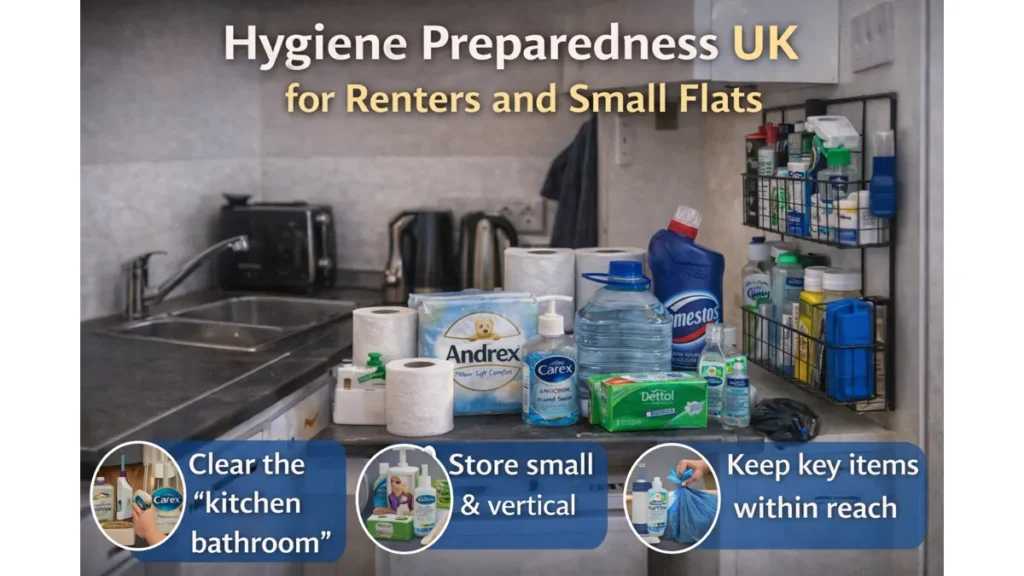
Small homes can do hygiene preparedness uk better than big homes because you can keep it simple.
Best ideas:
- A single “hygiene box” (lidded, labelled)
- Under-sink caddy with spares (soap, wipes, gloves)
- Over-door organiser for small items
Avoid:
- Storing paper goods where damp is common
- Buying massive bulk that clutters the only cupboard you’ve got
👉 [Emergency Planning for Renters in the UK]
Common Mistakes That Break Hygiene Preparedness
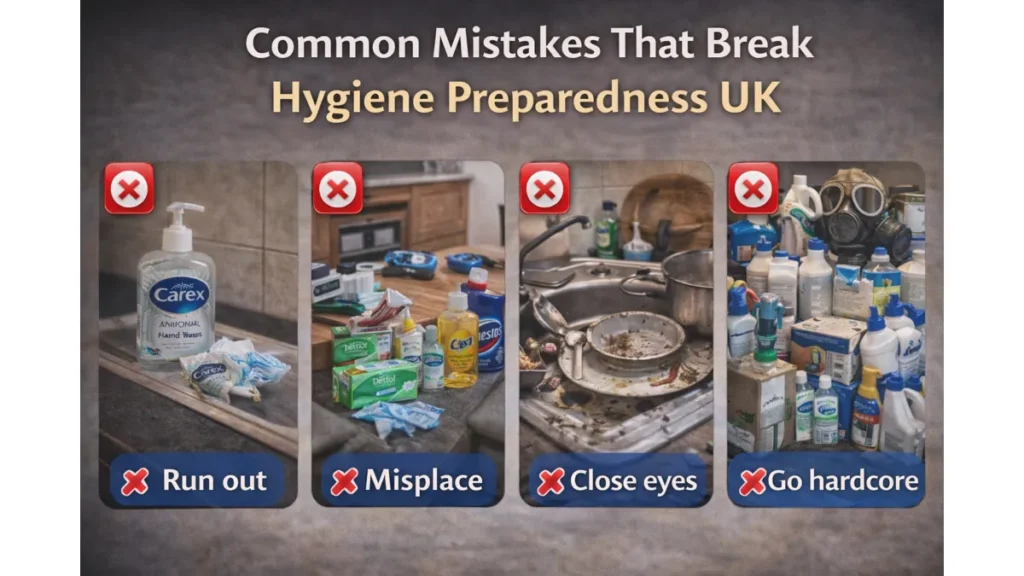
Mistake 1: Only buying “stuff” and skipping routines
Supplies are useless if habits collapse.
Mistake 2: No plan for illness
The most common disruption is someone being ill at home.
Mistake 3: Forgetting bins and laundry
When bins and laundry fail, the house feels unliveable fast.
Mistake 4: Assuming you’ll “just cope” without water
Water loss changes hygiene immediately. Hygiene preparedness uk needs a small water plan alongside it.
👉 [Hygiene During Water or Power Disruption]
👉 [Basic First Aid Every UK Home Should Have]
The Calm Checklist (Copy/Paste)
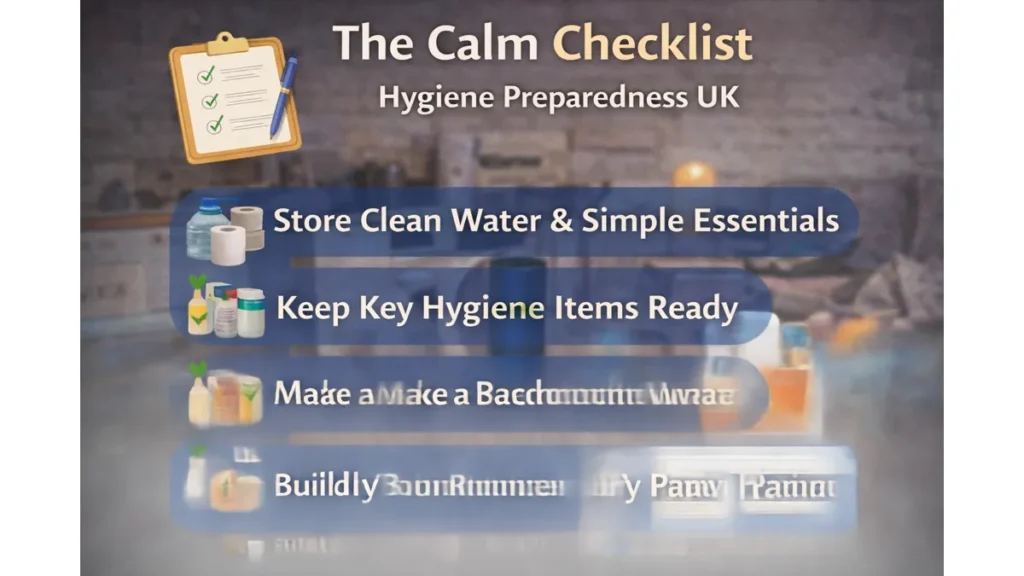
If you want a quick, realistic hygiene preparedness uk checklist:
- One spare: soap, toilet cleaner, multi-surface cleaner, detergent
- Hand sanitiser + disposable gloves
- Wet wipes (small reserve, not your main plan)
- Bin bags (extras) + a cleaning cloth supply
- Illness routine: separate towel + wipe-down plan
- Water backup supports hygiene (hands/toilets/dishes)
That’s enough for most UK disruptions.
FAQ
1) What does hygiene preparedness uk mean for a normal household?
Answer: Hygiene preparedness means you can keep hands, toilets, surfaces, and basic routines clean during short disruptions like illness, water loss, delivery delays, or power cuts—without stress or extreme gear.
2) What are the most important items for hygiene preparedness?
Answer: Soap, toilet cleaner, multi-surface cleaner, bin bags, hand sanitiser, and a small reserve of wipes and gloves. The key is keeping routines going, not building a huge stash.
3) How can I do hygiene preparedness uk if water is off?
Answer: Prioritise hands, toilets, and dishes. Use soap with small-bowl washing, sanitiser as a backup, and minimise dishes with simple meals. Pair your hygiene plan with a realistic water buffer.
4) How is hygiene preparedness uk different during a power cut?
Answer: Power cuts affect lighting and routine. Good lighting makes hygiene easier, and a “minimum hygiene routine” prevents dishes, bins, and damp from spiralling.
5) Is hand sanitiser enough for hygiene preparedness uk?
Answer: Hand sanitiser helps, but it doesn’t fully replace soap and water for all situations. Hygiene preparedness uk works best with both, especially during illness.
6) What’s the biggest mistake people make with hygiene preparedness uk?
Answer: Buying products but not setting a simple routine. A calm weekly top-up habit and an illness plan are what make hygiene preparedness uk actually work.
7) How do renters manage hygiene preparedness uk with limited space?
Answer: Use one labelled hygiene box and keep one spare of key items. Store paper goods in dry places and avoid bulky purchases that create clutter.
Next Steps
👉 [Hygiene During Water or Power Disruption]
👉 [Health Prepping Mistakes That Cause Problems]
👉 [Basic First Aid Every UK Home Should Have]
👉 [How Much Water Do UK Homes Really Need?]
👉 [Power Cuts & Home Warmth (UK)]
Check out the .gov prepping website