Emergency Water Storage UK is easy to overthink and even easier to get wrong. Most beginners do not fail because they do nothing. They fail because they do something awkward, expensive, or hard to use when life is already stressful.
This post shows you the most common beginner mistakes and the calm fixes that make emergency water storage feel normal in a UK home.
Build your calm 72 hour water setup today. Start with the minimum that removes stress. A few bottles, one pourable container, and labels. No panic buying. No complicated gear.
Key takeaways
- A minimum of 2.5 to 3 litres of drinking water per person per day is recommended for survival, and 10 litres per person per day is more comfortable because it also supports basic cooking and hygiene.
- Most problems in Emergency Water Storage UK are about containers, location, and rotation, not gadgets.
- If you receive a boil water notice, bringing water to the boil is advised to kill or deactivate microbes and make water safe to drink.
- A simple system beats a big stash. Small usable containers, labels, and a weekly habit win.
Quick start in 10 minutes
If you do nothing else today, do this. It prevents the most common Emergency Water Storage UK mistakes in one hit.
- Pick one storage spot that is cool, clean, and out of sunlight
- Choose two container sizes
- 1 to 2 litre bottles for grab and go and easy rotation
- 5 to 10 litre container with a tap for daily use
- Label each container with filled date and replace date
- Put a jug or funnel beside your stash
- Set a weekly reminder to rotate two bottles
If your the type who likes to start at the beginning and go step by step then start here Prepping UK The Complete System
The Calm Baseline for Emergency Water Storage UK
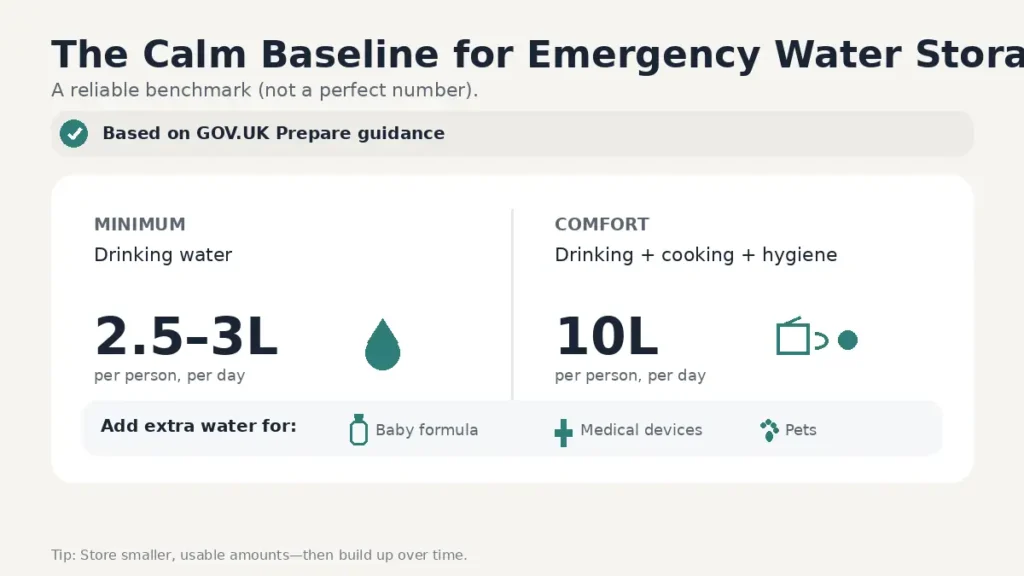
There is no single perfect number, but there is a reliable benchmark to aim at.
GOV.UK Prepare suggests a minimum of 2.5 to 3 litres of drinking water per person per day, and 10 litres per person per day will make you more comfortable by also providing for basic cooking and hygiene needs. It also notes additional water might be needed for baby formula, medical devices, and pets.
Use this baseline to keep your Emergency Water Storage UK plan realistic.
- Minimum level for drinking only
2.5 to 3 litres per person per day - Comfortable level for drinking plus basic cooking and hygiene
10 litres per person per day - Add a buffer for baby formula, pets, and medical needs
Internal link
How much water do UK homes really need
GOV.UK Prepare get prepared for emergencies
Emergency Water Storage UK
12 Common Mistakes Beginners Make
Mistake 1
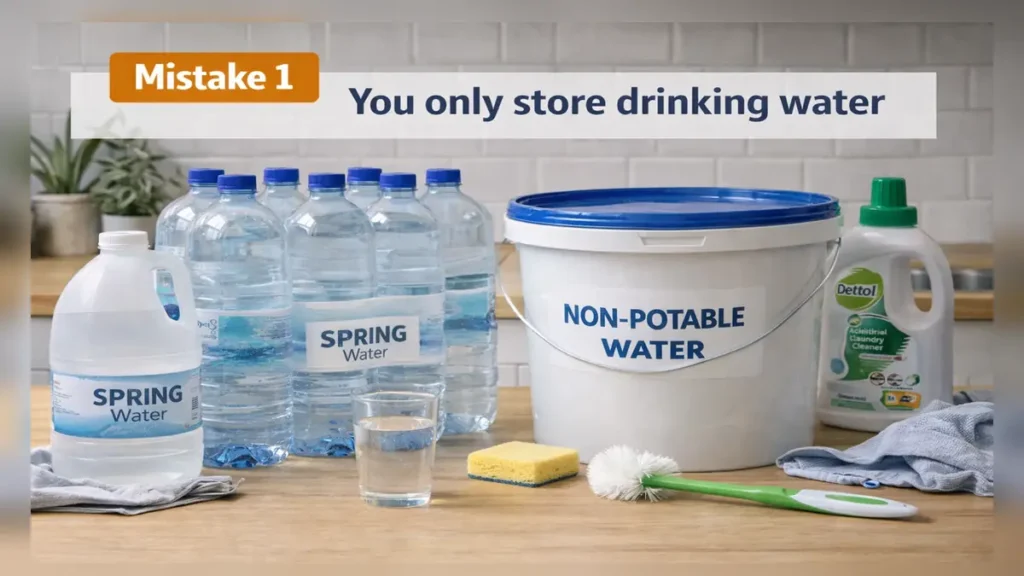
You only store drinking water
What it looks like
A couple of multipacks and a sense of relief, until you realise you still need water for cooking, teeth, and basic washing.
Why it backfires
You start rationing immediately, and everything feels tense.
Calm fix
Split your plan into two simple lanes.
- Drinking water
- Household water for cooking and basic hygiene
This is the first big step to making Emergency Water Storage UK feel normal.
Mistake 2
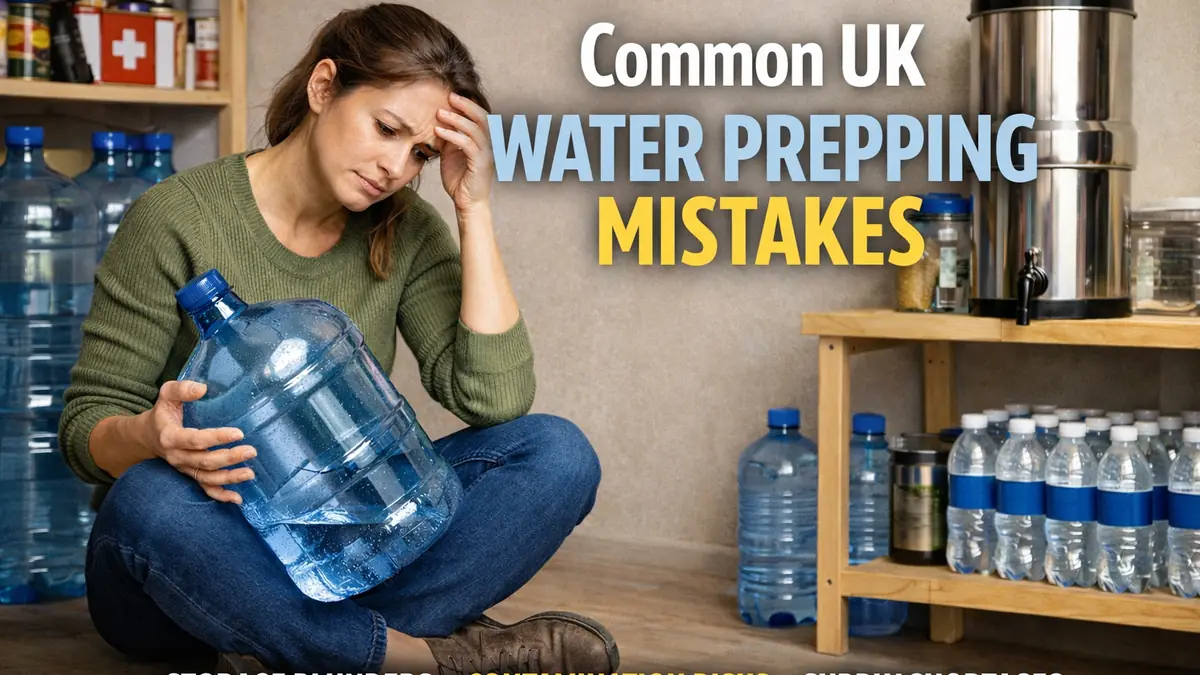
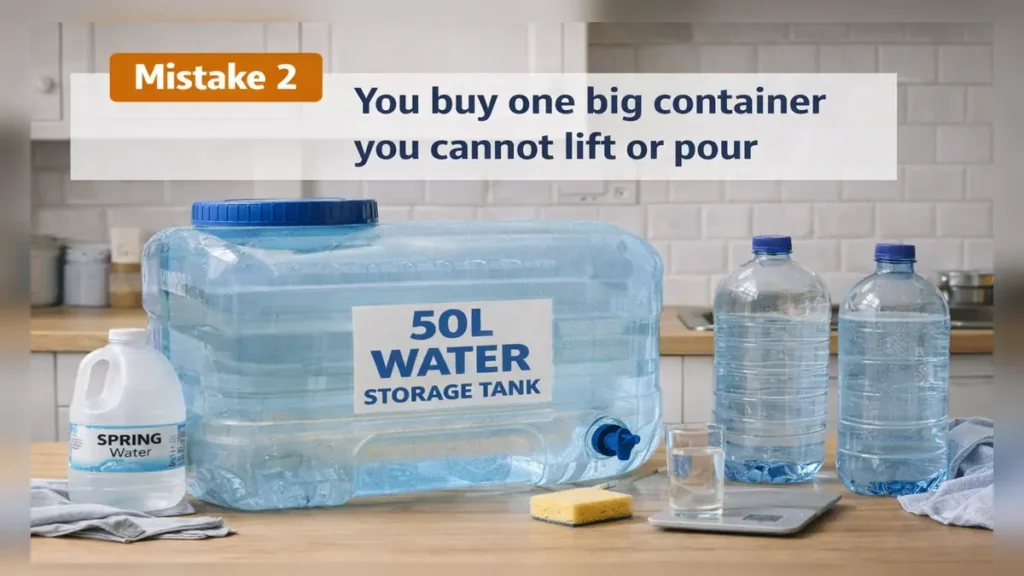
You buy one big container you cannot lift or pour
What it looks like
A huge container that is technically efficient, but practically useless when it is full.
Why it backfires
If you cannot pour it cleanly, you will waste water and your patience.
Calm fix
Use a mix of sizes that match real life.
- Bottles you can carry with one hand
- A tap container you can use at the sink without spilling
If you have stairs, keep some water upstairs. Convenience prevents bad decisions at 2am.
Mistake 3
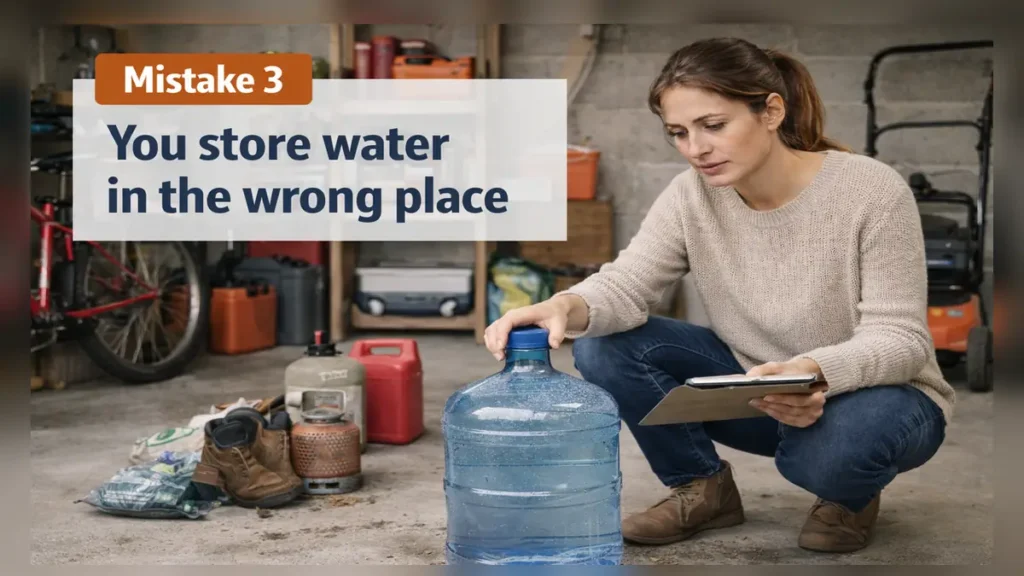
You store water in the wrong place
What it looks like
Conservatory, garage window, loft, beside a boiler, or outside in a shed.
Why it backfires
Heat and sunlight make water storage less reliable, and storage advice for bottled water recommends a clean, cool, dry place away from sunlight.
Calm fix
Store water indoors in a cool, dark spot such as an under stairs cupboard or a wardrobe base. Keep it away from strong smelling chemicals and fuels.
Internal link
Where to store water in UK homes
External link
British Bottled Water storage advice
Mistake 4
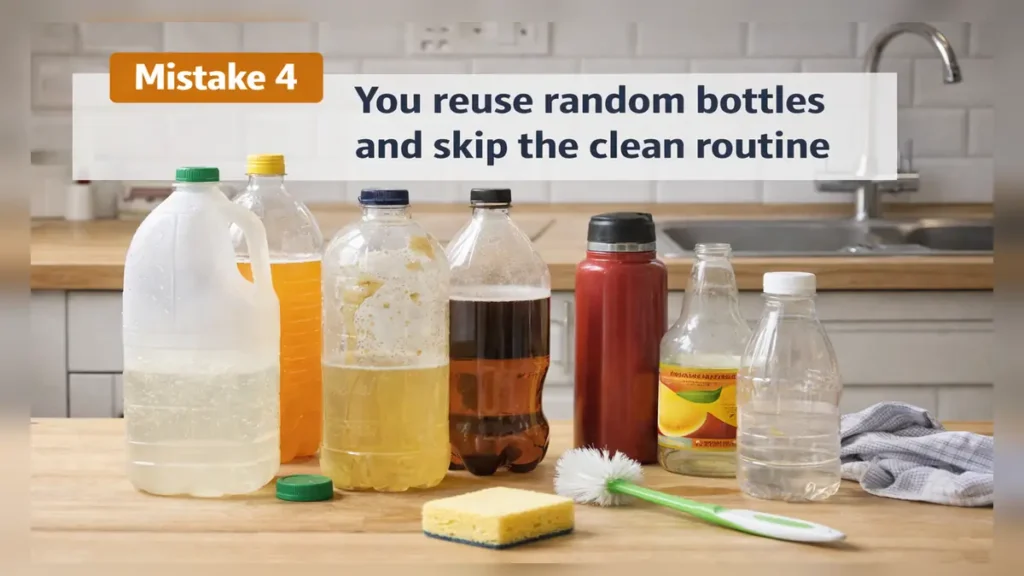
You reuse random bottles and skip the clean routine
What it looks like
Old juice bottles, odd containers, vague dates, and a smell you do not trust.
Why it backfires
If you doubt it, you will not drink it. Then you end up panic buying again.
Calm fix
Use food grade containers designed for water, or new bottles. Keep refilling simple.
- Clean hands
- Clean funnel
- Label the date
- Rotate regularly
Perfection is not required for Emergency Water Storage UK. Consistency is.
Mistake 5
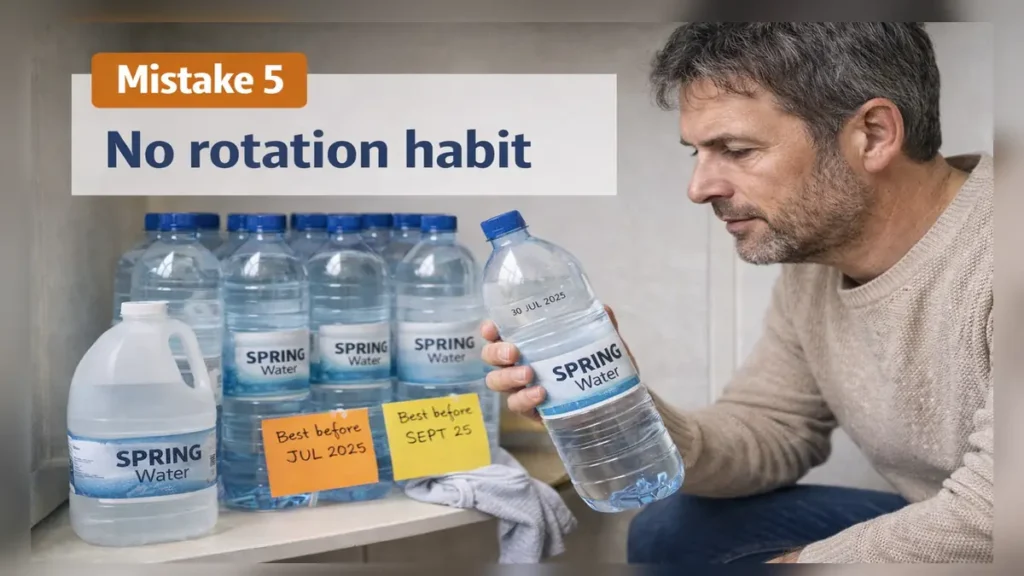
No rotation habit
What it looks like
A stash that sits untouched until you need it.
Why it backfires
When the moment comes, you hesitate, question it, and replace everything at once.
Calm fix
Make rotation automatic.
- Keep a few bottles at the front of the kitchen where you will actually drink them
- Replace them from your back stock on your normal shop day
- Rotate two bottles weekly
Water industry guidance notes shelf life is typically advised by the manufacturer and usually a maximum of 2 years when stored in suitable conditions, but rotation is what makes it feel effortless.
Mistake 6
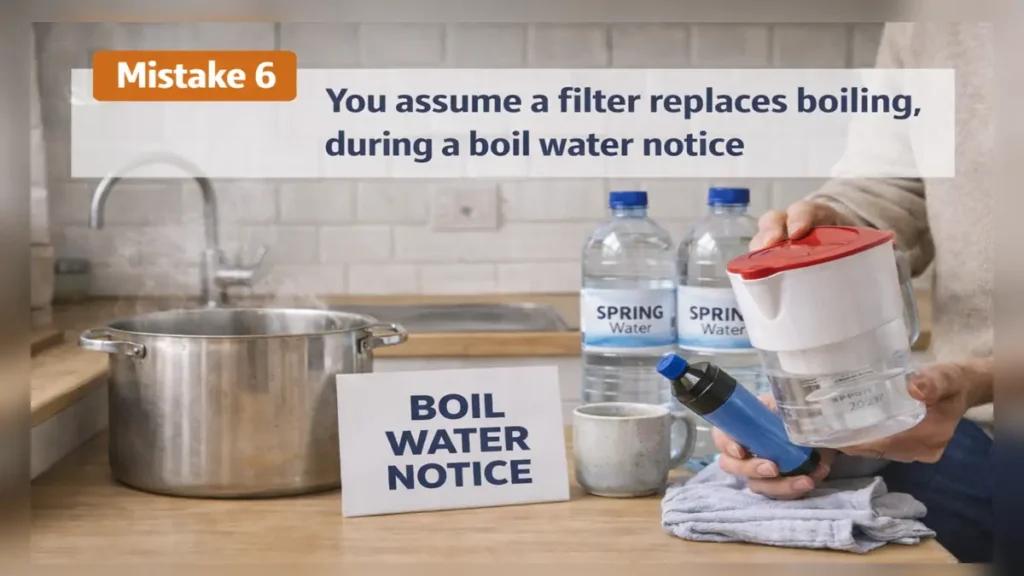
You assume a filter replaces boiling, during a boil water notice
What it looks like
I will just run it through a jug filter.
Why it backfires
A boil water notice is a public health warning. The Drinking Water Inspectorate advises bringing water to the boil so bacteria or viruses are killed or deactivated, making the water safe to drink.
The Consumer Council for Water also explains you must boil tap water before drinking it and before using it for brushing teeth, making ice, preparing food, and cleaning feeding equipment.
Calm fix
If you receive a boil water notice, follow the instruction to boil. Keep it simple.
- Use boiled water for drinking and anything that goes in your mouth
- Use boiled water for baby feeding equipment and food preparation
- Follow your local water supplier updates
Internal link suggestion
Do you need water filters in the UK
Drinking Water Inspectorate receiving a boil water notice
Mistake 7
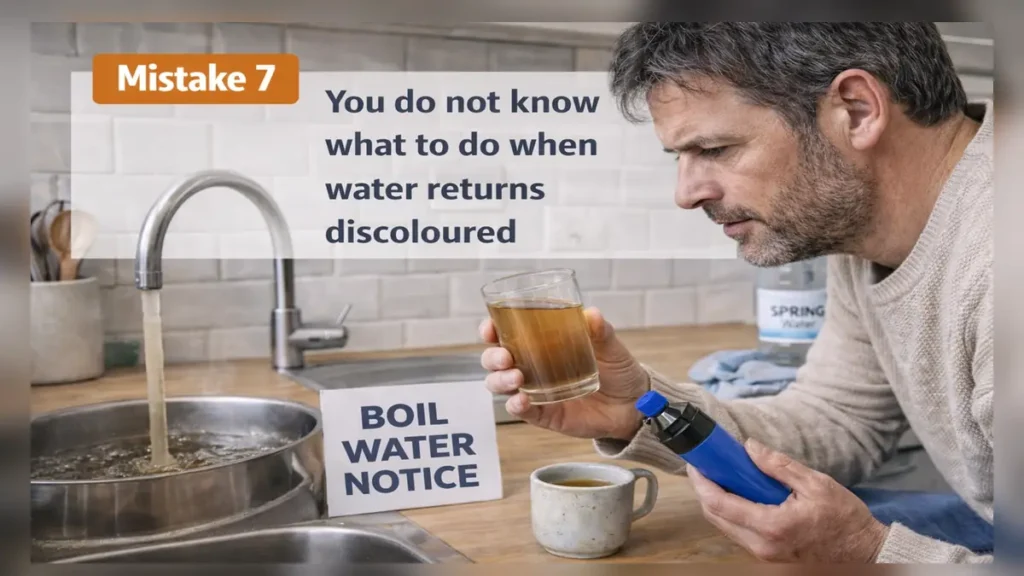
You do not know what to do when water returns discoloured
What it looks like
The tap runs cloudy or brownish after maintenance or a burst, and everyone panics.
Why it backfires
You waste stored water unnecessarily, or you run appliances before the water clears.
Calm fix
Scottish Water explains discoloured water can happen during maintenance or repairs and provides guidance on what to do.
A practical rule is to run the cold kitchen tap for several minutes until it runs clear, and avoid drawing sediment into internal pipework and appliances.
Mistake 8
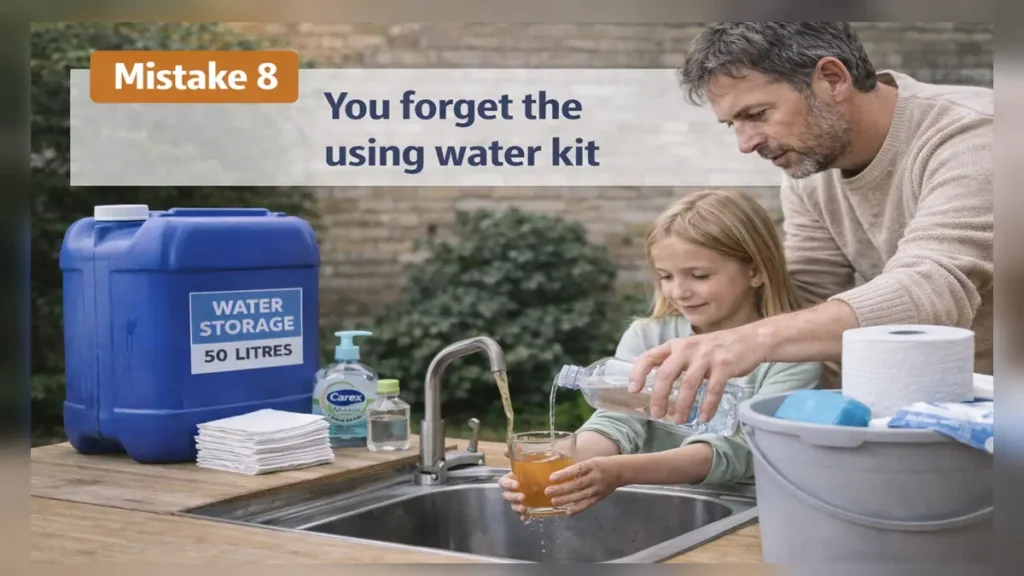
You forget the using water kit
What it looks like
You have water, but no jug, no funnel, no easy way to pour, and you spill half of it.
Why it backfires
Spills waste water and add stress fast.
Calm fix
Keep a small using kit beside your water.
- Jug and funnel
- One bottle per person for daily drinking
- Wipes and hand sanitiser
- Bin bags
This is a quiet upgrade that makes Emergency Water Storage UK actually usable.
Mistake 9
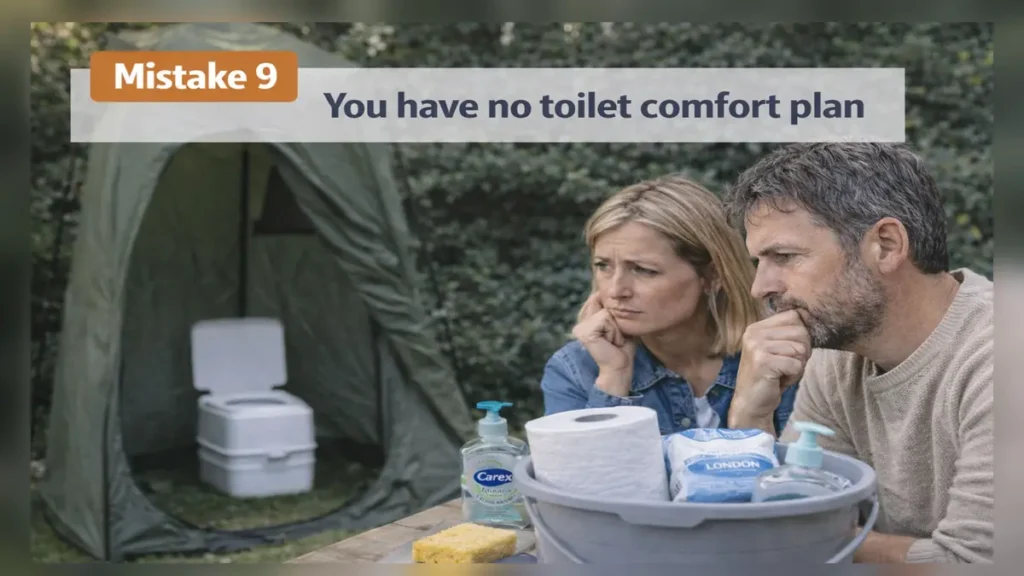
You have no toilet comfort plan
What it looks like
Everything is fine until toilet use becomes the main issue.
Why it backfires
Comfort drops, stress spikes, and the household mood changes fast.
Calm fix
Keep it realistic for short disruptions.
- Allocate a little household water for minimal flushing
- Store wipes and hand gel with your water supplies
- Keep a simple backup plan stored together so you can find it quickly
Mistake 10
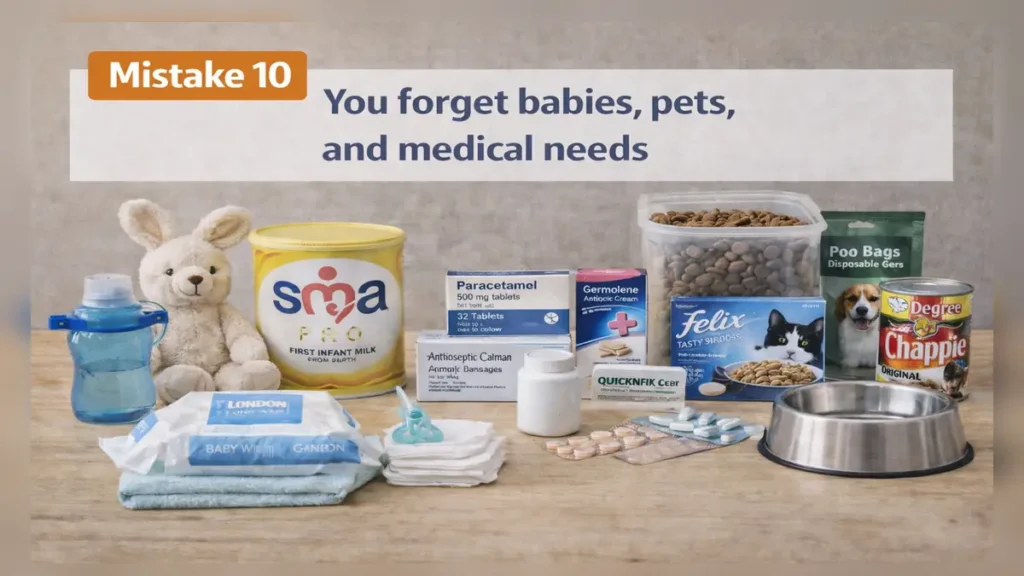
You forget babies, pets, and medical needs
What it looks like
The water math only includes adults.
Why it backfires
Baby formula, medical devices, and pets can change your daily needs. GOV.UK Prepare explicitly flags these as reasons you may need additional water.
Calm fix
Add a small buffer. Even a small buffer removes a lot of anxiety.
Mistake 11
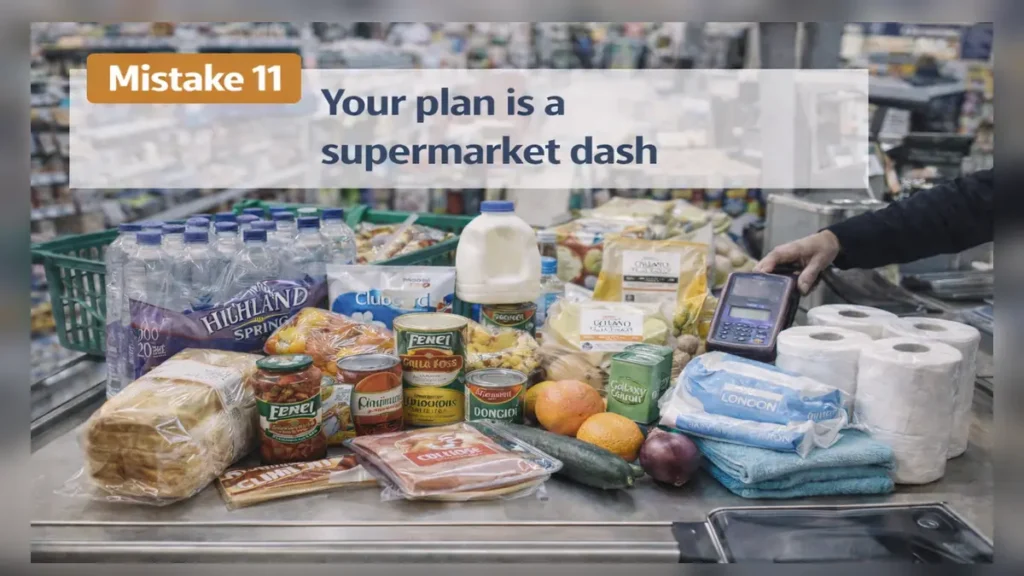
Your plan is a supermarket dash
What it looks like
I will just buy bottled water if something happens.
Why it backfires
You compete with everyone else when shelves thin out.
Calm fix
Build a refill habit instead of a panic habit.
- Add bottled water gradually on normal shopping days
- Keep refillable containers ready
- Rotate as you go
This is how Emergency Water Storage UK stays calm and affordable.
Mistake 12
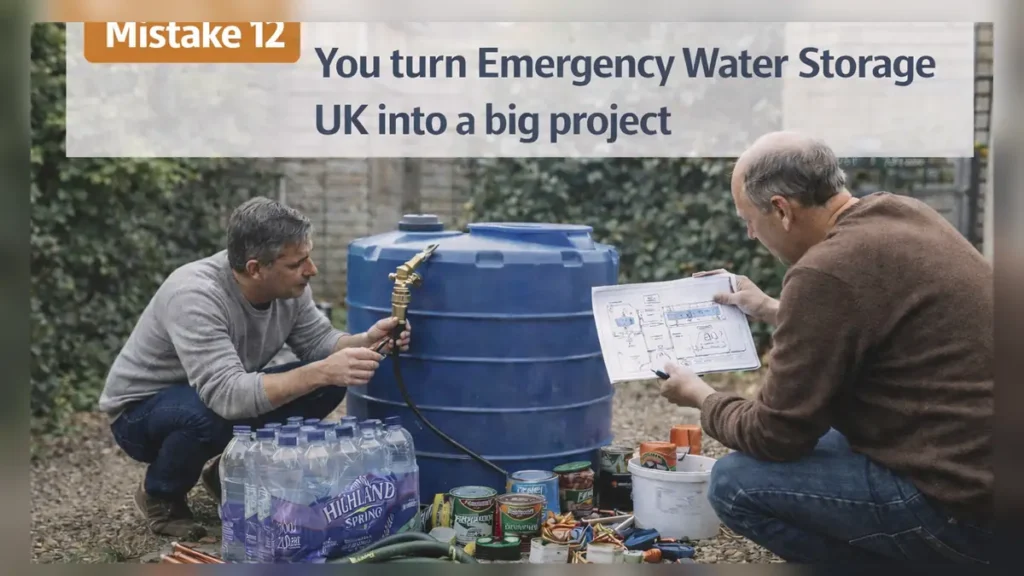
You turn Emergency Water Storage UK into a big project
What it looks like
Weeks of research, no setup, no habit, no confidence.
Why it backfires
The plan never becomes real.
Calm fix
Use a simple four week build.
- Week 1 add bottles
- Week 2 add a tap container
- Week 3 add labels and dates
- Week 4 add the using water kit
Small steps build a system you will actually maintain.
Two Emergency Water Storage setups you can copy
Small flat setup
- Twelve 2 litre bottles stored under bed or wardrobe base
- One 5 litre container for daily use
- Using water kit with jug, wipes, hand sanitiser
Why it works
Light, tidy, easy to rotate, no heavy lifting.
Family home setup
- Twenty four 2 litre bottles rotated through weekly shops
- One or two 10 litre tap containers
- Extra buffer for pets, baby formula, or medical needs
Why it works
Comfortable daily use without stress.
Link
Internal link
water-storage-small-flats-uk/
Smart mistakes that feel sensible but are not
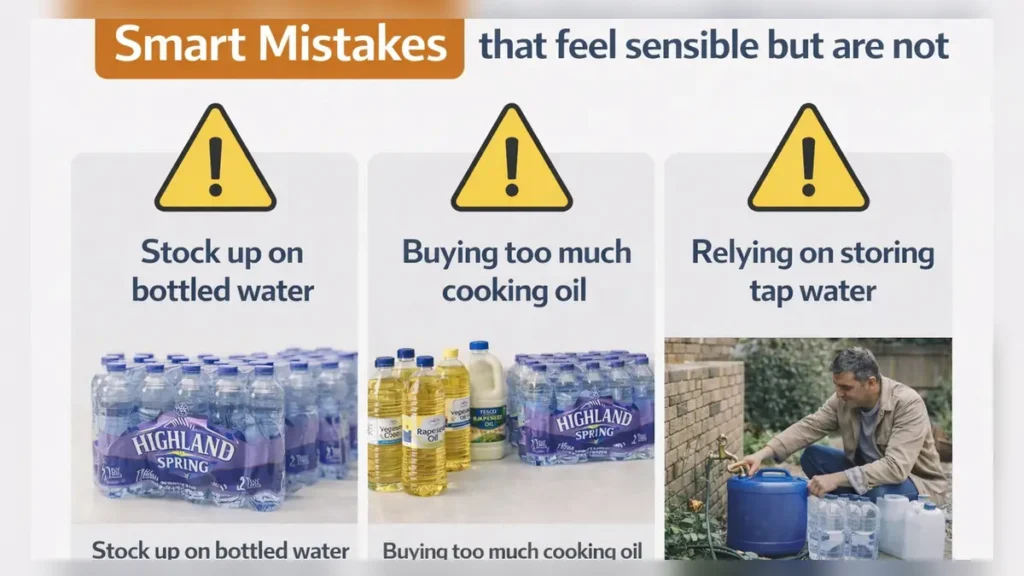
These show up in almost every Emergency Water Storage UK conversation.
- Buying a filter first instead of storing water
- Storing water outside or in sunlight to save space, despite storage advice recommending away from sunlight
- One massive container instead of usable sizes you can pour
If you fix container sizes, storage location, and rotation, you eliminate most beginner stress.
FAQs
How much water should I store for Emergency Water Storage UK
A minimum of 2.5 to 3 litres of drinking water per person per day is recommended for survival, and 10 litres per person per day is more comfortable because it supports basic cooking and hygiene too. Add more if you need water for baby formula, pets, or medical devices.
What is the biggest mistake beginners make with Emergency Water Storage UK
The biggest mistake is storing water in a way that is hard to use. Too heavy, stored in heat or sunlight, no rotation habit, and no plan for using water day to day. Storage advice recommends a clean, cool, dry place away from sunlight.
What should I do during a boil water notice
Follow the instruction to boil. The Drinking Water Inspectorate advises bringing water to the boil so microbes are killed or deactivated, making it safe to drink. The Consumer Council for Water notes you must boil tap water before drinking it and before using it for brushing teeth, ice, food prep, and cleaning feeding equipment.
Why is my tap water discoloured after repairs or an outage
Discoloured water can occur when maintenance or repairs disturb sediment. Scottish Water advises running the cold kitchen tap for several minutes until the water runs clear.
Conclusion
Emergency Water Storage UK works best when it is boring. Store water in a cool, dark place away from sunlight, use containers you can pour without stress, label and rotate, and know what to do during a boil water notice.
Do that, and you stop relying on last minute shop runs. You have a calm, usable system.
Next Read