Published by: Preppers Only
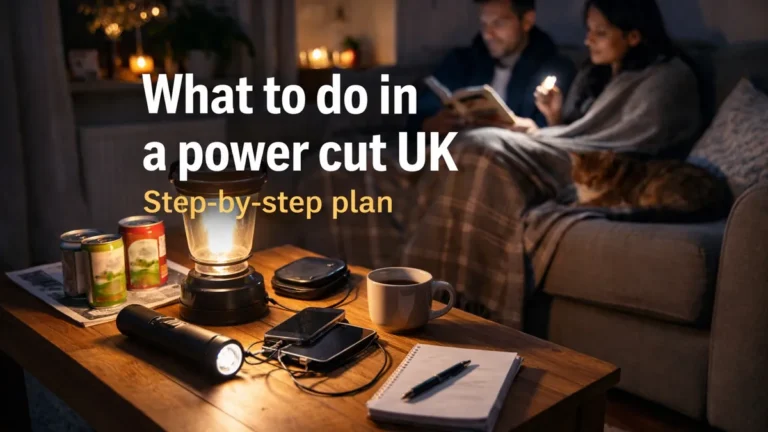
UK power cuts can happen at any time, so it’s important to be prepared. In the UK, most power cuts are not dramatic—but they are disruptive. When electricity fails, lighting disappears, heating controls stop, and phones begin to drain far faster than people expect. What starts as a minor inconvenience can become stressful within hours, particularly in winter or after dark.
British power cuts are usually local and temporary, but their effects are predictable. This guide focuses on the three areas that matter most in UK homes:
Lighting, charging, and warmth.
No panic. No off-grid living. Just practical, legal preparation that works in Britain.
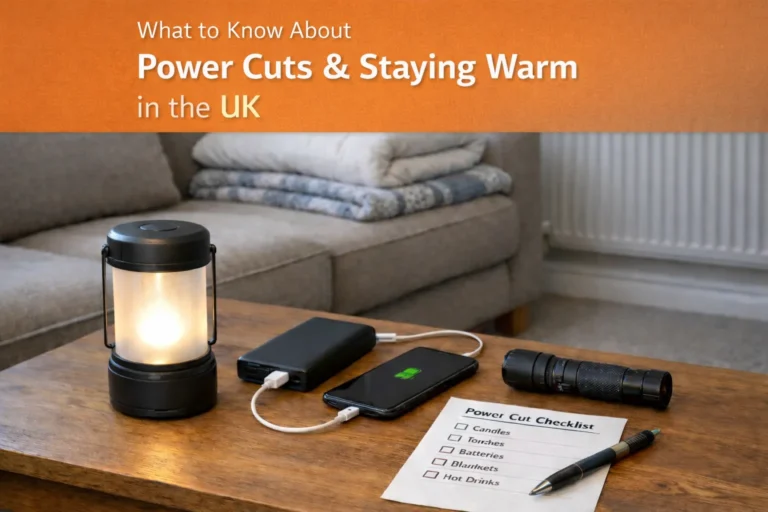
UK Power-Cut Essentials
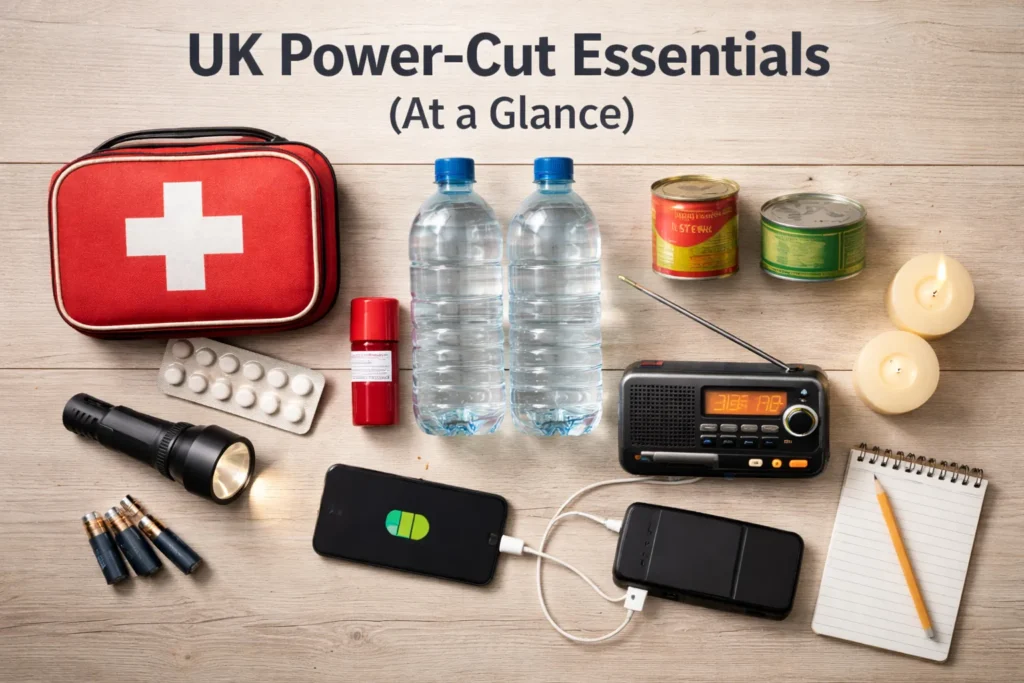
A simple setup covers most situations:
- Battery lighting (torches and lanterns, not candles)
- Phone power banks
- Warm layers and blankets stored together
- No indoor fuel use
- Low-cost, low-complexity items
If you can see clearly, stay warm, and keep your phone working, you are prepared for the majority of UK outages.
Why Power Cuts Matter More Than People Expect
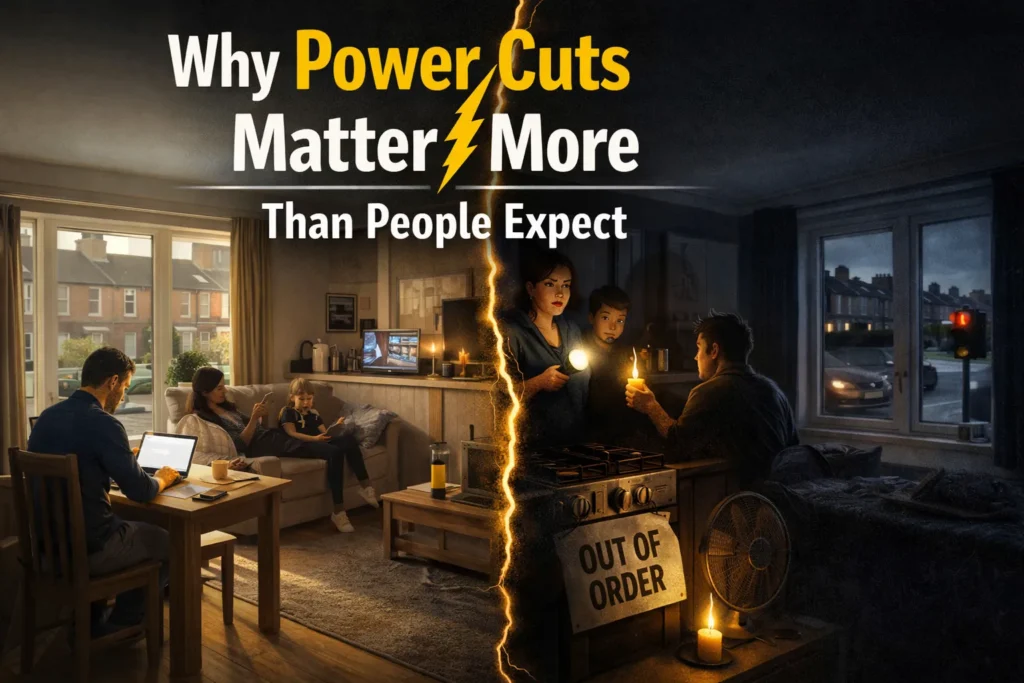
In modern UK homes, electricity underpins almost everything:
- Lighting after dark
- Heating controls and boilers
- Phone charging and mobile data
- Internet routers and home alarms
A short outage may be inconvenient. A longer one—especially during cold weather—quickly affects comfort, safety, and communication. Flats are particularly vulnerable due to lifts, shared systems, and water pressure dependence, but houses are not immune.
Preparedness is not about expecting disaster. It is about removing avoidable stress when systems fail temporarily.
Start Here [Power Cuts & Home Warmth (UK)]
Realistic UK Power-Cut Causes
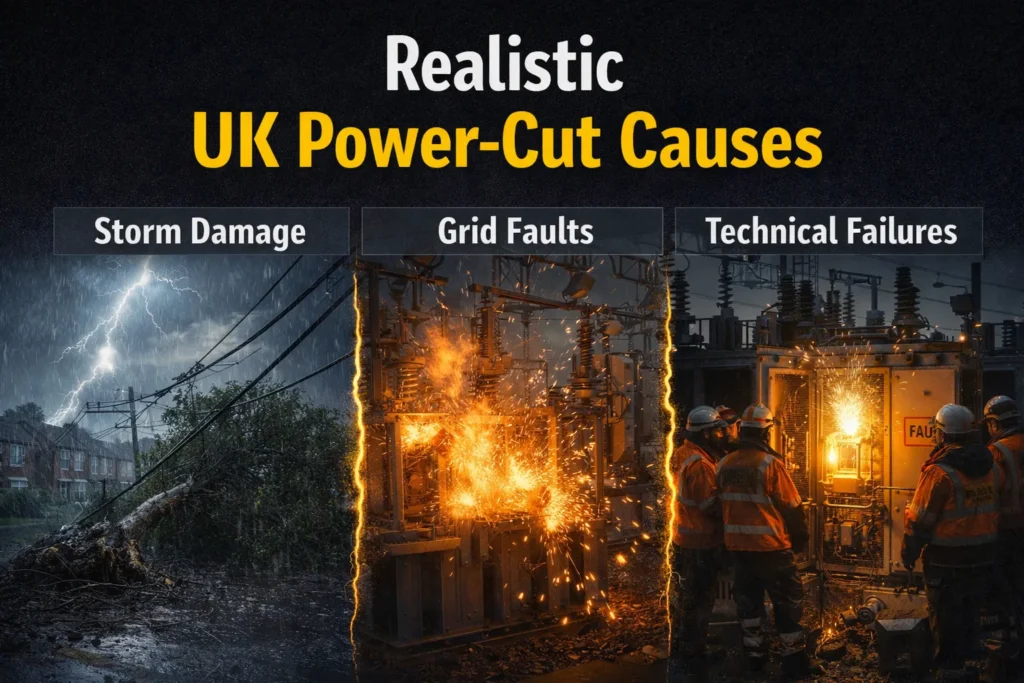
Most UK power cuts are caused by:
- Storms and high winds
- Snow and ice
- Equipment failure
- Road accidents damaging infrastructure
Rural areas experience outages more often, but urban areas can be affected just as suddenly. Restoration times vary from hours to days depending on damage and weather conditions.
Lighting: Your First Priority After Dark
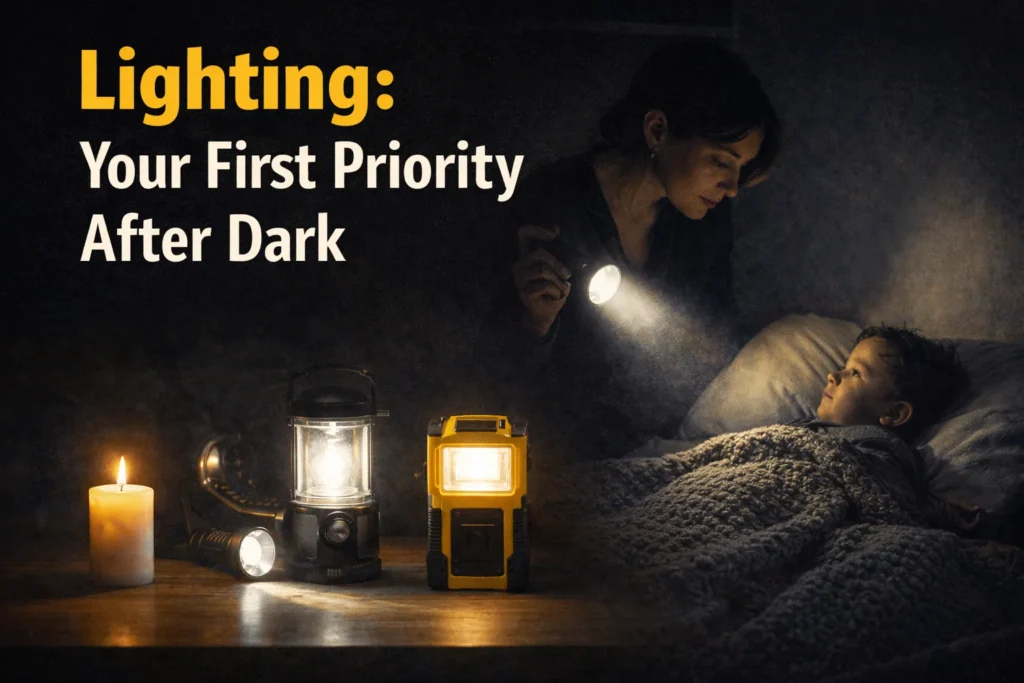
When the power goes out, lighting becomes the immediate priority.
What Actually Works
Torches
- Reliable and inexpensive
- Easy to store
- Ideal for movement and task lighting
Recommended minimum:
- One torch per adult
- Spare batteries or rechargeable options
Battery Lanterns
- Light an entire room
- Reduce eye strain
- Hands-free and safer than torches alone
Lanterns are particularly useful during evenings when moving around the home.
Candles: Use With Caution
Candles are familiar but risky.
- Fire hazard
- Poor, uneven lighting
- Dangerous if unattended
If used at all:
- Keep use brief
- Place on stable, non-flammable surfaces
- Never use while sleeping
Battery lighting is always safer and should be the default.
Phone Charging & Power Banks
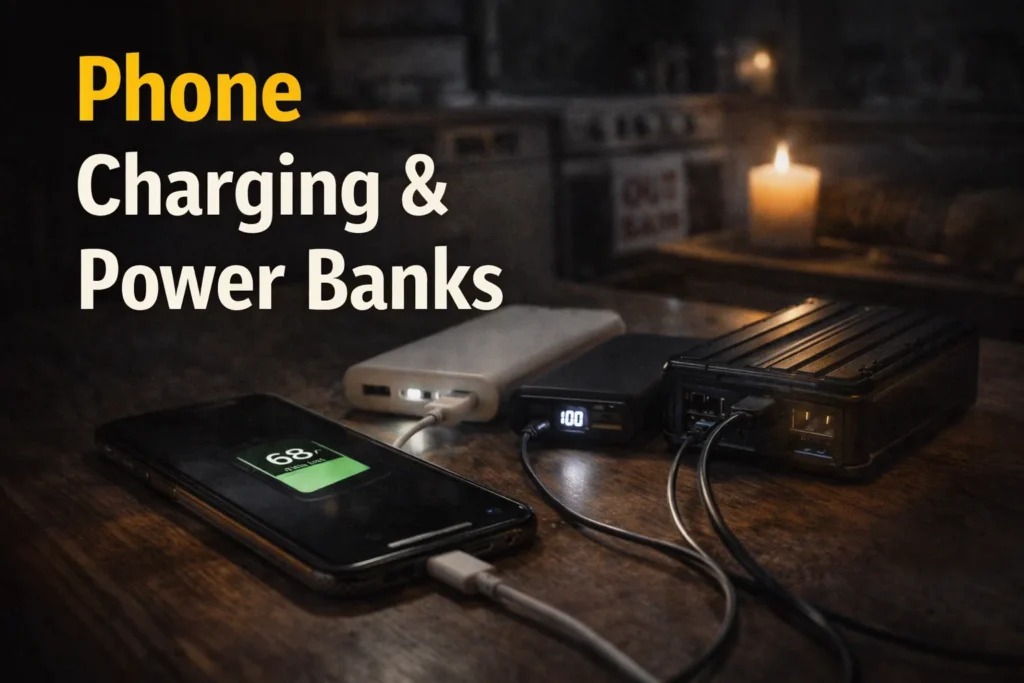
Your phone is your:
- Torch
- Information source
- Emergency contact tool
Power Banks
Power banks are essential for UK households.
- Small and inexpensive
- Easy to store
- Reliable during short and medium outages
Best practice:
- One power bank per regular phone user
- Keep fully charged
- Recharge immediately after any outage or severe weather warning
Avoid relying on:
- Laptops
- Car charging alone
- High-drain gadgets
Simplicity and reliability matter more than capacity.
Solar Chargers: The UK Reality Check
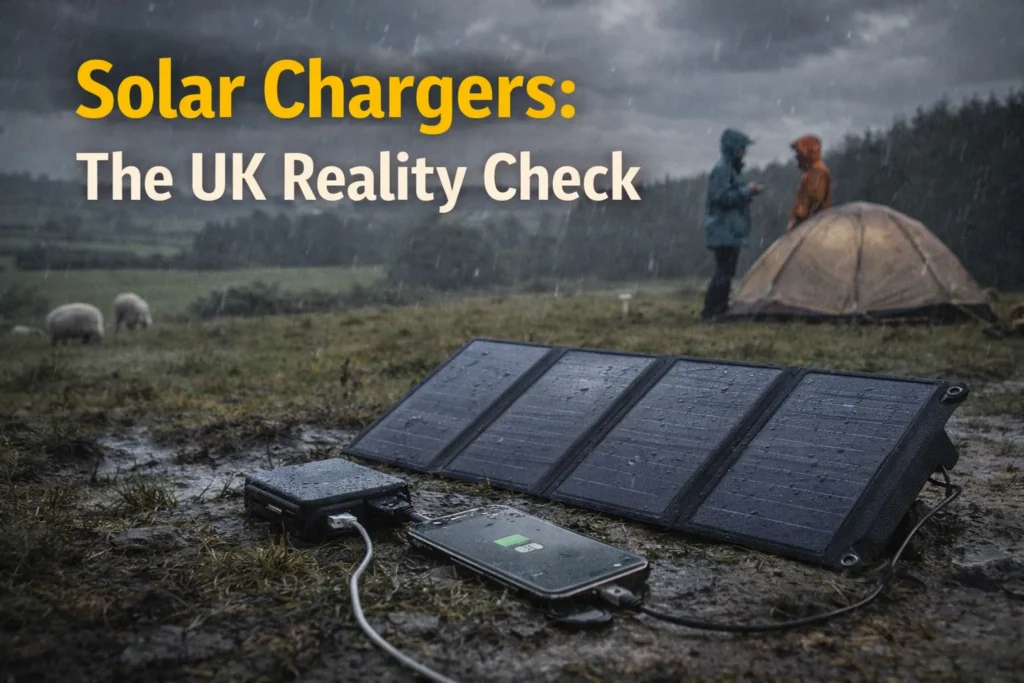
Solar chargers can help—but expectations must remain realistic.
Pros
- Renewable
- Useful in summer
- Suitable for topping up power banks
Cons
- Slow in UK weather
- Poor winter performance
- Unreliable as a sole solution
In Britain, solar works best as a supplement, not a replacement for stored power.
Heating & Warmth During Power Cuts

This is where UK outages become serious, particularly in winter.
Many people assume homes will stay warm for hours. In reality, modern properties cool faster than expected once heating systems stop—especially flats and older houses.
What Not to Do
Never use:
- BBQs indoors
- Camping stoves inside
- Improvised fuel heating
Carbon monoxide is invisible, odourless, and deadly.
What Actually Helps
- Layered clothing
- Blankets and throws
- Hot water bottles (prepared in advance if possible)
- Staying in one room
Managing body heat is far more effective than attempting to heat an entire property.
Cooking Without Power
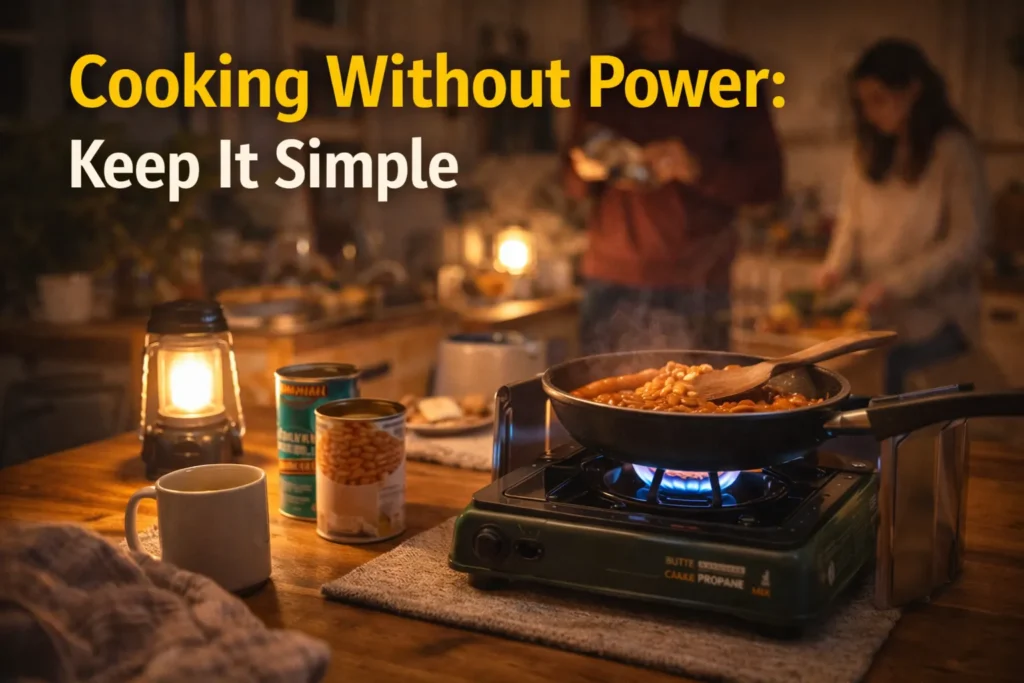
For most UK power cuts, cooking is unnecessary.
Short Outages
- Eat no-cook food
- Use pre-prepared meals
- Avoid complicated setups
If Cooking Is Necessary
- Only use equipment designed for indoor use
- Ensure ventilation
- Follow manufacturer instructions exactly
Most UK outages do not justify cooking solutions. Keeping food simple reduces risk.
Flats vs Houses: UK Differences

Flats
- Lift failures
- Water pressure issues
- Heavy reliance on electricity for access and services
Lighting and phone charging are critical.
Houses
- More storage space
- Greater flexibility
- Faster heat loss in older properties
Both benefit from the same basic preparation.
Common UK Power-Cut Mistakes
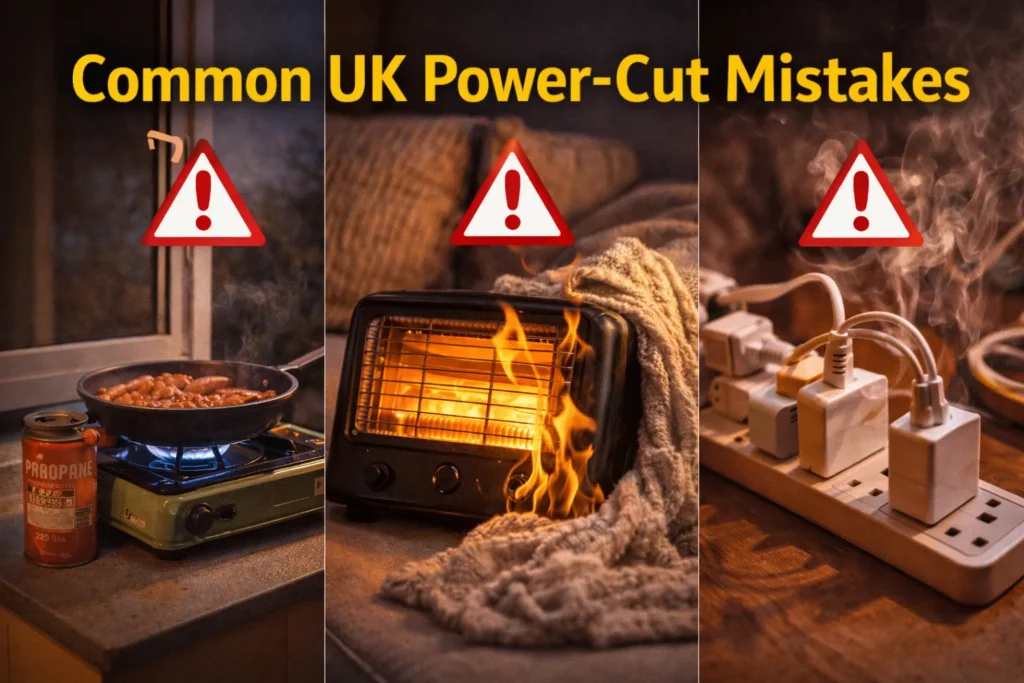
These increase risk and stress:
- Relying on candles
- Forgetting phone charging
- Ignoring winter impact
- Buying gadgets instead of basics
Preparedness should reduce complexity, not add to it.
Simple UK Power-Cut Plan
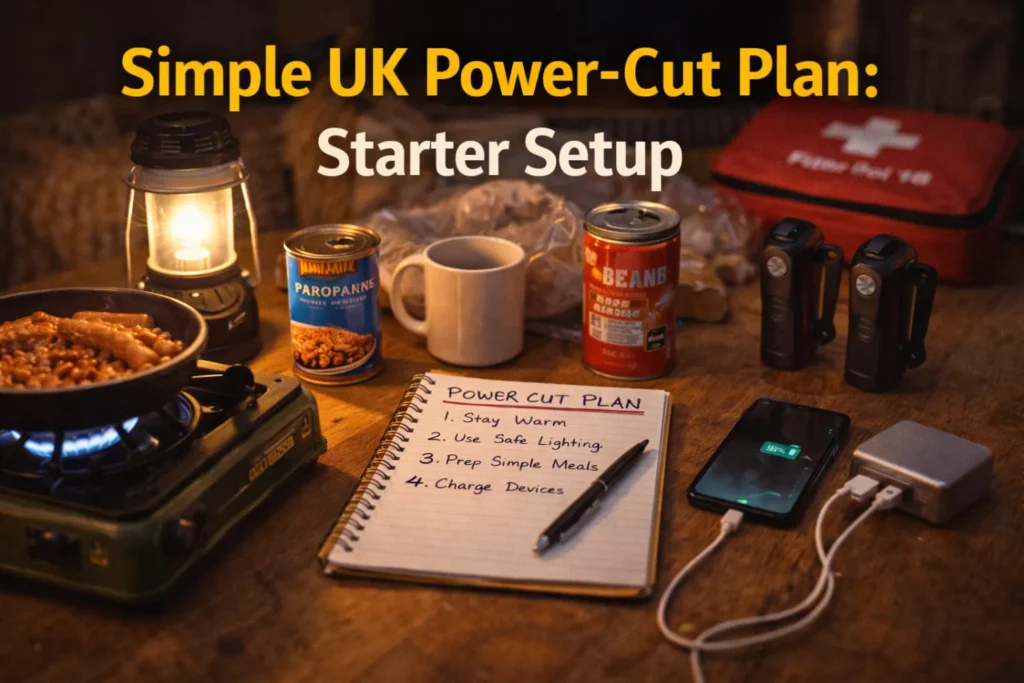
A minimum setup for most households:
- 2–3 torches
- 1–2 battery lanterns
- Power banks for all phones
- Warm layers stored together
T
his covers the majority of UK power cuts comfortably.
Additional Tips for Staying Warm and Connected
- Hot water bottle or microwavable heat pack to stay warm.
- Layer clothing and wear hats, gloves, and thermal socks.
- Insulated flasks for keeping drinks hot longer.
- Solar-powered or car-based chargers to top up phones and small devices.
- Printed emergency contacts and local support numbers.
- Check the official government power cut guidance for safety tips,and see our water storage and filtration guide for more resilience.
Final Thought
In Britain, power-cut preparedness is about comfort and safety—not living off-grid.
If you can:
- See clearly
- Stay warm
- Keep your phone alive
You are already ahead of most UK households.
For a detailed emergency kit checklist, check out our Bug Out Bag UK Guide 2025 and our article on bug-out bags in the UK.
These additional tips will help you stay safe and comfortable during UK power cuts.
Check out the GOV.UK/Prepare