If you only prep one thing, prep water storage and filtration UK first.
In Britain, water usually arrives quietly through the tap — so most households never plan for it failing. When it does (burst mains, local outages, pressure loss in flats, contamination and boil notices), the impact is immediate: drinks, cooking, hygiene, toilets, and stress levels.
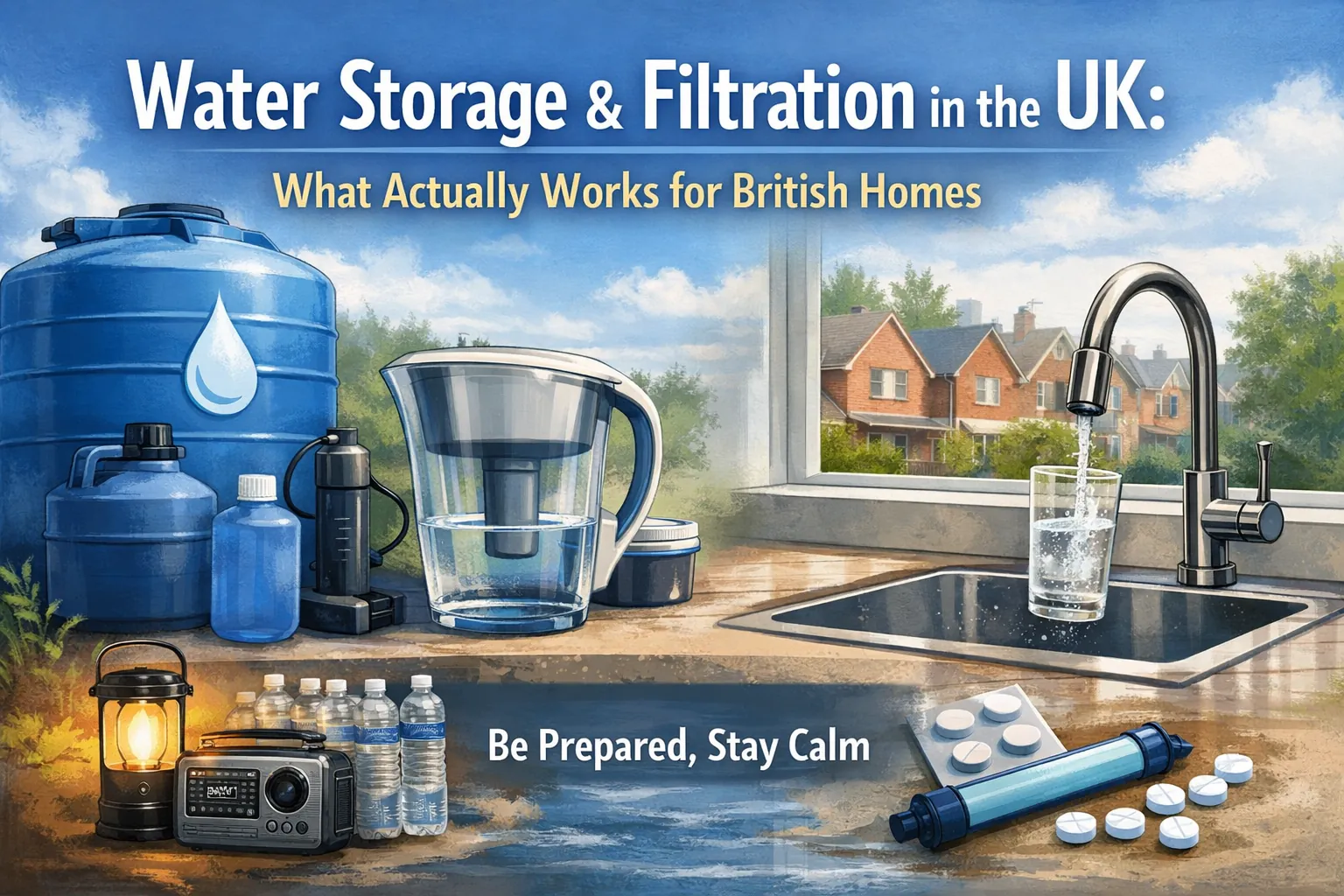
This pillar is the calm, realistic system for water storage and filtration UK homes — no panic buying, no over-engineered gear cupboards, just a plan you’ll actually maintain.
Key takeaways
- Store water first. Filtration is a backup and extender — not a replacement for storage.
- A realistic baseline is 3–4 litres per person per day for drinking plus basic cooking and hygiene.
- Bottled water is the easiest “baseline win” for most UK homes.
- During an outage, your water company may provide alternative supplies — but having your own buffer keeps your household calm.
- If you get a boil water notice, follow the notice and official guidance until it’s lifted.
Quick start
- Store 3 days of bottled water per person (start there, then build).
- Put it somewhere accessible, not “hidden for later.”
- Add a simple hygiene plan (bowl + soap) to stretch water use.
- Decide if you actually need filtration based on your home and lifestyle.
- If anyone in your home is vulnerable, check your water supplier’s Priority Services Register.
If you want a 72-hour checklist (1 page printable)
Enter your email and i will send the PDF instantly.
Why water comes first in UK prepping
When water is disrupted, it’s not just “no drinking water.” It’s cooking, washing hands, brushing teeth, cleaning baby items, flushing toilets, and keeping pets safe — all at once.
UK disruption is usually local and temporary, but it’s still disruptive enough that basic water preparation makes a huge difference. That’s why water storage and filtration UK is the first system to build.
If you want the bigger system around this, start here too:
Realistic UK water risks
This isn’t fear-based. It’s the stuff that happens in normal life.
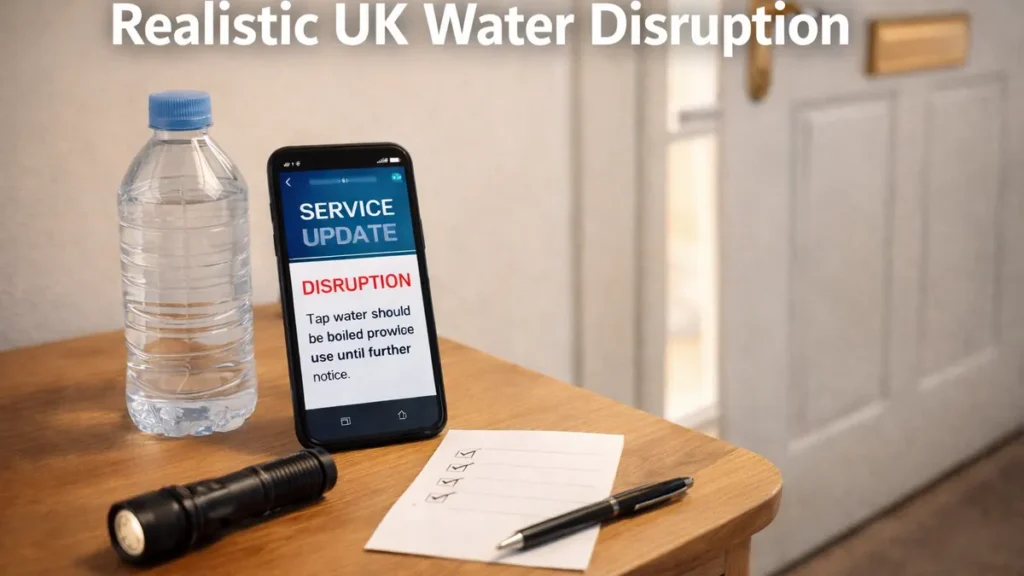
Burst mains and emergency works
Sudden interruptions from leaks or repairs can affect streets or estates for hours — sometimes longer.
Planned interruptions
Planned works happen too. The key is: when disruption hits, having your own water buffer turns “stressful” into “annoying.”
Power cuts and pressure loss
Even when taps technically “work,” pressure can drop — and flats often feel this first. Pair this water plan with your power-cut plan
Flooding and contamination
Sometimes water still flows but isn’t safe. This is when boil notices or other instructions matter most — and you follow them exactly.
How much water do you actually need
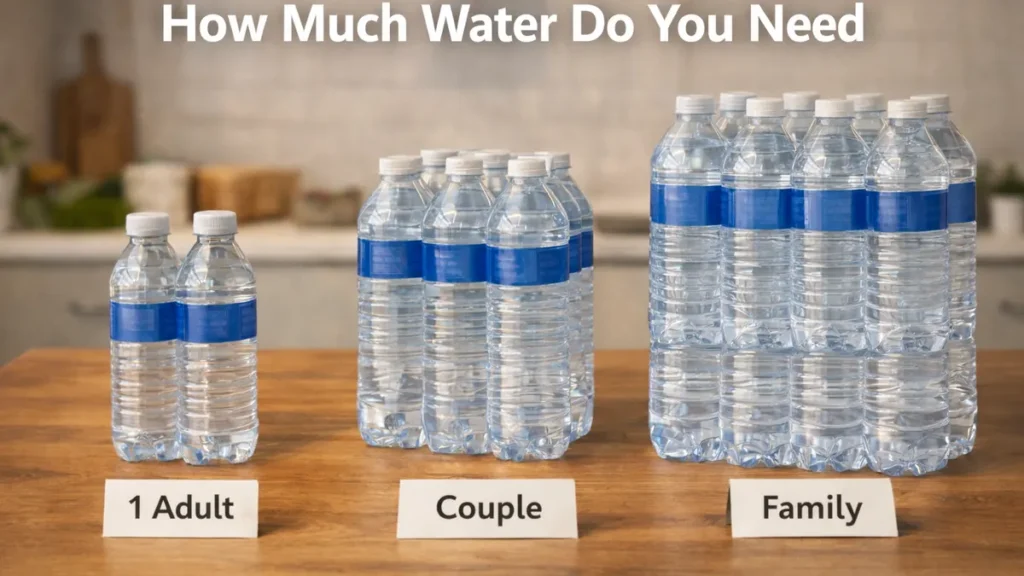
There’s no single “perfect” number — but you do need a baseline you can actually hit.
For water storage and filtration UK planning, most households do well with:
Realistic baseline
- 3–4 litres per person per day (drinking + basic cooking + basic hygiene)
Quick examples
- 1 adult, 3 days: 9–12 litres
- 2 adults, 3 days: 18–24 litres
- Family of 4, 3 days: 36–48 litres
Don’t forget “extra users”
You may need additional water for:
- babies and formula preparation
- medical needs
- pets
If you’ve got babies at home, follow NHS guidance for making up formula safely (it matters even more during disruption)
Water storage options for normal UK homes
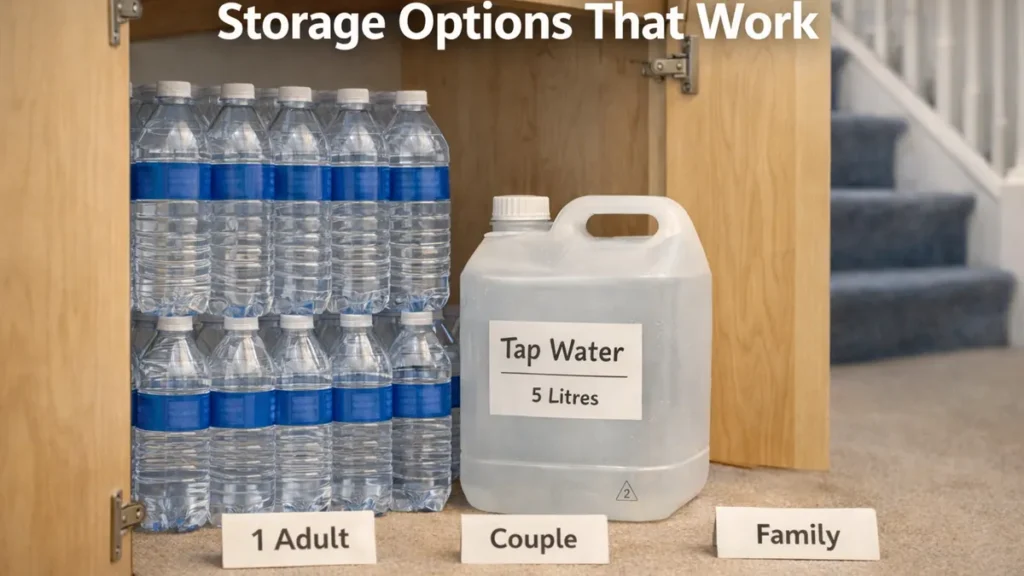
Here’s the order that keeps it simple and reliable.
Option 1: Bottled water as your baseline
For most households, bottled water is the best starting point because it’s already safe, sealed, and low-effort.
What to store:
- supermarket still water bottles (mixed sizes are fine)
- a couple of smaller “grab” bottles you can take upstairs / into the car easily
Why it works:
- no treatment needed
- easy to rotate
- ideal for renters and flats
Option 2: Stored tap water in proper containers
Tap water storage can be useful — but only if you do it correctly.
Rules that keep it safe:
- use food-grade containers
- keep them sealed
- label fill dates
- rotate on a simple schedule
Avoid:
- old milk bottles
- unlabelled random containers
- anything that previously held chemicals or cleaning products
Option 3: Non-drinking water for toilets and cleaning
If you have outdoor space, a rain butt can be useful for flushing and cleaning — but don’t treat collected rainwater as drinking water.
Where to store water in a UK home
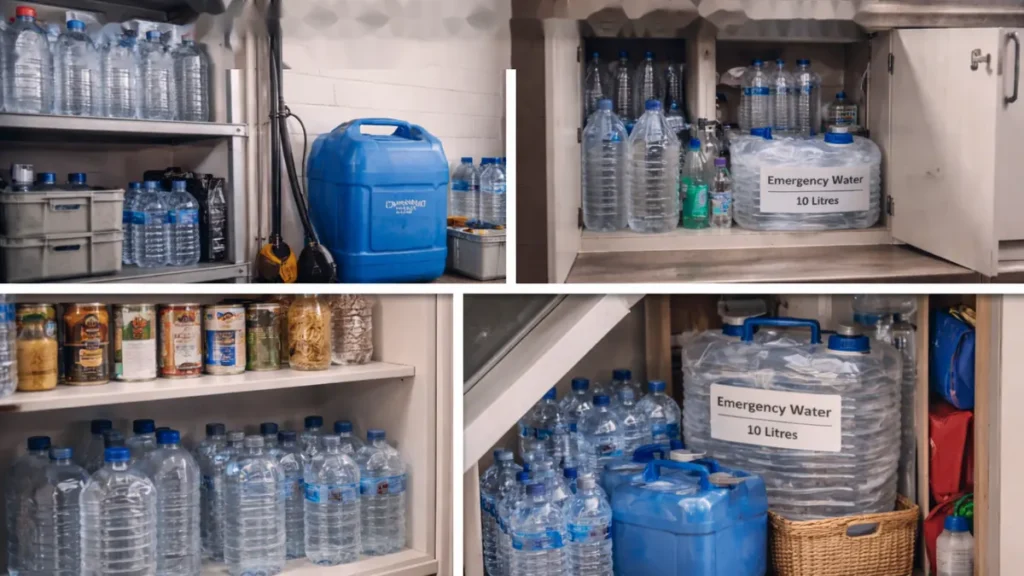
The best storage location is the one you’ll actually use when you’re tired and stressed.
Good places
- bottom of wardrobes
- under beds
- kitchen cupboards (small stash)
- utility rooms
Avoid
- lofts (heat extremes)
- garages/sheds (freezing risk)
- anywhere you’ll forget it exists
Flat-specific tip
Keep a “mini stash” on the same floor you sleep on — because carrying 12 litres upstairs during an outage is exactly the kind of job you don’t want.
Rotation and maintenance
Water storage and filtration UK plans succeed when they become automatic.
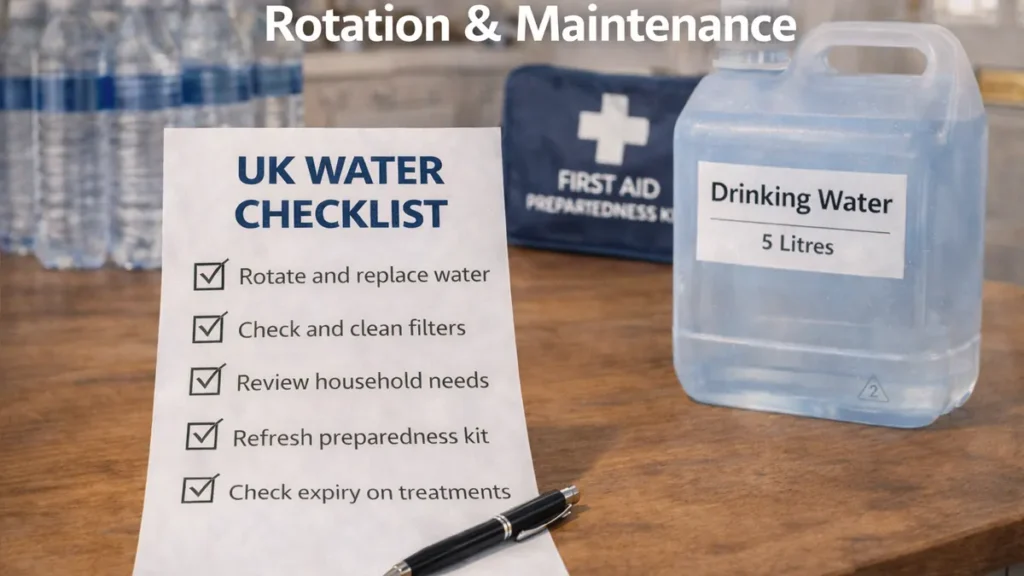
A simple routine:
- Once a month: quick check (30 seconds)
- Every shop: replace what you used
- Twice a year: rotate stored tap-water containers (if you use them)
If you use filtration gear, add a reminder to:
- store it correctly
- keep it clean
- replace filters as recommended
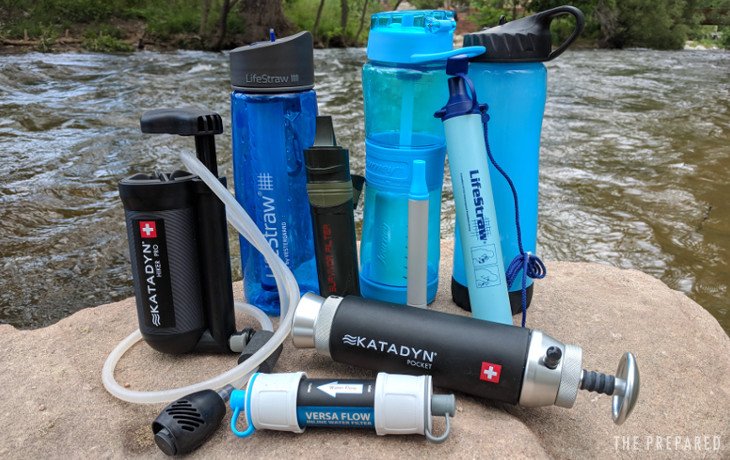
A good start point: Portable Water Filter Guide
Water filtration and purification for UK homes
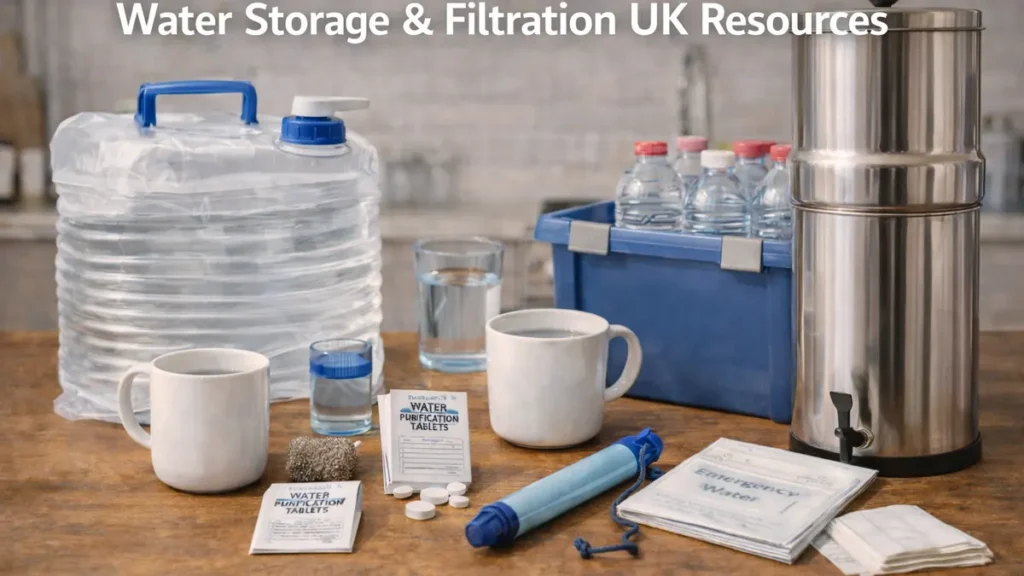
Let’s simplify the language, because “filters” gets used to mean everything.
Filtration vs purification
- Filtration often removes particles and many microbes (depends on the system)
- Purification implies higher protection (again, depends on the system)
Your goal isn’t to become a water engineer. It’s to pick one backup option you can maintain.
UK-appropriate options
- Gravity systems: good output, no power, practical at home
- Bottle filters: portable, low output, good for grab-and-go
- Pump systems: flexible, but require effort and maintenance
When you need a water filter in the UK
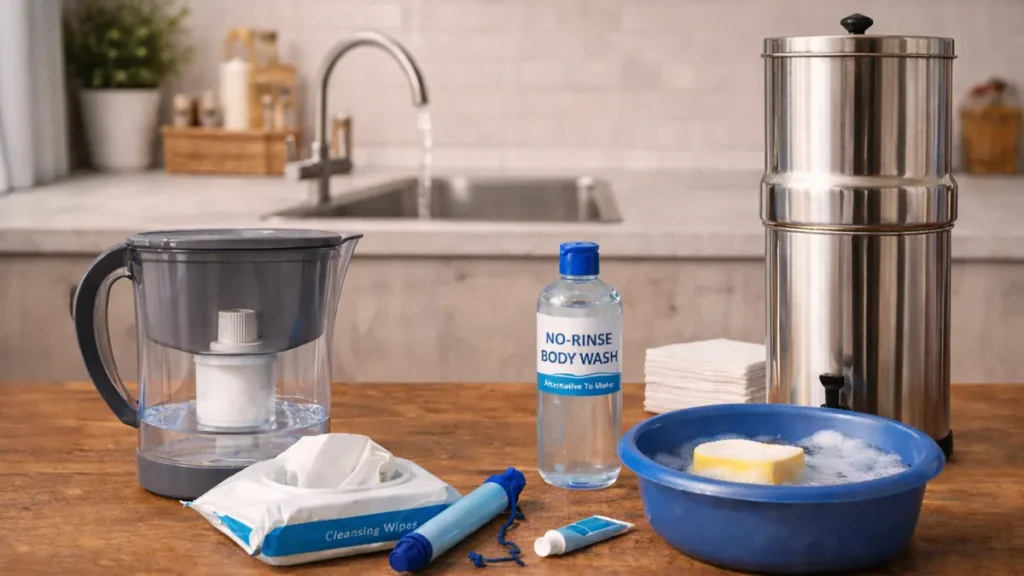
A filter makes sense when it solves a real constraint.
Choose filtration sooner if:
- you’re rural
- you’re in a flood-risk area
- your home can’t store much water (small flat)
- you want a plan that extends beyond 72 hours
You can usually delay filtration if:
- your goal is short, local outages
- you can store a few days of bottled water easily
- you’re building your system gradually
The clean decision rule for water storage and filtration UK:
- If you can store 3 days of bottled water per person, do that first.
- If you can’t, add filtration earlier to extend what you can store.
Boil water notices: what to do
If you’re told to boil water, treat it as: boil tap water for anything you might swallow.
That usually means:
- drinking
- brushing teeth
- food prep
- baby items
- pets
- ice
External reference:
Practical steps:
- Follow your water company updates and the notice.
- Boil water and let it cool naturally before use.
- Use bottled water first if you have it — save boiled water for tasks where you need volume.
- Keep kids from swallowing bath water; avoid getting water in your mouth in the shower.
Water for cooking, hygiene, and toilets
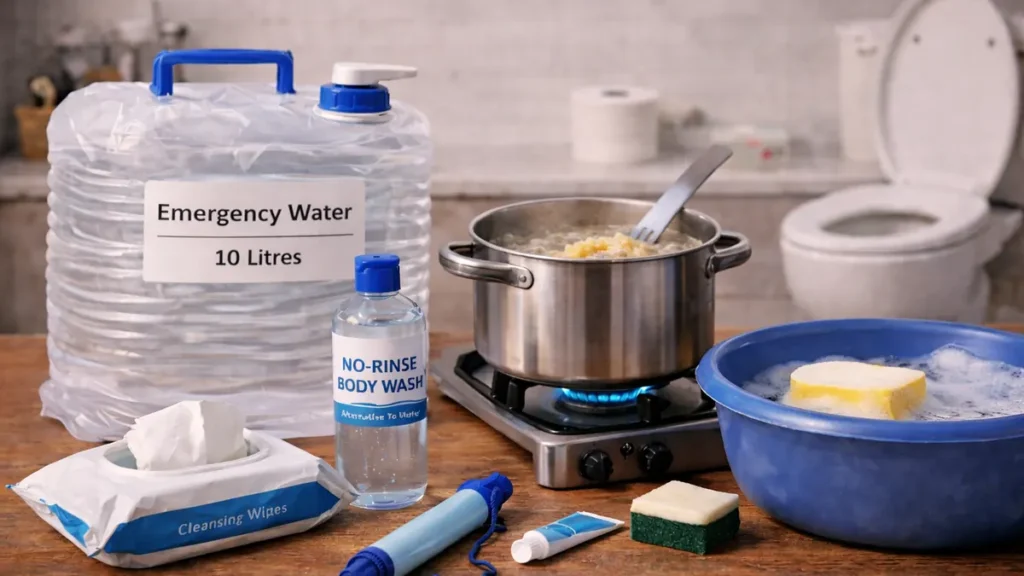
This is where most people underestimate how fast water disappears.
Hygiene with minimal water
A simple “wash bowl” routine stretches your supply:
- bowl of water + soap
- separate clean towel
- sanitiser as a backup, not the whole plan
Toilets
Toilet flushing is often the stress multiplier.
- If you have non-drinking water, it can help with flushing.
- If you don’t, reduce flushes and keep hygiene tight.
Flats, renters, and small homes
If you’re tight on space, you don’t need a different plan — you need a tighter version of the same plan.
Flat-friendly water storage and filtration UK setup
- bottled water under beds or at the bottom of wardrobes
- smaller bottles you can move easily
- a small “upstairs stash” so you’re not hauling weight around
Renter-friendly rule
Avoid anything that needs permanent installation. Portable storage + portable filtration keeps you flexible.
Common mistakes
These are the ones that create false confidence:
- buying filters before you’ve stored any water
- assuming “the tap will be fine”
- storing water in unsuitable containers
- hiding water where you can’t reach it quickly
- forgetting cooking and hygiene needs
- forgetting pets and baby needs
30-minute action plan
Do this once and you’ve got a real baseline.
- Count how many people (and pets) you’re covering.
- Buy or set aside 3 days of bottled water per person.
- Put it in two locations: main stash + mini stash.
- Add a bowl and soap plan for handwashing.
- Save your local water company contact details.
- If you want filtration, choose one option you can maintain (don’t collect gadgets).
Related guides
Start here
- UK Prepping: The Complete System – your calm “start-to-finish” roadmap
- UK Prepping Checklists – 30 minutes, 2 hours, 1 weekend
Go deeper on water
- How Much Water Do UK Homes Really Need? – realistic targets for flats and families
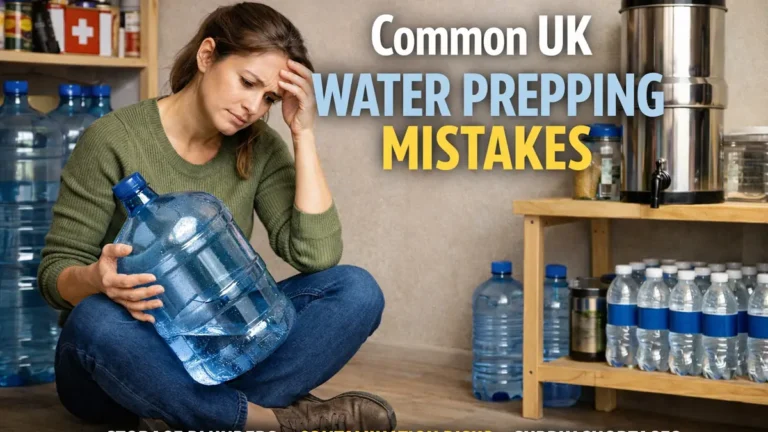
- Common UK Water Prepping Mistakes – the “why your plan fails” fixes
- How Long Does Bottled Water Last in the UK? – storage, rotation, and what matters
Filters and gear
- Portable Water Filters Guide – simple breakdown of what’s worth it
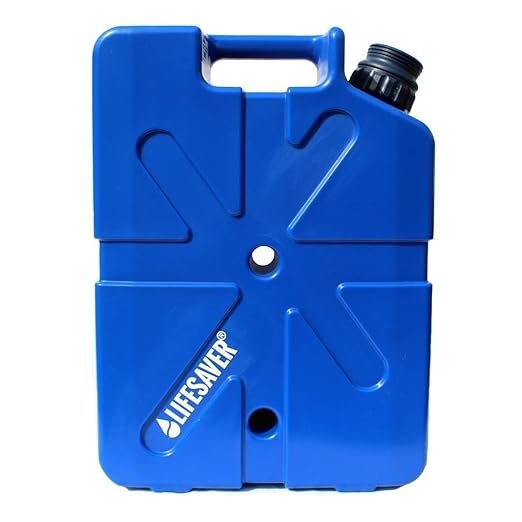
- LifeSaver Cube Review – who it’s for, who should skip it
FAQs
Question: How much water should I store per person in the UK
Answer: A practical baseline is 3–4 litres per person per day for drinking, basic cooking, and minimal hygiene. Start with 3 days, then build up if you’ve got space.
Question: What is the simplest water storage and filtration UK setup
Answer: Store bottled water first as your buffer, then add one reliable backup method as your plan B. That’s the most realistic water storage and filtration UK approach for normal homes.
Question: Is bottled water good for emergency storage
Answer: Yes. It’s sealed, ready to drink, and low-maintenance. Rotate it occasionally by using the oldest bottles first and replacing them on your next shop.
Question: Should I store tap water in containers
Answer: You can, but only in food-grade containers that seal properly. Label fill dates and rotate on a simple schedule so it stays reliable.
Question: Do I need a water filter in the UK
Answer: Not always. If you can store a solid 3-day buffer, you may not need a filter right away. Filtration is most useful when storage space is limited or you’re planning for longer disruption.
Question: Are jug filters enough for emergencies
Answer: No. Jug filters are mainly for taste and general household use, not emergency water safety. Don’t rely on them as your backup plan.
Question: What should I do during a boil water notice
Answer: Use bottled water if you have it, and boil tap water for anything you might swallow, including brushing teeth, food prep, baby items, pets, and ice. Follow the notice instructions until it’s lifted.
Question: Can I shower during a boil water notice
Answer: Usually yes, but avoid getting water in your mouth. For children, supervise bath time and treat it as “don’t swallow the water.”
Question: How do I safely make up baby formula during disruption
Answer: Follow NHS guidance on making up formula safely, including using freshly boiled water and keeping hygiene standards high. Refer to NHS
Question: What’s the best water plan for flats and renters
Answer: Keep it portable and split into small stashes: bottled water under the bed or wardrobe, plus a smaller grab stash upstairs. Water storage and filtration UK plans work best when they’re easy to access and easy to maintain.
Final thought
Water storage and filtration UK isn’t about survivalism. It’s about removing stress from normal disruption.
Store water first.
Make it accessible.
Add a backup only if you need it.