Bug Out Bag UK: What They’re Really For (and What to Avoid)
Published by: Preppers Only
In this guide, we’ll demystify what a bug‑out bag actually means for UK residents and how it differs from a grab bag or get‑home bag. We’ll outline when you might need to leave your home, what to pack, and how to build a kit that is legal, realistic and tailored to your family’s needs.
Do You Actually Need a Bug-Out Bag in the UK?

For most people in Britain, the honest answer is no — not in the way the internet presents it. In short, a bug out bag UK should be realistic and tailored to our country’s needs.
A traditional “bug-out bag” assumes:
- Long-distance travel on foot
- Wilderness navigation
- Extended time away from civilisation
That model rarely fits UK emergencies.
In reality, UK disruptions are usually:
- Short-term
- Localised
- Managed by emergency services
Most households are safer staying put with supplies at home. However, a realistic UK bag does make sense as a grab-and-go safety buffer if you need to leave quickly.
Think of it as:
- A temporary relocation kit
- Not a survival rucksack
- Not a camping pack
- Not a military loadout
Bug-Out Bag vs Grab Bag vs Get-Home Bag (UK Context)
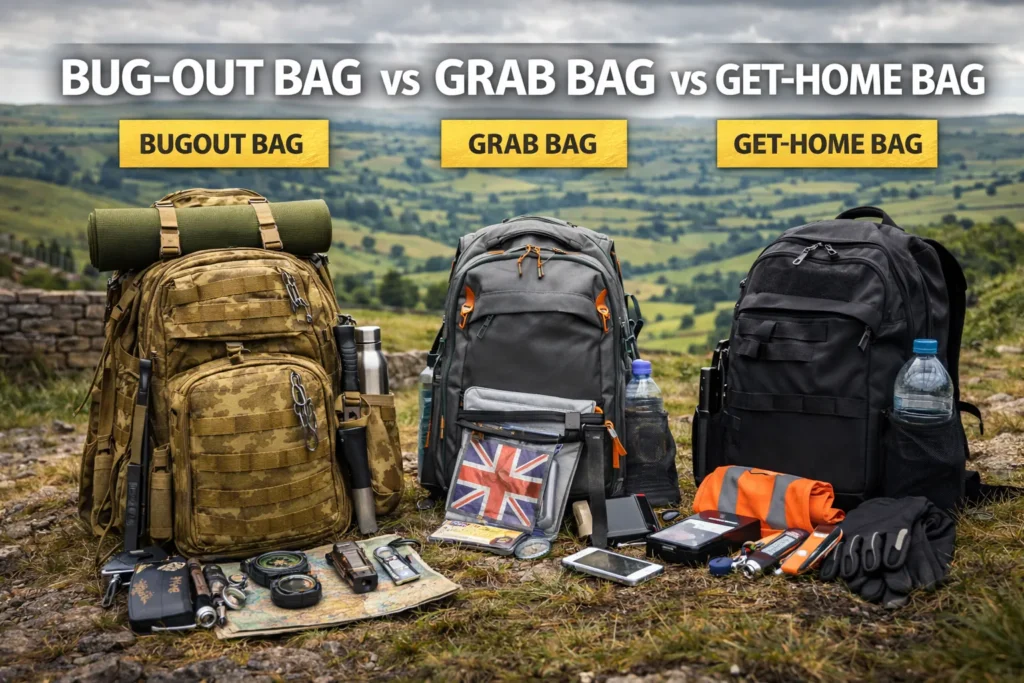
These terms are often mixed up. In the UK, clarity matters.
| Bag Type | What It’s For | UK Relevance |
|---|---|---|
| Bug-Out Bag | Leaving home for days | Rare |
| Grab Bag | Sudden evacuation or relocation | High |
| Get-Home Bag | Commuters returning home | Moderate |
For most UK households, a “Grab Bag” is the correct solution.
This article uses “bug-out bag” only because that is what people search for.
UK Legal & Practical Constraints (Critical)
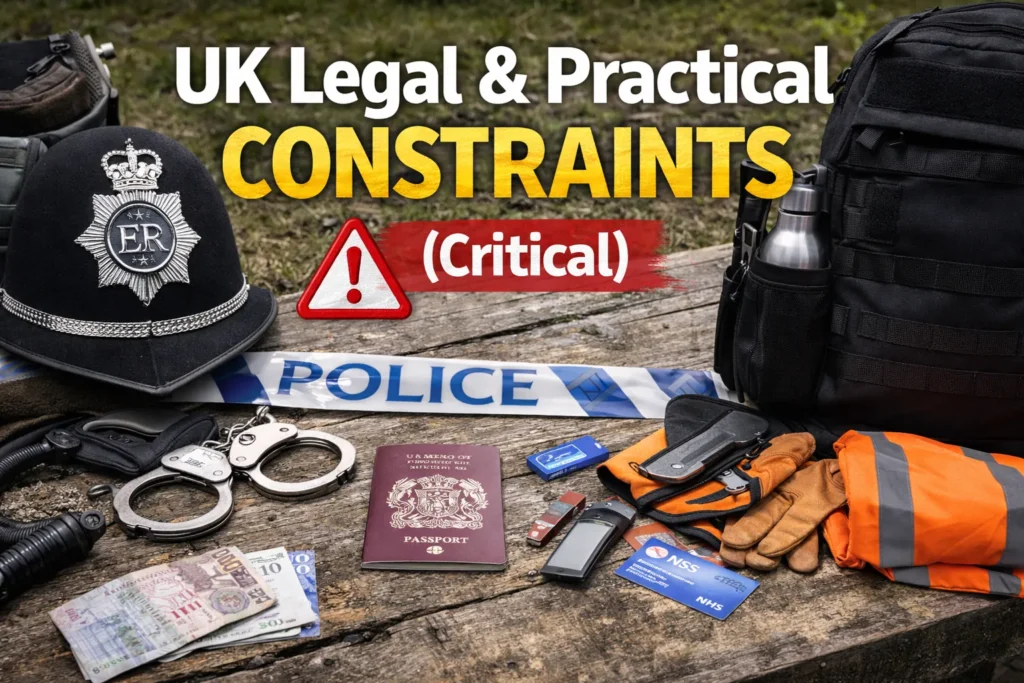
This is where much online advice becomes dangerous or useless.
Knives
- Fixed blades: illegal to carry
- Legal carry: a folding pocket knife with a blade under 3 inches (7.62 cm) and non‑locking only
- Legal carry: small, non-locking folding pocket knife under 3 inches – avoid other knives and tools
If in doubt, leave it out. Tools are not essential for short UK evacuations.
Fuel & Stoves
- Carrying fuel indoors or on public transport is unsafe
- Cooking equipment is rarely usable in evacuation scenarios
Solution: no-cook food only.
Radios
- Legal and useful
- Hand-crank or battery radios are ideal
- Avoid oversized “tactical” models
Self-Defence Items
- Pepper spray, batons, and similar items are illegal
- Carrying them can cause serious legal trouble
Low profile and legality matter more than perceived protection.
The UK-Realistic 72-Hour Bag Framework
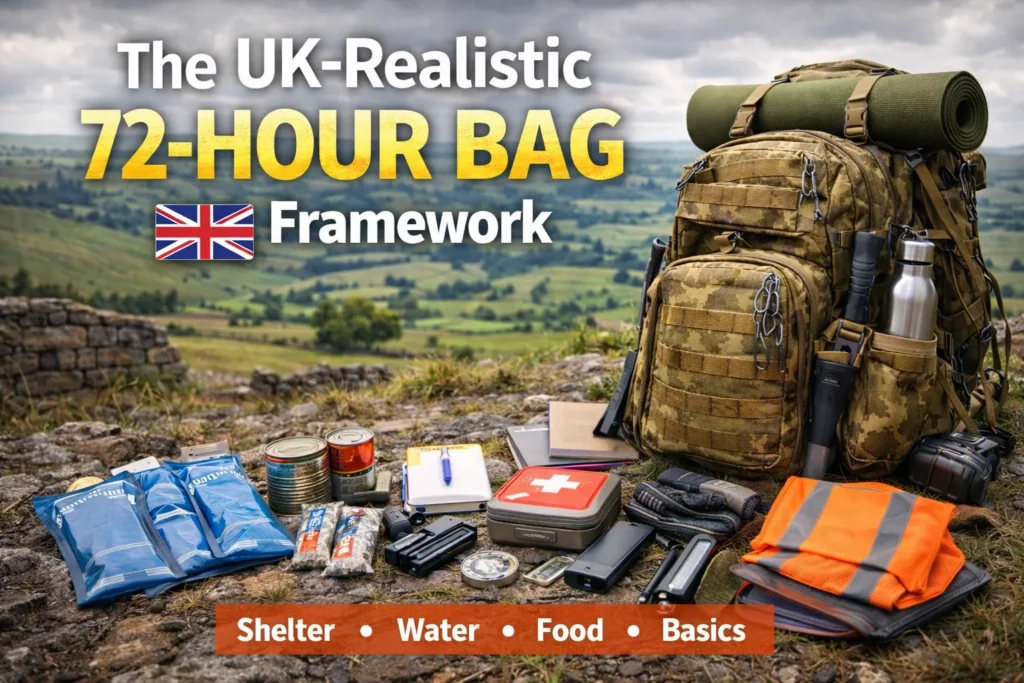
Your bag should assume:
- Short travel distances
- Public transport use
- Staying with friends, family, or emergency accommodation
Design principles:
- Lightweight
- Non-military appearance
- Fits under a chair or in a car boot
- Looks like a normal travel bag
What Goes in a UK Bug-Out / Grab Bag

Water (Carry vs Access)
- Small bottled water (1–2 litres)
- Collapsible bottle if space allows
You are bridging short gaps, not living off-grid.
Food (No Cooking Required)
- Cereal bars
- Protein bars
- Nuts
- Crackers
- Comfort snacks
Avoid:
- Tins (weight)
- Cooking equipment
- Dehydrated meals
Power & Lighting
- Torch (or headlamp)
- Power bank
- Charging cable
Phones are your primary tool for:
- Navigation
- Communication
- Information
Clothing & Warmth
- Spare socks
- Warm layer
- Lightweight gloves or hat (seasonal)
UK emergencies are often cold and damp.
Hygiene & Medical
- Basic toiletries
- Wet wipes
- Medication (where safe)
- Plasters and pain relief
Keep it minimal and legal.
Documents & Cash
- Copies of ID
- Emergency contacts
- Small amount of cash
Paper backups matter when systems fail.
Bags That Actually Work in the UK
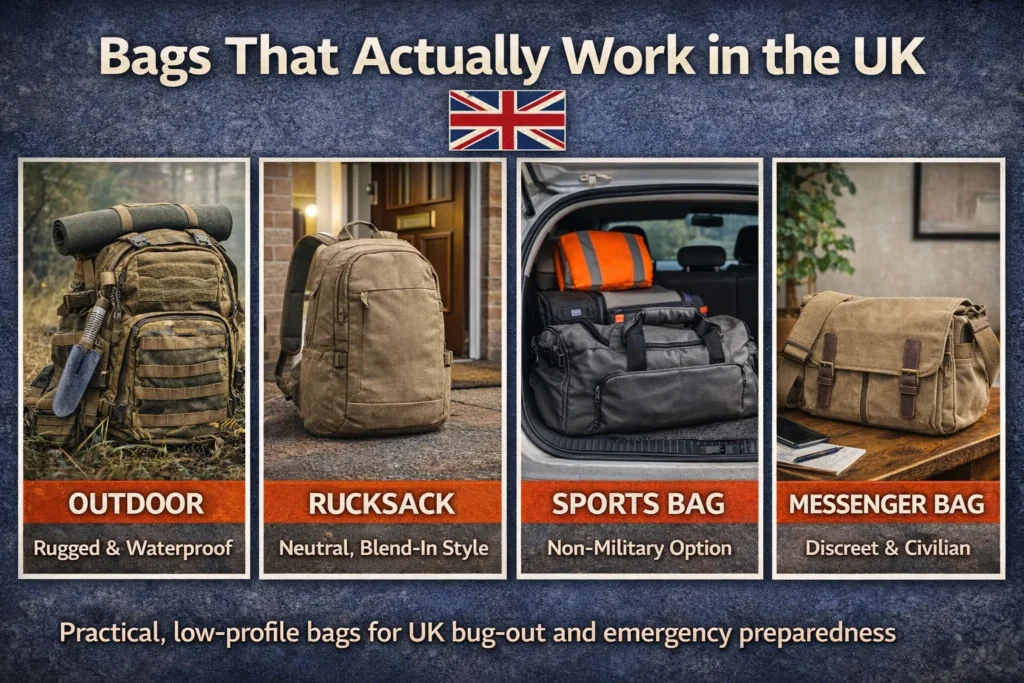
Best options:
- Normal backpacks
- Travel daypacks
- Neutral duffel bags
Avoid:
- Military-style packs
- MOLLE systems
- Camouflage colours
Looking “tactical” offers no benefit and increases attention.
Flats, Houses & Vehicles: UK Variations
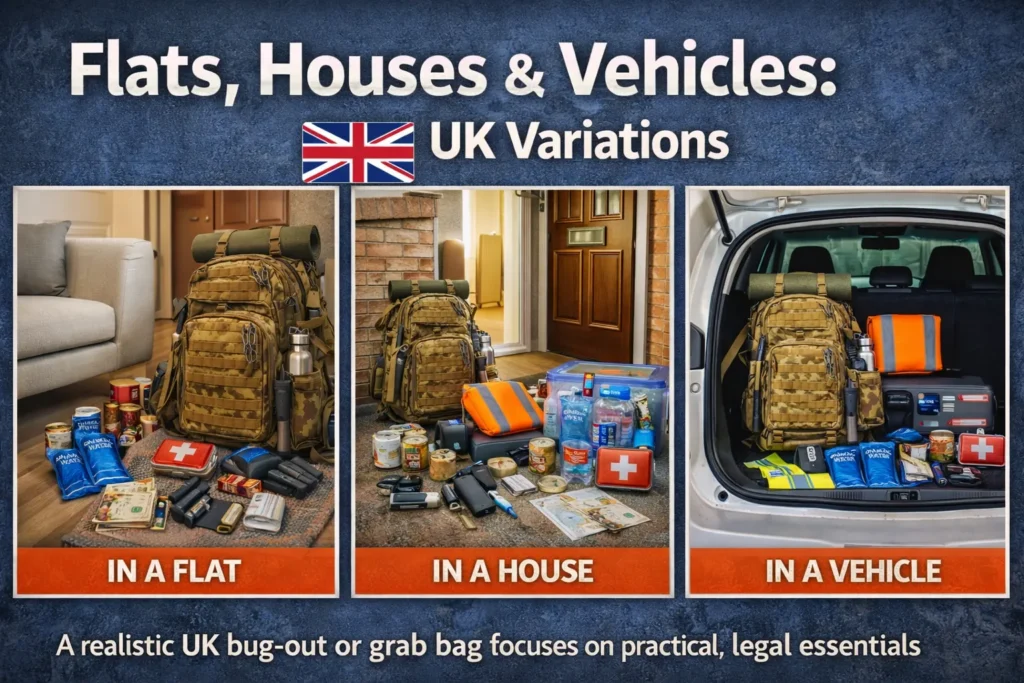
Flats
- Smaller bags
- Store near the exit
- Prioritise documents and power
Houses
- Slightly larger bags
- Consider seasonal swaps
Vehicles
- Keep a lighter version
- Avoid fuel storage
- Include visibility items
Common UK Bug-Out Mistakes

These reduce safety rather than improve it.
- Overpacking
- Copying US loadouts
- Carrying illegal items
- Planning to walk unrealistic distances
- Ignoring public transport reality
A calm, light, legal bag always wins.
Start Simple: The UK Grab Bag Checklist
Your first goal is readiness, not perfection.
A simple bag allows you to:
- Leave quickly
- Stay organised
- Avoid panic buying
Next step:
Download the Free UK Bug-Out / Grab Bag Checklist and build your bag gradually using items you already own.
Personalising Your Bag
Key Considerations for Personalising Your Bag
- Children – nappies/diapers, wipes, formula or baby food, a favourite toy/blanket, child-friendly snacks and an extra set of clothes.
- Disabilities & chronic illnesses – extra prescribed medication, mobility aids, spare glasses or hearing aids, and copies of care plans.
- Pets – pet food, water, collapsible bowls, leash and collar, waste bags, and copies of vet records.
- Season & climate – tailor your kit to the weather: sun cream, hat and insect repellent for summer; thermal blanket, gloves and warm hat for winter.
Refresh your kit every six months: replace expired food, medicines and batteries, and update clothing sizes. Remember that a grab bag or bug‑out bag complements, not replaces, a home emergency kit—keep bottled water, long‑life food, lighting and blankets at home for staying put during common disruptions. Make a simple emergency plan: agree meeting points, escape routes and important phone numbers, and sign up for local alerts and flood warnings.
Final Thought
In the UK, preparedness is about quiet mobility, not survival theatrics.
A realistic bag:
- Buys time
- Reduces stress
- Keeps you legal
- Keeps you unnoticed
That is what actually works.
For official guidance on preparing for emergencies and assembling your bug out bag UK, see the UK government’s Prepare campaign.
Ultimately, the best bug out bag UK is one that meets your personal needs, complies with UK law, and focuses on short-term disruptions rather than extreme survival scenarios.