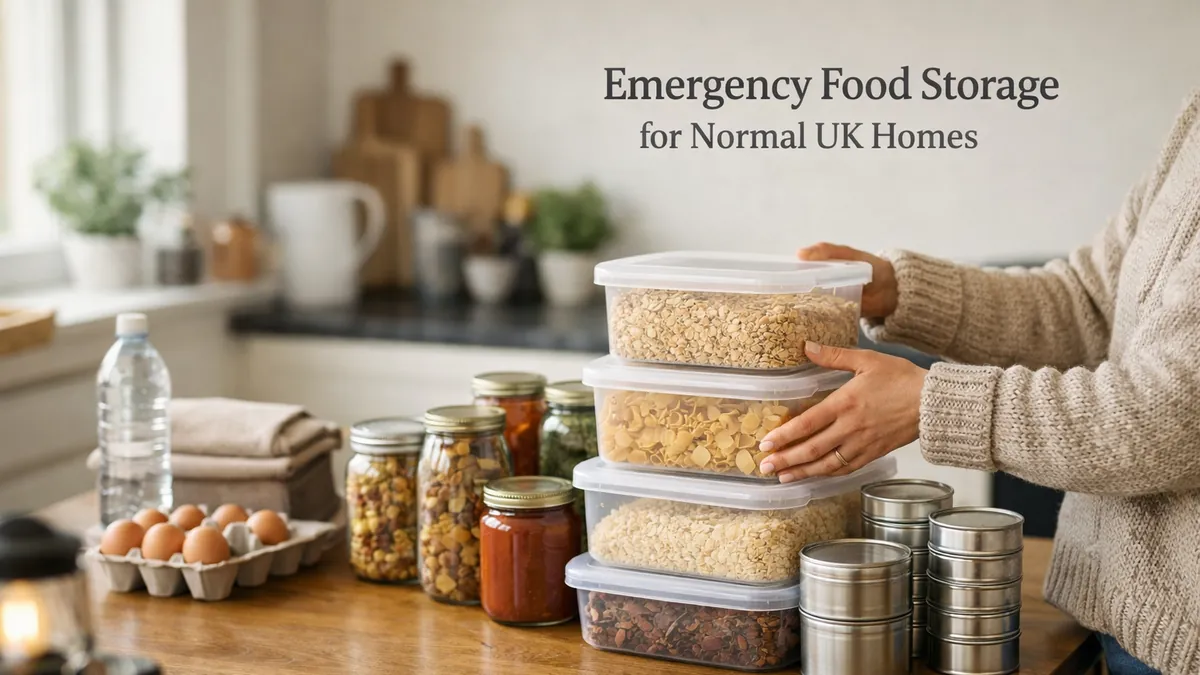
Emergency food storage sounds bigger than it needs to be. For most UK households, it simply means keeping enough everyday, long-life food to get through a short disruption without stress, waste, or panic-buying.
This guide is for normal kitchens, flats, and rented homes. No bulky “survival” tubs required. We’re aiming for a tidy, realistic emergency food storage setup that you can build from Tesco, Asda, Sainsbury’s, Morrisons, Aldi, Lidl, and a couple of budget online top-ups when it suits.
If you do one thing today, make it this: build a small buffer of meals you already eat, then rotate it.
If you would prefer to start at the beginning and go step by step then start here: Prepping UK The Complete System
Key takeaways
- Emergency food storage is easiest when it’s just extra of what you already use
- Start with 72 hours, then build to 7–14 days if you’ve got space
- Pick meals that work with minimal cooking and limited washing up
- Store by meal, not by ingredient, so it’s actually usable
- Rotate with a simple first in first out system to avoid waste
- Flats and renters can do this with one shelf, one box, and a plan
What emergency food storage actually means in the UK
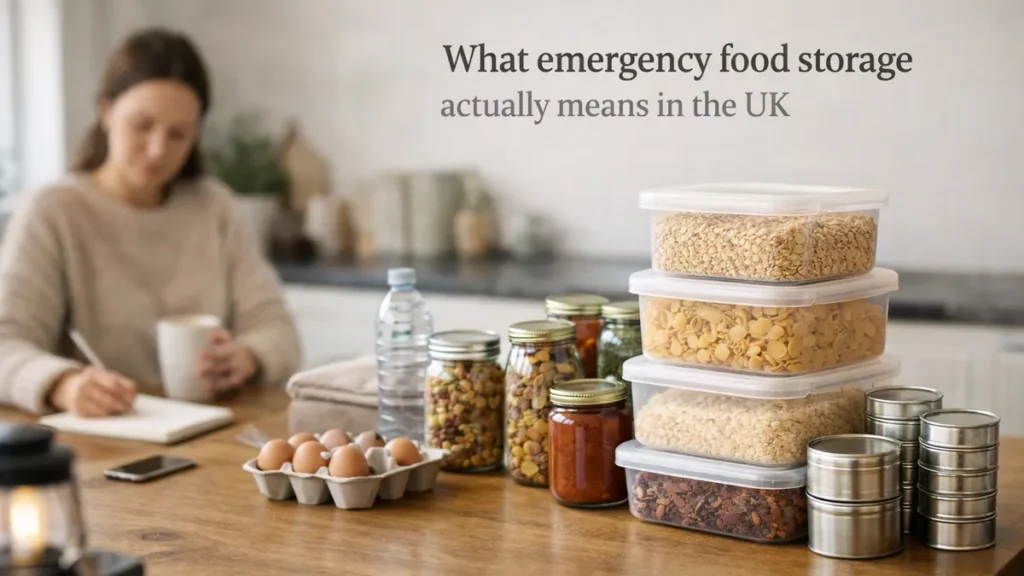
Emergency food storage is a small, organised backup of shelf-stable food you can rely on if you can’t shop normally for a few days.
That might be because:
- You’re ill and can’t get out
- Deliveries are delayed
- You’re stuck at home with the kids
- Your local supermarket shelves are thin for a week
- You’ve had an unexpected bill week and need to stretch the shop
It’s not about extreme scenarios. For most people, an emergency food supply UK plan is about convenience and calm.
Best goal for most households
- Level 1: 3 days of simple meals and snacks
- Level 2: 7 days of meals you genuinely like
- Level 3: 14 days if you’ve got space and you want extra cushion
You can stop at any level and still be “sorted”.
Emergency food storage quick-start checklist
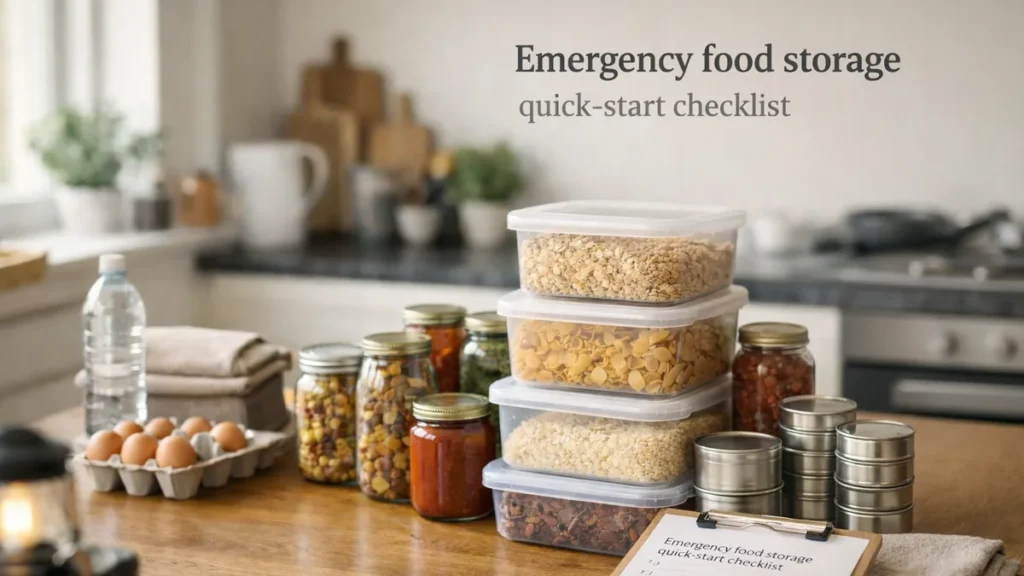
Do this now in 30 minutes:
- Pick 6 meals your household already eats
- Choose 2 no-cook meals and 4 quick-cook meals
- Add one extra of each ingredient on your next shop
- Assign one storage spot: one shelf, one crate, or one under-bed box
- Put new items at the back, older at the front
- Add a 10-minute monthly check-in date on your phone
Do this on your next shop:
- Add breakfast basics for 3 days
- Add snacks you’d want if you’re stressed or ill
- Add tea, coffee, squash, and long-life milk if you use it
Emergency food storage levels
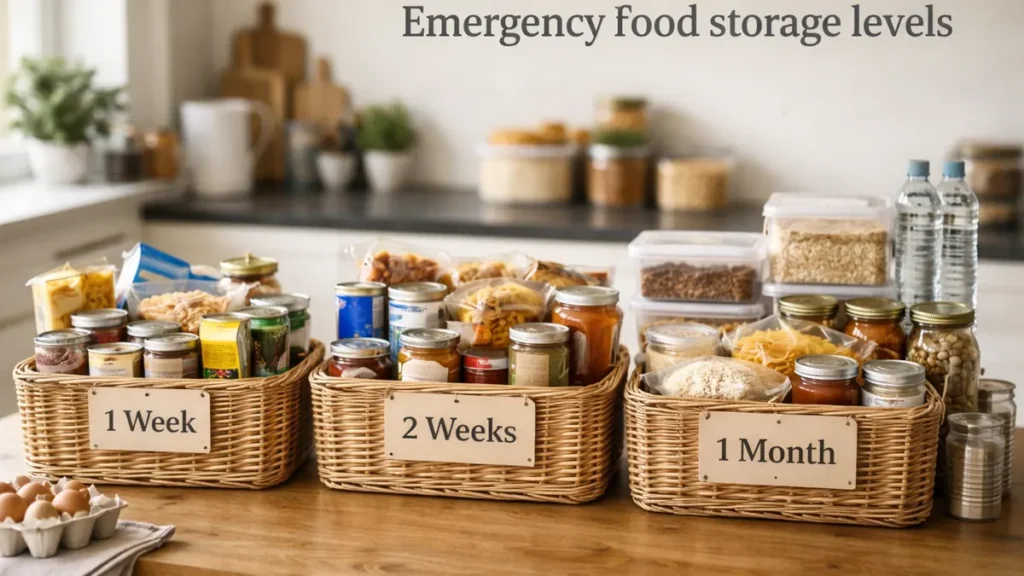
Level 1: 72 hours
This is the sweet spot for most people starting out. A 3 day emergency food supply UK setup can fit in:
- One kitchen cupboard shelf, or
- One lidded storage box, or
- Two tote bags under a bed
Aim for:
- 6 main meals for the household
- 3 breakfasts
- Snacks and hot drinks
- A couple of “comfort” options
Level 2: 7 days
Once Level 1 feels easy:
- Double your 72-hour meals
- Add more variety so you don’t get bored
- Add ingredients for one simple “big batch” meal
Level 3: 14 days
This is for households who want extra breathing room:
- More repeats of your favourites
- More protein options
- More kid-friendly and “sick day” foods
- A stronger rotation system so nothing expires
The easiest way to plan emergency food storage, store meals, not ingredients
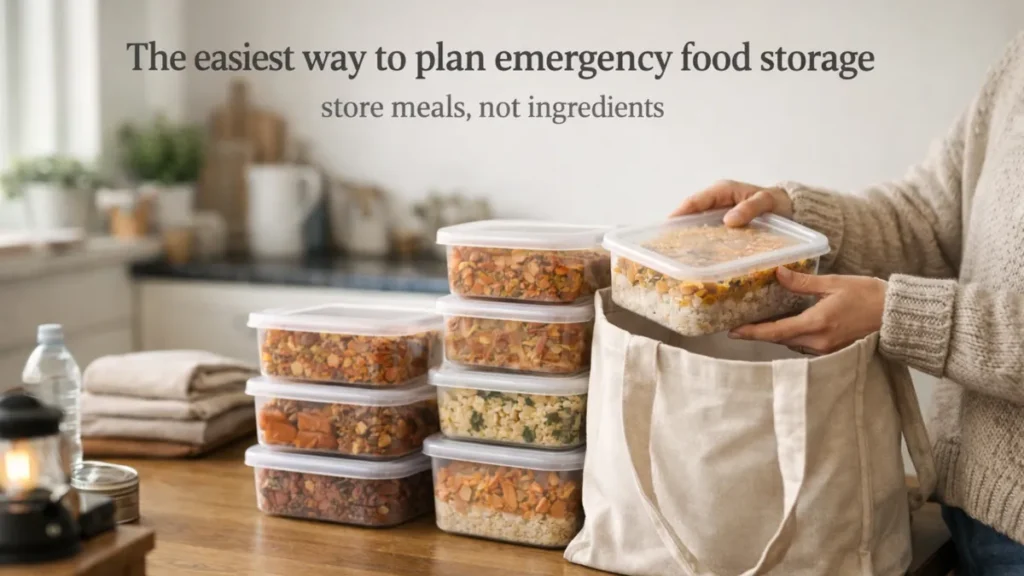
A cupboard full of random tins can still leave you thinking, what do I actually make?
Plan your emergency food storage around complete meals. Pick meals you can cook with:
- One pan
- Minimal water
- Short cooking time
- Basic seasoning
A simple 6-meal starter set
Choose any six:
- Pasta + sauce + tinned tuna or chickpeas
- Rice pouch + curry sauce + lentils
- Instant noodles + tinned sweetcorn + peanut butter
- Soup + breadsticks/crackers
- Baked beans + jacket potato or microwave rice
- Tinned chilli + rice
- Couscous + tinned mackerel + olives
- Tinned potatoes + corned beef hash style meal
- Dal pouch + rice + yoghurt from the fridge if you have it
If you already make these meals, emergency food storage becomes effortless.
What to buy for emergency food storage
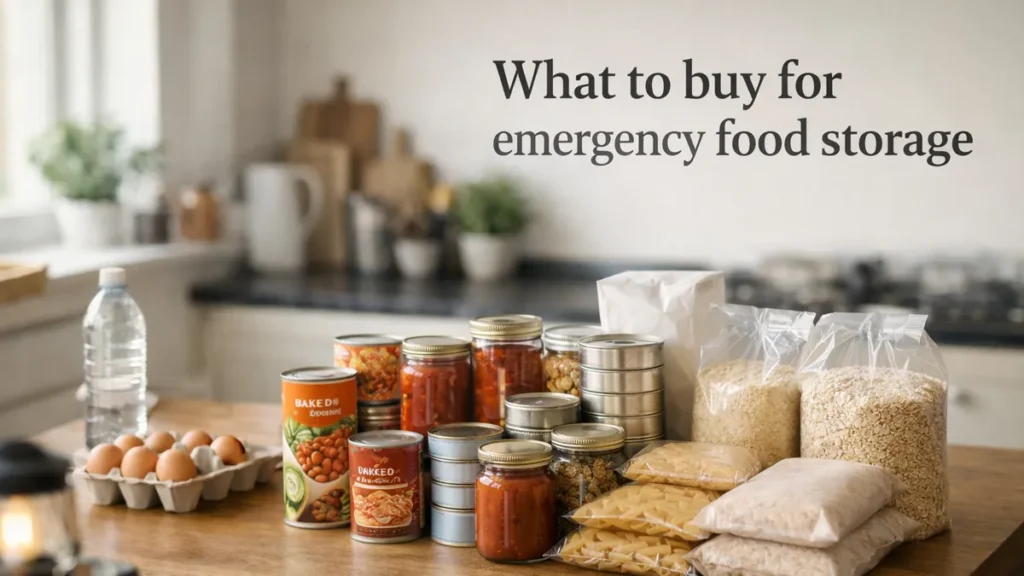
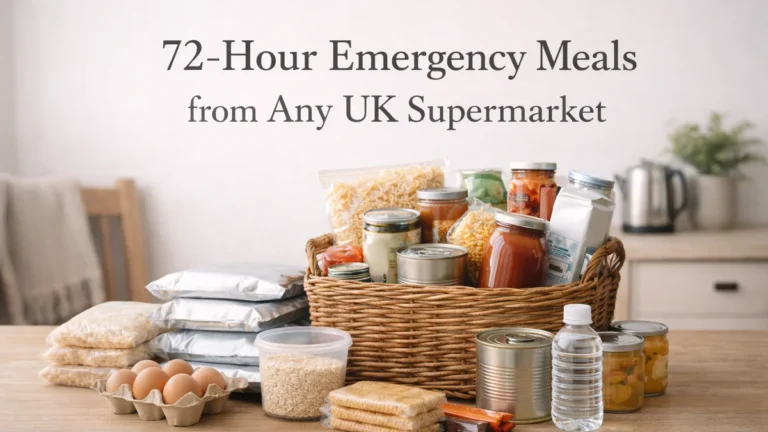
Here’s a practical shopping list you can tailor to your household. This is long life food UK stuff you’ll actually use.
Carbs and base ingredients
- Pasta
- Rice
- Microwave rice pouches
- Couscous
- Instant noodles
- Instant mash
- Crackers, oatcakes, breadsticks
- Flour tortillas or long-life wraps
Protein
- Tinned tuna, salmon, sardines, mackerel
- Tinned chicken
- Baked beans
- Lentils and chickpeas
- Tinned chilli, curry, stews
- Peanut butter
- UHT milk, or powdered milk if you’ll use it
- Protein bars if that’s your thing
Veg and fruit
- Tinned tomatoes
- Tinned sweetcorn, peas, carrots
- Jarred peppers, olives
- Tinned fruit
- Dried fruit
Meals and convenience
- Soup
- Instant porridge sachets or oats
- Cereal
- Pasta sauce jars
- Curry sauce jars
- Stock cubes
- Ready-to-eat pouches (dal, chilli, curry)
Snacks and morale
- Biscuits
- Chocolate
- Crisps
- Nuts
- Squash
- Tea and coffee
This is the part people skip, then regret when the house feels tense. A calm emergency food storage plan includes a few treats.
Cooking essentials you forget until you need them
- Salt
- Pepper
- Oil
- Vinegar
- Sugar or sweetener
- Herbs and spices you actually use
- Soy sauce or hot sauce if you like it
A simple table build a 3-day emergency food storage kit
Use this as a template and swap items to suit your household.
| Meal slot | Example option | Shelf-stable items | Notes |
|---|---|---|---|
| Breakfast x3 | Porridge | Oats or sachets, long-life milk | Add honey or dried fruit |
| Lunch x3 | Soup + crackers | Soup tins, crackers/oatcakes | Add tinned fish if needed |
| Dinner x3 | Pasta night | Pasta, sauce, tuna/chickpeas | One-pan friendly |
| Dinner x3 | Rice pouch meal | Rice pouches, curry/dal pouch | Minimal cooking |
| Snacks | Comfort | biscuits, nuts, fruit | Keep what you like |
| Drinks | Normal routine | tea/coffee/squash | Makes it feel normal |
If you want a done-for-you plan, add this:
Where to keep emergency food storage in a flat or rented home
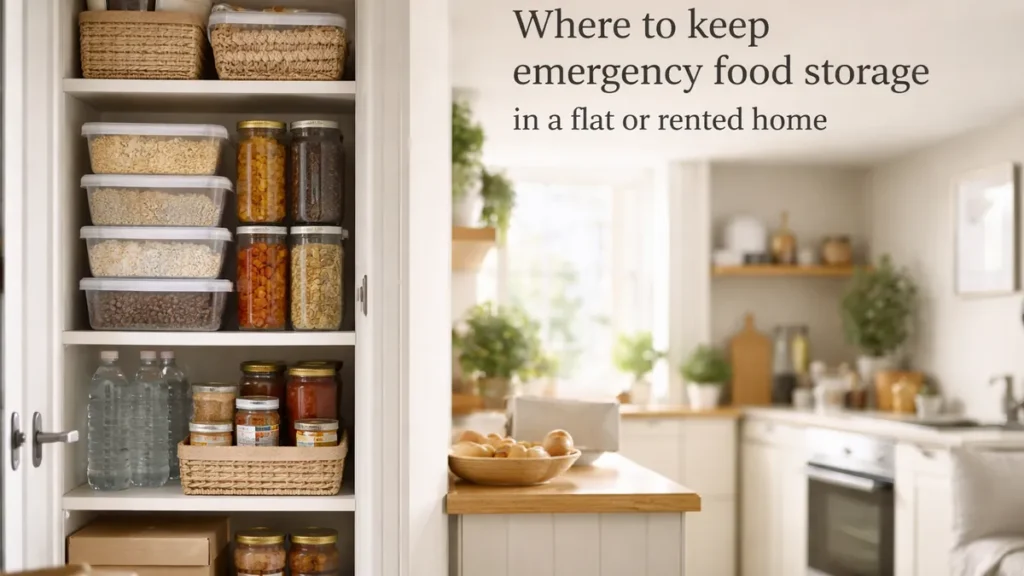
You don’t need a garage or a spare room. You need a dedicated spot that stays cool, dry, and accessible.
Good options:
- A single kitchen cupboard shelf
- The top shelf of a wardrobe
- Under-bed storage boxes with lids
- A lidded crate in a hallway cupboard
- A high shelf in a utility area
Avoid:
- Directly next to ovens, radiators, boilers
- Damp spots (under leaky sinks)
- Loose bags that get forgotten behind other items
Tiny-space rule
If space is tight, aim for density:
- Rice pouches, pasta, oats
- Pouches over cans if weight matters
- Stackable boxes you can pull out easily
A lidded, labelled box is brilliant for renters because it moves with you.
Food safety for emergency food storage
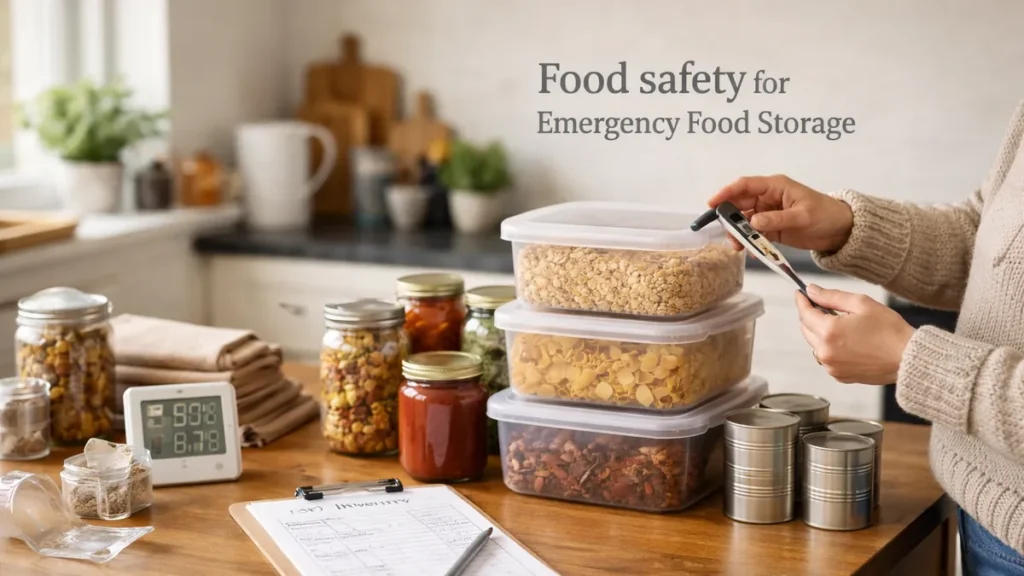
This is the boring bit that saves you money.
Know the date labels
- Use by: safety date, don’t eat after
- Best before: quality date, often fine after if stored well
The Food Standards Agency explains date labels clearly
Storage basics that actually matter
For emergency food storage, you want:
- Cool
- Dry
- Dark
- Pest-proof
Tips:
- Keep food off the floor if possible
- Use lidded containers for flour, rice, oats
- Don’t store tins where they’ll rust or get damp
- Keep a small notepad or note on your phone for what you’ve got
How much emergency food storage do you need per person
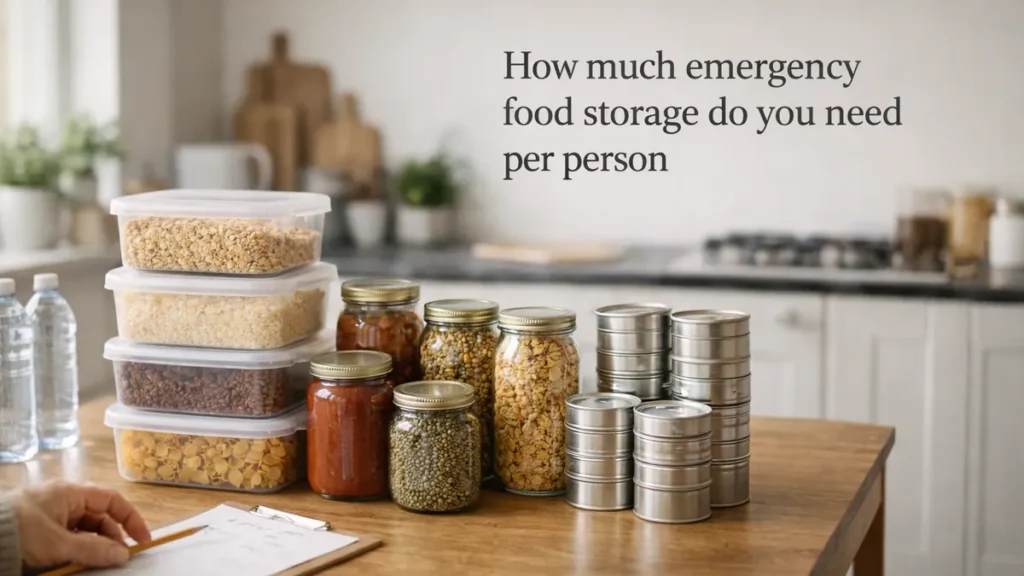
A simple way to think about it:
- 3 meals a day per person
- Plus snacks
- Plus hot drinks
For a 3-day emergency food supply UK starter:
- 9 meal slots per person
- 2–3 snack options per person per day
- 1–2 hot drinks per person per day
If you’ve got kids, include their predictable favourites. In a stressful week, familiarity matters.
Rotation made easy the no-waste method
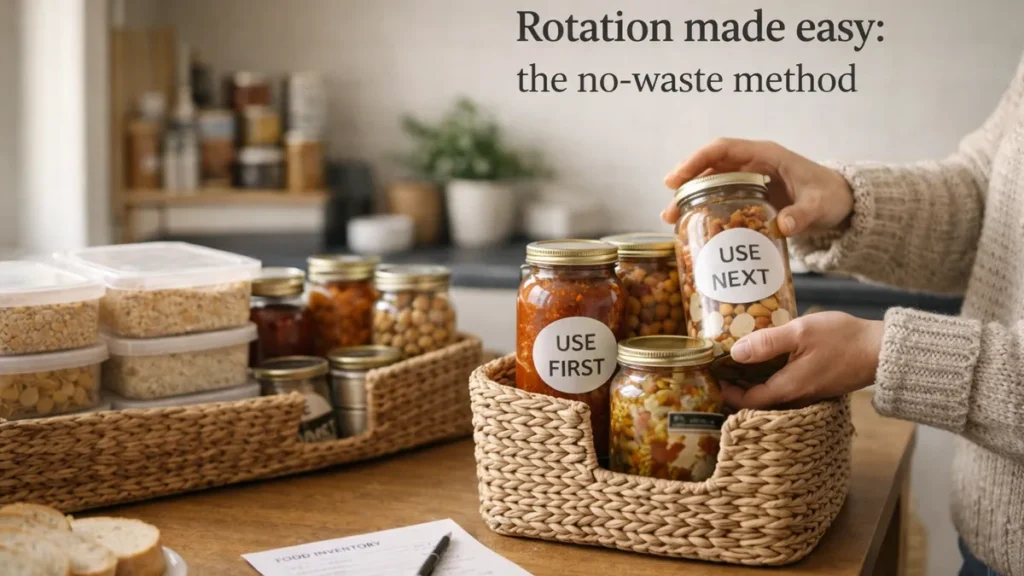
Emergency food storage fails when it becomes a museum of expired tins.
Here’s the simplest system:
- Buy what you already eat
- Put new items at the back
- Pull older items forward
- Use one “top-up shop” a month to replace what you’ve eaten
The 10-minute monthly check
Once a month:
- Scan dates on anything at the front
- Move the next items forward
- Add 3–5 replacements to your next shop
- Check you still have complete meals, not just bits
This is how long life food UK staples stay useful instead of clutter.
Emergency food storage for common UK diets
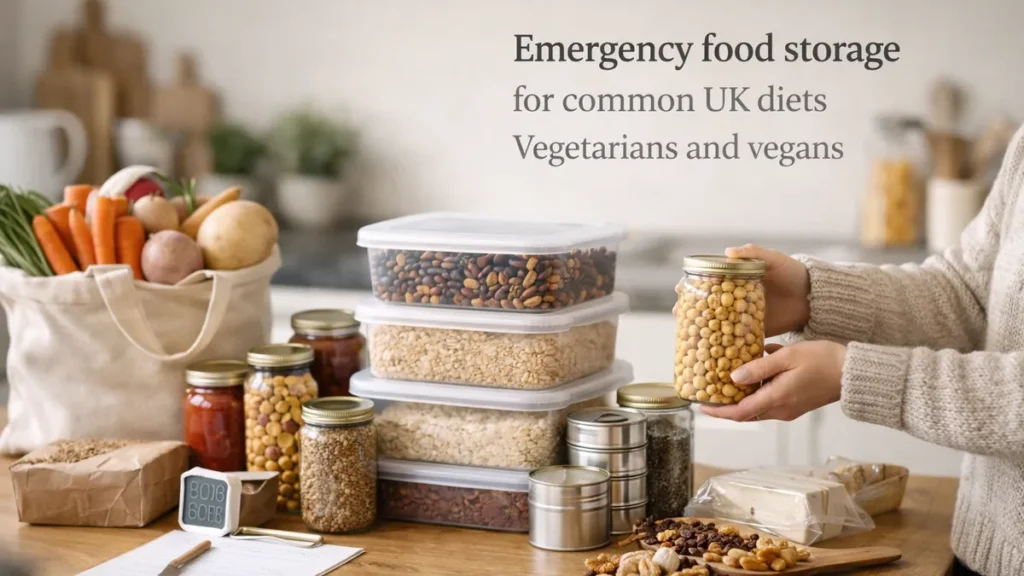
Vegetarians and vegans
Easy wins:
- Lentils, chickpeas, beans
- Dal pouches
- Couscous, rice pouches
- Tinned veg and tomatoes
- Plant-based long-life milk
Make sure you store:
- Enough protein options
- Enough calories, not just veg
- A couple of tasty sauces and seasonings
Gluten-free
Stock:
- GF pasta
- Rice and rice noodles
- Oats labelled gluten-free
- Crackers you trust
- Sauces you already tolerate
Allergies
Emergency food storage is a good reason to:
- Keep a separate, clearly labelled box
- Avoid “random bargain tins” with unclear ingredients
- Stick to known brands you already buy
Don’t forget water and simple cooking
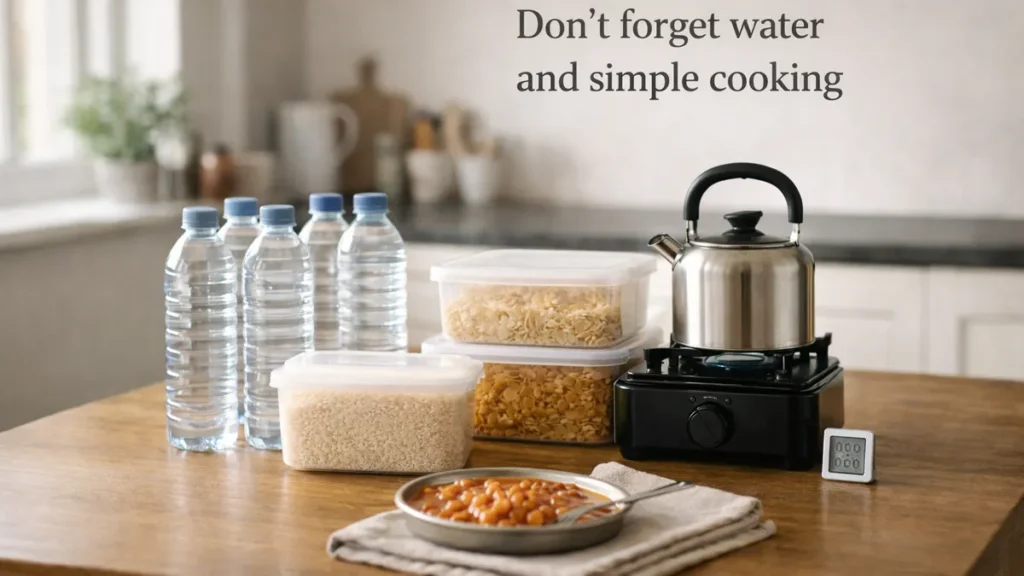
Food is only half the picture.
If you’re planning meals that need water, make sure you also have:
- Drinking water stored, or a plan for it
- A way to heat food if your cooker isn’t available
Useful external guidance:
Internal help:
Budget-friendly emergency food storage in the UK
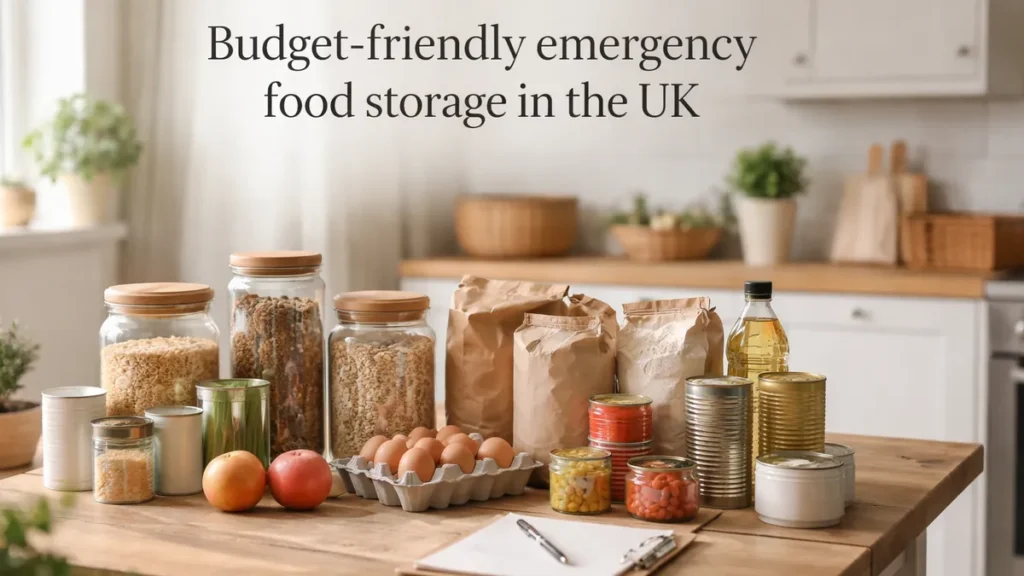
Emergency food storage doesn’t need a big spend. The easiest strategy is a slow build.
The £5–£10 per shop method
Each shop, add:
- One extra carb staple (pasta, rice, oats)
- One extra protein (beans, tuna, lentils)
- One extra meal (soup, ready pouch)
- One snack or comfort item
In a month, you’ll have a solid emergency food supply UK buffer without noticing.
Smart swaps that still feel normal
- Swap one fresh meal for a shelf-stable meal each week
- Swap one fizzy drink for squash and long-life milk
- Add one multipack of noodles or couscous instead of a “random treat”
You’re not depriving yourself. You’re moving a bit of spending into a buffer.
Emergency food storage mistakes that cause waste
- Buying foods you don’t like
- Storing ingredients without a plan for meals
- Forgetting salt, oil, sauces, and seasonings
- Not rotating and ending up with expired stock
- Storing in hot or damp places
- Overbuying early and losing motivation
If you’ve done any of these, you’re normal. The fix is always the same: simplify and rotate.
A calm 7-day emergency food storage plan example
Here’s a simple pattern you can repeat.
Breakfast options:
- Porridge
- Cereal + long-life milk
- Toast with peanut butter if bread is available
Lunch options:
- Soup + crackers
- Beans on toast
- Tuna + crackers + tinned fruit
Dinner options:
- Pasta + sauce + protein
- Rice pouch + dal or curry pouch
- Instant mash + tinned stew
- Noodles upgraded with tinned veg and peanut butter
Snacks:
- Biscuits, fruit, crisps, nuts
That’s a tidy, realistic emergency food storage setup that works in a normal UK kitchen.
Make it work for your household quick personalisation
Families with children
Keep:
- The 2–3 meals they never refuse
- Familiar snacks
- Easy breakfasts
And add one “bribe meal” for hard days. No judgement.
Renters and flats
Prioritise:
- Pouches over tins if weight is an issue
- Under-bed boxes with lids
- Compact foods that stack well
People who don’t cook much
Your emergency food storage can still be strong:
- Ready meal pouches
- Soup
- Noodles
- Microwave rice
- Crackers, peanut butter, tinned fish
- Instant porridge
FAQs
How long should emergency food storage last in the UK?
Most households do best starting with 72 hours, then building to 7 days. If you have the space and budget, 14 days is a comfortable buffer for a normal home.
What is the best emergency food storage for a small flat?
A 3-day emergency food supply UK kit fits in one lidded under-bed box. Choose dense staples like rice pouches, pasta, oats, beans, and ready-to-eat meal pouches, then rotate monthly.
Should I buy special long-life emergency food packs?
You can, but you don’t need to. For most people, emergency food storage works best when it’s just extra of what you already eat from normal UK supermarkets. It’s cheaper, less wasteful, and easier to rotate.
How do I rotate emergency food storage without waste?
Use first in first out. Put new items at the back, pull older items forward, and replace what you use. Do a 10-minute monthly check and add replacements to your next shop.
What foods are best for an emergency food supply UK plan if I’m ill?
Think “sick day foods”: soup, instant porridge, crackers, tinned fruit, meal pouches, long-life milk, and snacks you’ll actually eat. Keep meals simple and low-effort.
Can emergency food storage work if I have limited cupboard space?
Yes. Focus on a 72-hour kit stored as complete meals, not lots of ingredients. One shelf or one box is enough to start, and it’s genuinely useful.
Next-step CTA
Tonight, pick six meals your household already eats and build a 72-hour emergency food storage kit by adding one extra of each item on your next shop. Then set a 10-minute monthly rotation reminder so it stays fresh and waste-free.
Latest Posts: