Most “emergencies” at home aren’t dramatic. They’re the everyday stuff: a cut finger while cooking, a burn from the oven tray, a twisted ankle on the stairs, or a kid with a bumped head.
This guide is your calm, practical setup for a basic first aid kit UK home routine what to keep, what to skip, and how to make it actually usable when you’re tired, stressed, or it’s 11pm.
You do not need a huge medical cupboard. You need the right few items, stored sensibly, and checked occasionally.
First aid is important but not the most important, find out what is here: Prepping UK The Complete System
Key takeaways
- Keep one main first aid kit where you can grab it quickly, not buried in a random drawer
- Stock for bleeding, burns, sprains, and minor illness first, then add personal extras
- Store medicines safely, and keep a simple list of what you have and when it expires
- Do a 10-minute check every 3 months so your kit stays ready
- For anything serious or worsening, use NHS 111 for advice, and 999 in an emergency
What basic first aid kit UK home really means
Basic first aid isn’t about being a medic. It’s about three things:
- Stop problems getting worse while you get proper help
- Treat minor injuries safely and quickly
- Keep calm because you already know where everything is
If you live in a flat, rent, or share, it matters even more. You might not have a garage full of “stuff”, so your kit needs to be compact, organised, and reliable.
Health and hygiene preparedness UK
UK 72-hour home plan
Basic first aid UK home essentials list
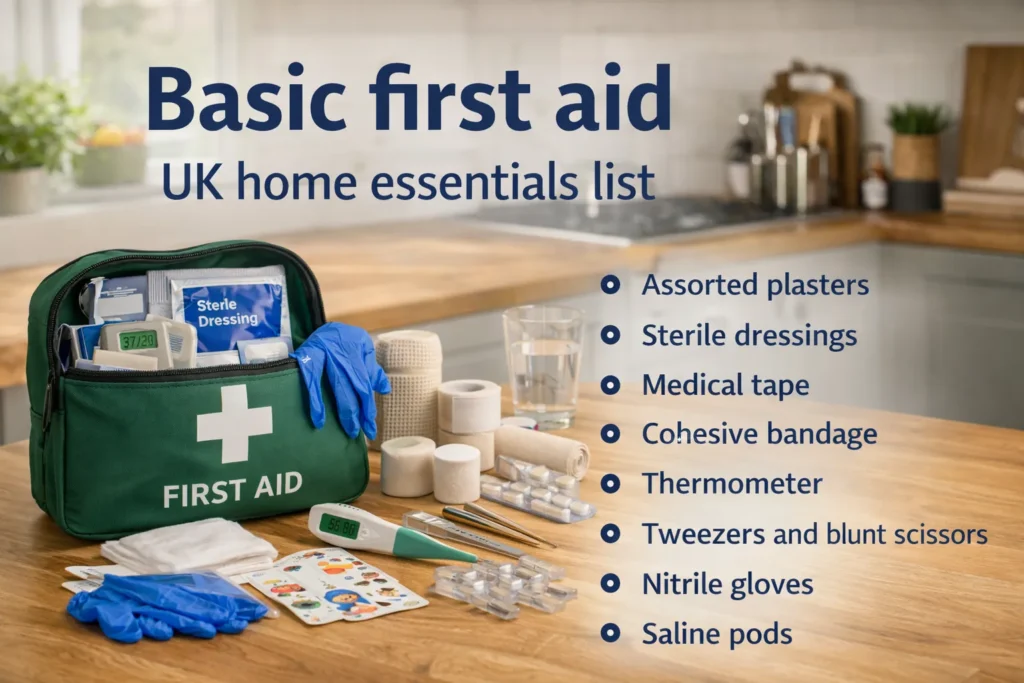
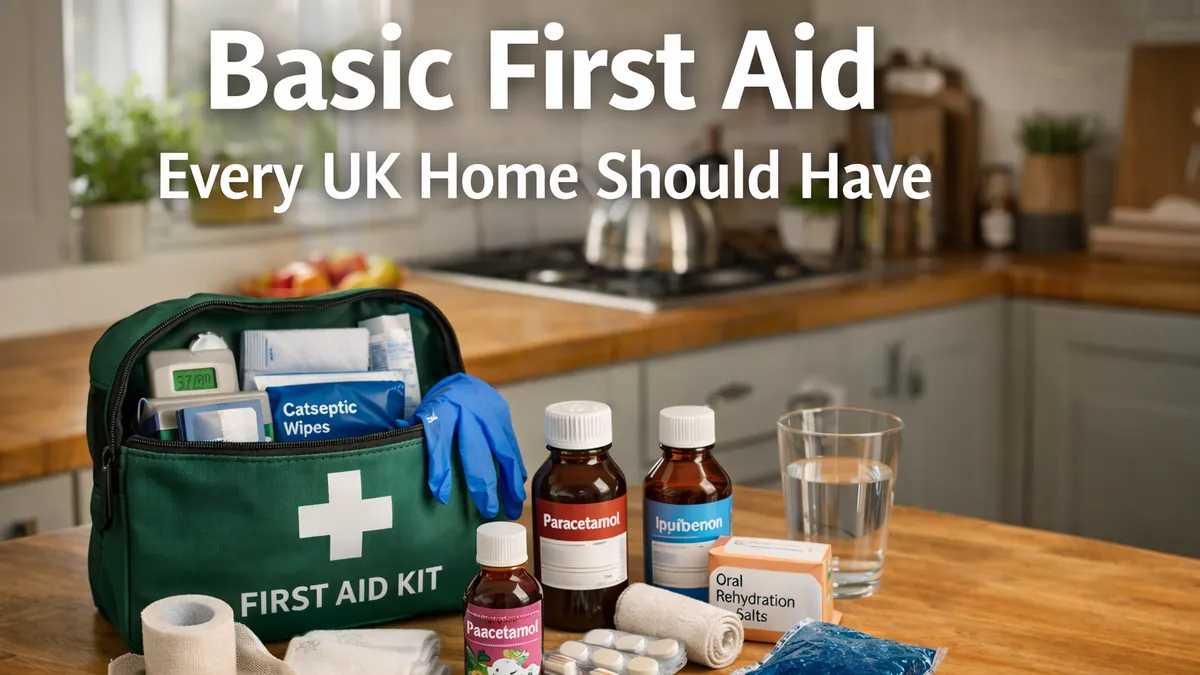
This is the core “works for most households” kit. If you already have a home first aid kit UK style, compare it against this and top up the gaps.
Wound care and bleeding
- Assorted plasters including a few larger ones
- Sterile gauze pads or sterile dressings
- Medical tape or cohesive bandage wrap
- Antiseptic wipes for cleaning around minor cuts
- Disposable gloves, nitrile if possible
- Small pair of blunt-ended scissors
- Tweezers for splinters
Burns and scalds
- Non-stick sterile dressings
- Cling film for covering a burn after cooling it
- A clean, soft cloth or bandage for holding dressings in place
Important: For a burn, cool under cool running water for 20 minutes and then cover. Avoid butter, oils, or toothpaste. For anything large, blistering, chemical, or on face/hands/genitals, get urgent medical advice.
Sprains, strains, and knocks
- Elastic support bandage
- Instant cold pack, optional but handy
- Basic pain relief you can take safely, see medicines section
Useful “small but mighty” extras
- Digital thermometer
- Saline pods for rinsing eyes or cleaning around wounds
- Notepad and pen for timing symptoms or noting what happened
- A small torch, because first aid often happens in poor light
A simple table you can shop from
These are basic first aid kit essentials UK shoppers can find easily without overspending.
| Item | What it’s for | Buying tip |
|---|---|---|
| Sterile dressings and gauze | Stopping bleeding, covering wounds | Multipacks are usually best value |
| Medical tape and cohesive wrap | Holding dressings in place | Cohesive wrap is easier than tape on skin |
| Nitrile gloves | Hygiene, especially with blood | Keep a few pairs in the outer pocket |
| Scissors and tweezers | Cutting bandages, removing splinters | Blunt-ended scissors are safer |
| Thermometer | Fevers and illness tracking | Digital is simplest |
| Saline pods | Rinsing eyes, gentle cleaning | Useful with kids and dusty DIY |
Medicines for a home kit without turning it into a pharmacy
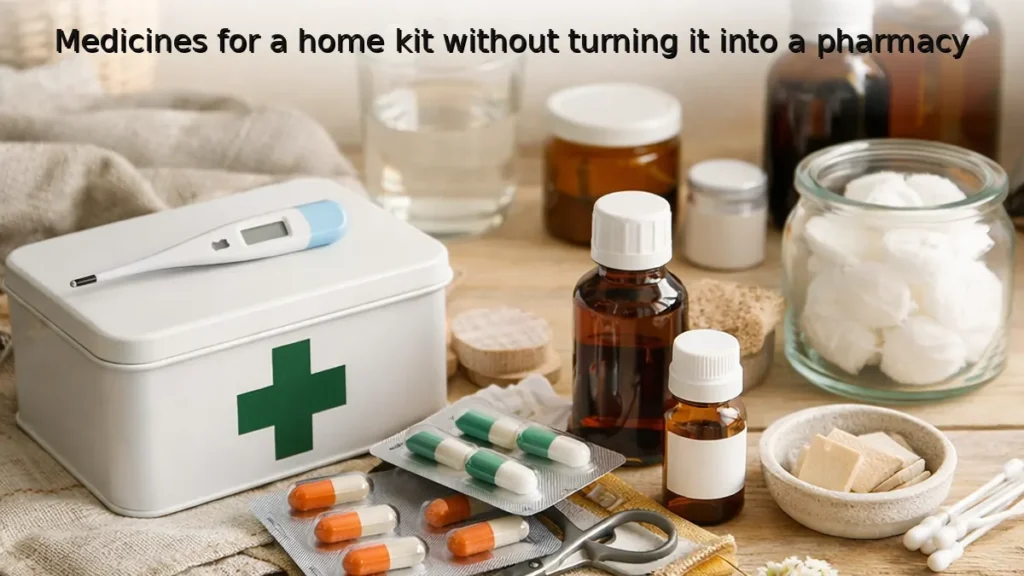
Medicines are personal. What’s safe for one person isn’t safe for another, especially for kids, pregnancy, asthma, stomach conditions, or if you take other medication.
A sensible approach:
- Keep only what your household uses and can take safely
- Store it out of reach of children and away from heat and damp
- Keep the box and leaflet so you can check dose and warnings
Common basics many UK homes keep:
- Paracetamol and or ibuprofen for adults, if suitable
- Child-appropriate options if you have children, check age and weight guidance
- Oral rehydration sachets for sickness bugs
- Antihistamine for mild allergies, if suitable
If anyone in your home has prescribed emergency medication, for example an adrenaline auto-injector, keep it accessible and make sure everyone knows where it is and how it works.
Where to keep it in a flat or rented home
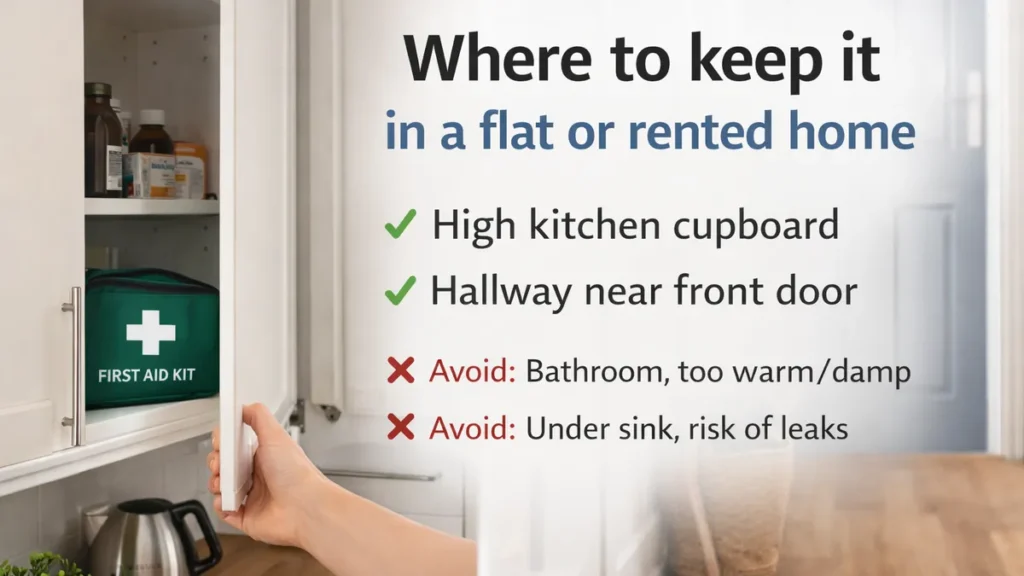
You want fast access, but also safe storage.
Best spots for most households:
- A high kitchen cupboard away from the cooker and kettle steam
- A hallway cupboard near the front door
- A bedroom top shelf if you’re dealing with regular meds
Avoid:
- Bathroom cabinets, too warm and damp
- Under the sink, risk of leaks and kids getting into it
- The loft, you won’t go up there when you need it
One main kit plus a tiny grab kit
If you can, do this:
- Main kit for the home
- Mini kit for bags or the car, plasters, wipes, gloves, small dressing
Car preparedness checklist UK
Do this now in 10 minutes
This is the quickest way to get “good enough” today.
- Pick a home for the kit and tell everyone in the house
- Put plasters, dressings, tape, gloves, scissors, and wipes in one clear pouch or box
- Add a thermometer if you have one
- Write a simple list on paper and pop it inside the lid
- Save NHS 111 and local GP number in your phone
Emergency numbers in the UK:
- 999 or 112 for emergencies
- 111 for urgent advice when it’s not life-threatening
A 3-month first aid kit check routine
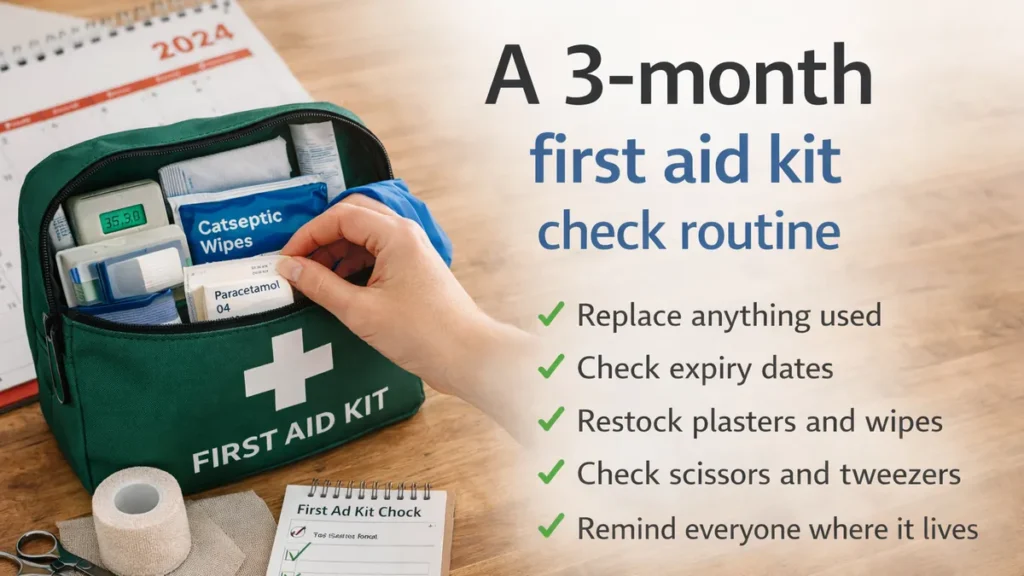
Set a simple repeat habit. Every 3 months:
- Replace anything used
- Check expiry dates on sterile items and medicines
- Restock plasters and wipes, they vanish quietly
- Make sure scissors and tweezers are still in there
- Confirm everyone still knows where the kit lives
If you want to keep it even simpler, do it when the clocks change.
Basic first aid actions for common home situations
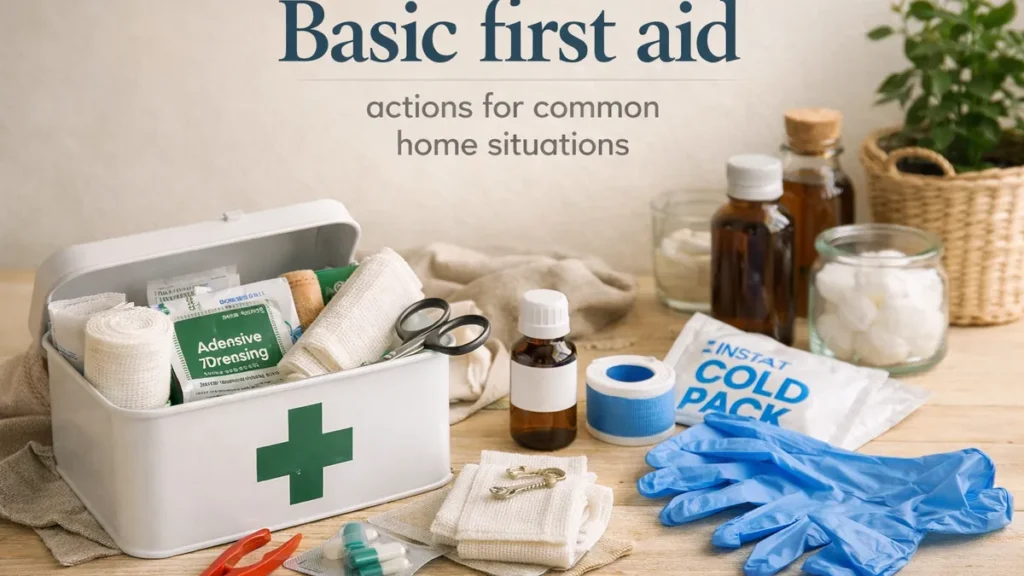
This is not a substitute for training, but it covers the “what should I do first” moment.
Cuts and bleeding
- Apply firm pressure with a clean dressing
- Keep the injured area raised if you can
- If bleeding soaks through, add more dressing on top rather than removing the first
- Get medical help if bleeding will not stop or the wound is deep
Burns and scalds
- Cool under cool running water for 20 minutes
- Remove jewellery or tight items near the burn if it’s safe to do so
- Cover with cling film or a non-stick dressing
- Get help for large burns, chemical burns, electrical burns, or burns on sensitive areas
Sprains and strains
- Rest the area and avoid “walking it off” if it hurts
- Use a support bandage if it helps
- Consider a cold pack wrapped in cloth for short periods
- Seek advice if pain is severe, swelling is rapid, or you cannot bear weight
Choking and CPR
These are the moments where training is genuinely worth it. If you can do one course this year, make it a first aid course.
St John Ambulance first aid training
British Red Cross first aid advice
First aid for homes with children
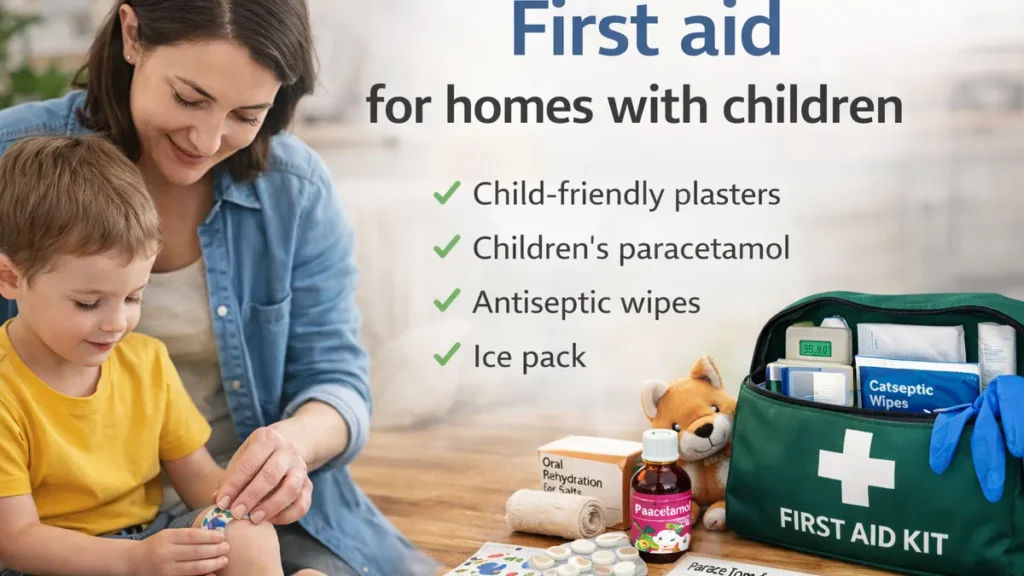
If you’ve got kids, make your kit child-proof and child-relevant:
- Child plasters
- Saline pods for sticky eyes and gentle cleaning
- A thermometer you trust
- Child-appropriate medicines only if suitable, stored safely
Consider a paediatric first aid course if you’re a parent, grandparent, or regular babysitter.
emergency plan for UK renters in 30 minutes
family preparedness basics UK
What to buy in the UK without overspending
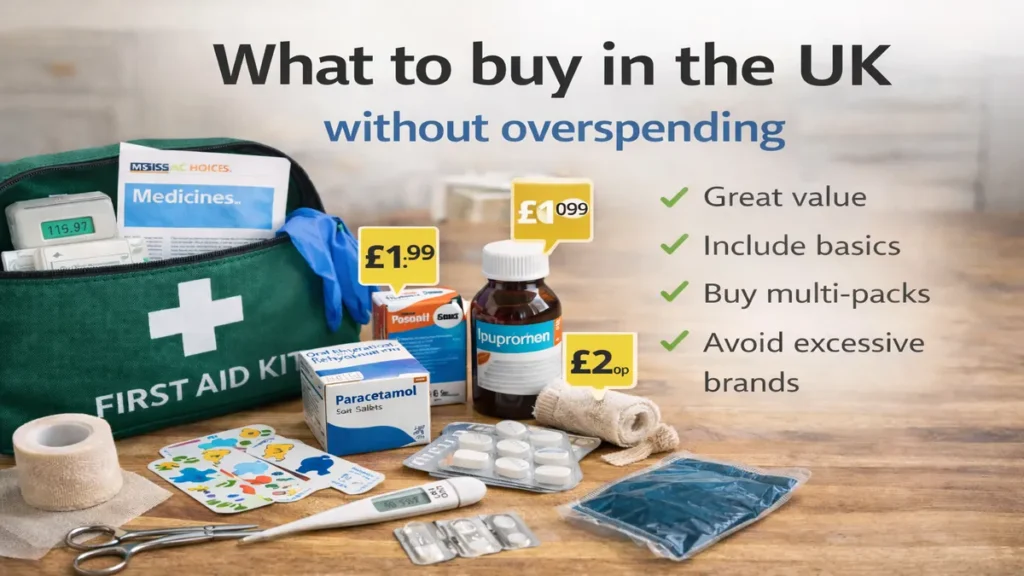
You can build a solid kit without fancy “tactical” bundles.
Good places to start:
- Boots and Superdrug for basics and reliable brands
- Tesco, Sainsbury’s, Asda, Morrisons, Aldi, Lidl for plasters, wipes, paracetamol, thermometer deals
- Local pharmacies for advice, especially if you have health conditions
Money-saving tip: buy multipacks of plasters and dressings, then top up little and often.
FAQs
What is the most important item in a home first aid kit UK households should keep
Sterile dressings and something to secure them, plus gloves. Cuts and bleeding are the most common problems, and you want to handle them cleanly.
How much should a basic first aid kit cost in the UK
If you’re starting from scratch, a sensible basic setup is often around £15 to £35 depending on what you already have and whether you add a thermometer and extra dressings.
Should I buy a pre-made kit or build my own
Pre-made kits are convenient, but many include filler items. Building your own usually gets you better value and a kit that matches your home.
How do I store medicines safely in a flat with kids
High up, locked if possible, and in original packaging. Avoid the bathroom. Keep a simple list inside the kit so you can check expiry dates quickly.
When should I call 111 vs 999
Call 999 or 112 for emergencies like severe bleeding, breathing difficulties, chest pain, or signs of stroke. Use 111 for urgent advice when it’s not life-threatening but you’re concerned.
External link: NHS 111
Next step
Do the 10-minute setup today: pick a home for your kit, stock the essentials list, and write your mini inventory. Then put a 3-month reminder in your phone so it stays ready when you need it.
Latest Posts: