If you searched prepping for beginners uk, you’re probably not trying to become “a prepper.” You’re trying to make your home less fragile.
You want a plan that works for real UK life: a cold power cut, a water disruption, severe weather, delivery delays, or a rough week where everything stacks up at once.
So here’s the beginner truth:
You don’t need extreme gear. You need a calm 72-hour system you can actually maintain.
This guide shows you exactly what to do—step by step—and where to go next when you’re ready.
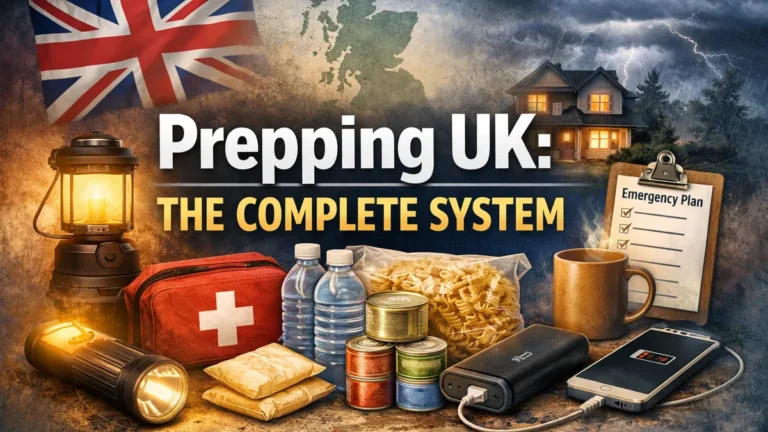
(If you want the full map of the whole site after this, start here: [UK Prepping: The Complete System].)
Key takeaways
- Prepping for beginners uk starts at home, not in a shopping cart.
- Water is the first win because everything else depends on it.
- Boring beats clever. Reliable basics > expensive gadgets.
- Your plan must fit your home (especially if you’re in a flat or renting).
- A tiny weekly routine keeps you “quietly ready” without thinking about it.
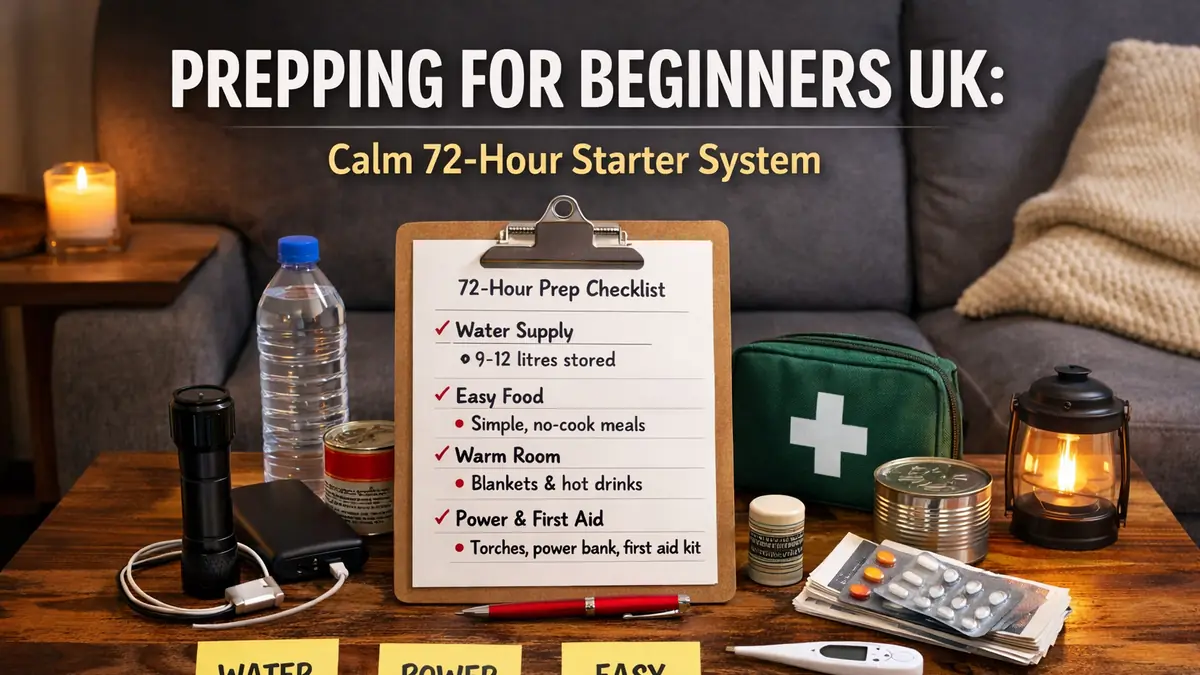
Quick-start checklist
Do this today (10 minutes)
- Put some water aside right now (even a few supermarket bottles is a win).
- Find two torches and put them somewhere you can reach in the dark.
- Charge a power bank and store it with the right cables.
- Choose your warm room and move a blanket there.
Then, when you’re ready to do the full version, follow: [Prepping Checklists: 30 Minutes, 2 Hours, 1 Weekend].
Do this this week (30–60 minutes)
- Build a 72-hour water buffer (you’ll calculate it below).
- Build a power cut box (light + batteries + charging).
- Add three days of easy meals you’ll actually eat.
- Create a simple sick day box (rehydration + basics).
For a guided, copy-and-paste setup, use: [UK 72-Hour Home Plan: Beginner Setup You Can Copy].
The one rule that makes prepping for beginners uk easy
Beginners get stuck because they try to prepare for everything.
Don’t.
For prepping for beginners uk, prepare for these three “normal UK” disruptions first:
- No power (lighting, phone power, warmth routine)
- No easy water (drinking + basic cooking + basic hygiene)
- No quick shopping (simple meals you already eat)
That covers most real-life disruption without the doom spiral.
Step 1: Water — the foundation of prepping for beginners uk
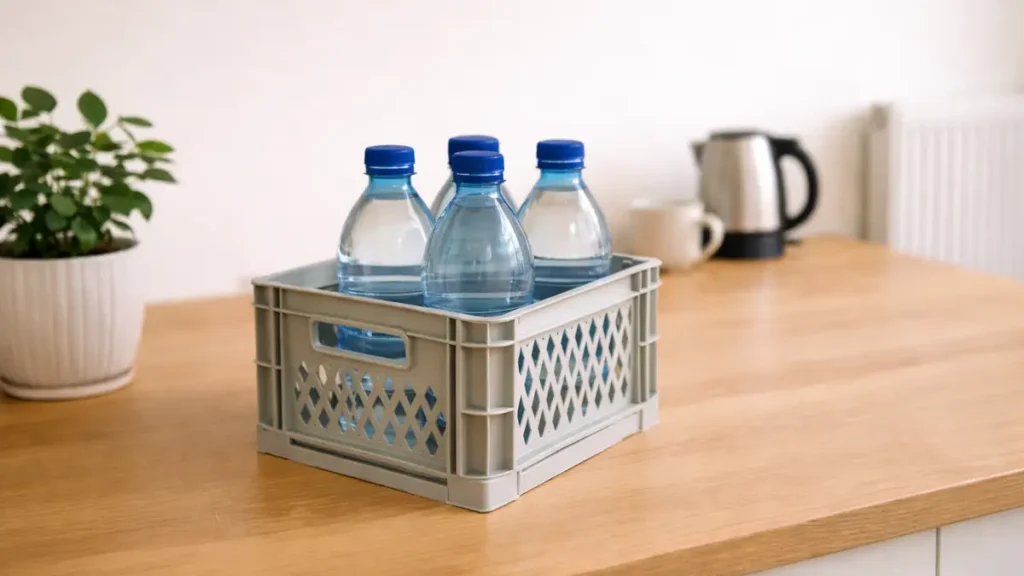
If you only fix one thing, fix water. Because without it, everything else gets harder fast: eating, hygiene, toilets, and even staying warm.
How much water do you need for 72 hours?
Use a simple beginner baseline:
- 2 litres per person per day for drinking
- + 1–2 litres per person per day for basic cooking and minimal hygiene
That gives a calm 72-hour target of roughly:
- 9–12 litres per adult
If you want the full breakdown (including kids and pets), read: [How Much Water Do UK Homes Really Need?]
Where to store water in a normal UK home
Prepping for beginners uk doesn’t require a garage.
Store water where it actually fits:
- Under beds (best beginner spot)
- Bottom of wardrobes (use a tray if you’re cautious)
- Under stairs
- Behind sofas
- A couple of rotating bottles in the kitchen
If you’re short on space, this is the most practical next read: [Water Storage for Small Flats UK].
Do you need a water filter in the UK?
For most people, prepping for beginners uk does not start with buying a filter.
A calm 72-hour plan is usually covered by:
- stored tap water
- supermarket bottled water
- a simple rotation routine
If you’re wondering when filters do make sense in the UK, read: [Do You Need a Water Filter in the UK?]
[GOV.UK Prepare – official UK emergency advice]
Step 2: Food — boring beats “survival food”
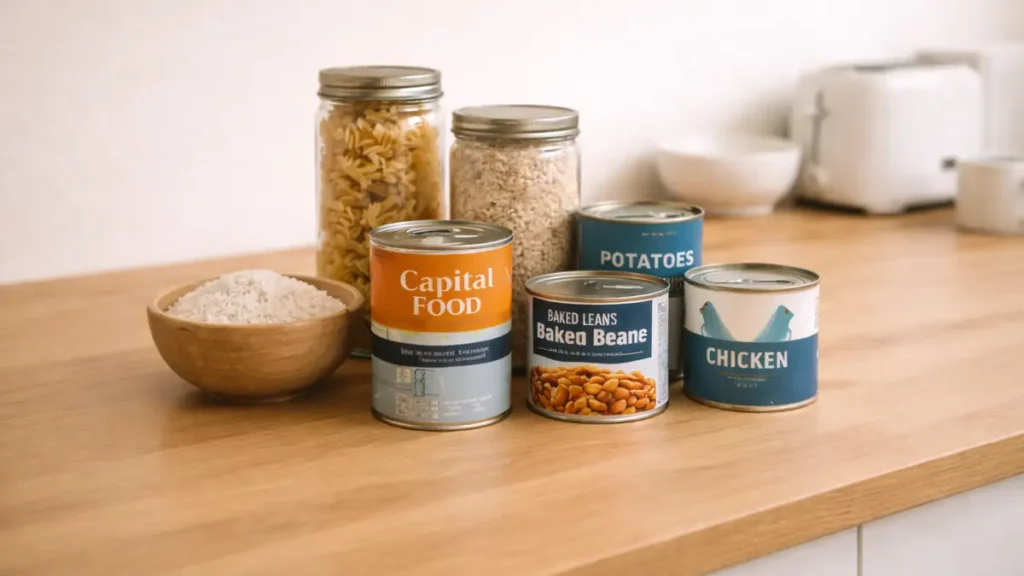
The fastest way to fail at prepping for beginners uk is buying food you don’t eat.
The calm rule store what you already eat
Your goal is three days of normal-ish meals, not a bunker pantry.
Start with:
- Breakfast you’ll actually eat (oats, cereal, long-life milk)
- Easy lunches (soup, crackers, noodles, tuna)
- Easy dinners (pasta + sauce, ready rice, curry pouches, tinned meals)
- Comfort extras (tea/coffee/hot chocolate, biscuits)
To build this properly without waste, use: [Emergency Food Storage UK: A Normal Cupboard Plan].
No-cook and kettle-only meals for power cuts
Power cuts are where beginners get stressed—so remove the stress.
Keep a “no power” shelf of:
- tinned meals you can eat cold if needed
- kettle-only foods (instant noodles, porridge pots, couscous, instant mash)
- shelf-stable protein (beans, tuna, chickpeas)
- morale items (hot drinks matter more than you think)
Next reads:
- [No-Cook Emergency Meals UK]
- [72-Hour Emergency Meals From Any UK Supermarket]
Step 3: Warmth — build one warm room
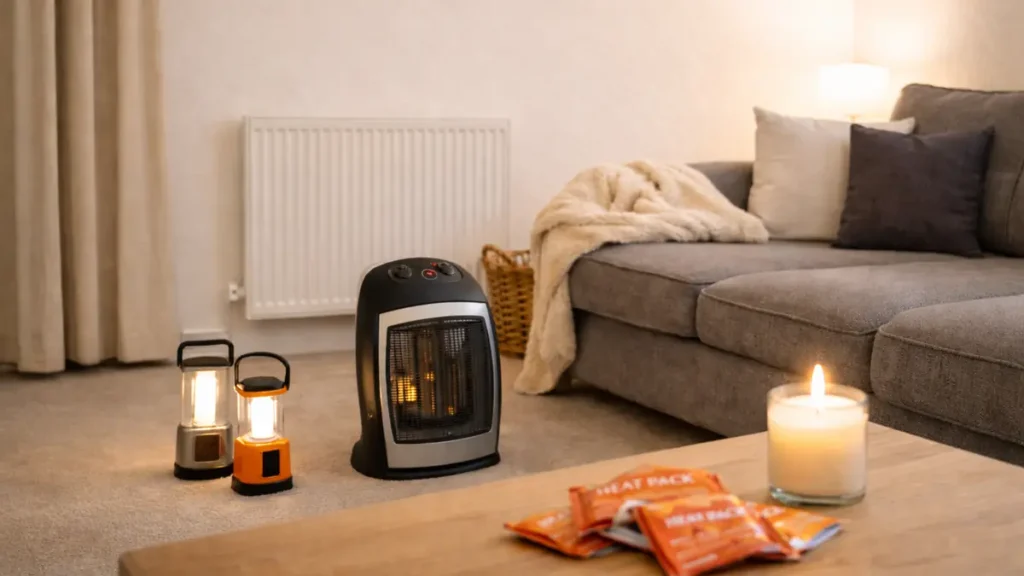
Cold is a silent stress multiplier in the UK. It drains energy, lowers mood, and makes people panic-buy rubbish.
A warm room plan is one of the highest-impact steps in prepping for beginners uk.
Your warm room setup (beginner simple)
- Pick one room (usually living room or bedroom)
- Shut doors, close curtains
- Block drafts with what you already own (rolled towel works)
- Layer clothing (base layer + hoodie + socks)
- Add blankets + hot water bottle
- Make hot drinks part of the routine
Full guide: [Stay Warm Safely in a Power Cut UK].
Step 4: Light and phone power — the “power cut box”
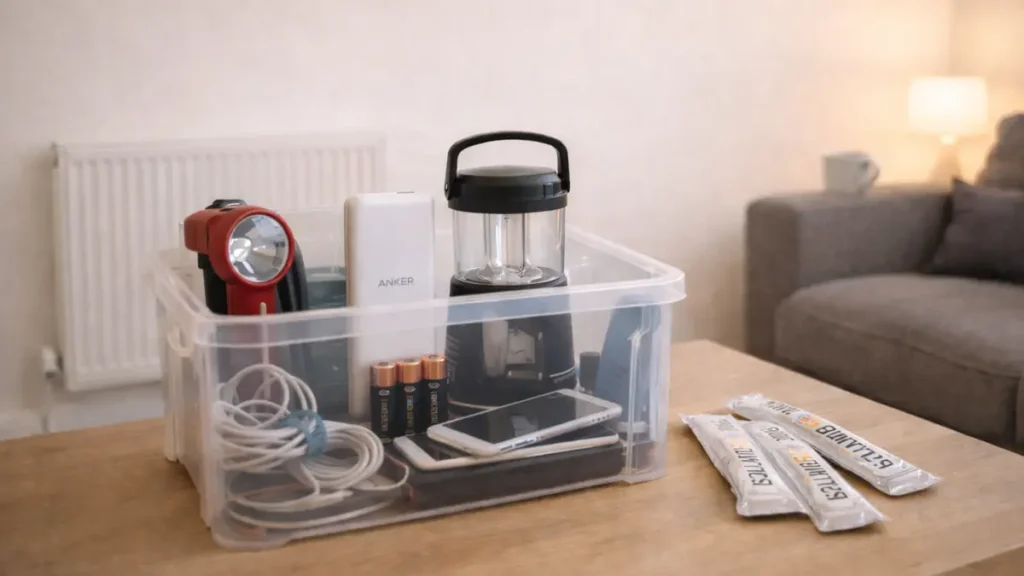
This is the fastest confidence win in prepping for beginners uk because you can fix it tonight.
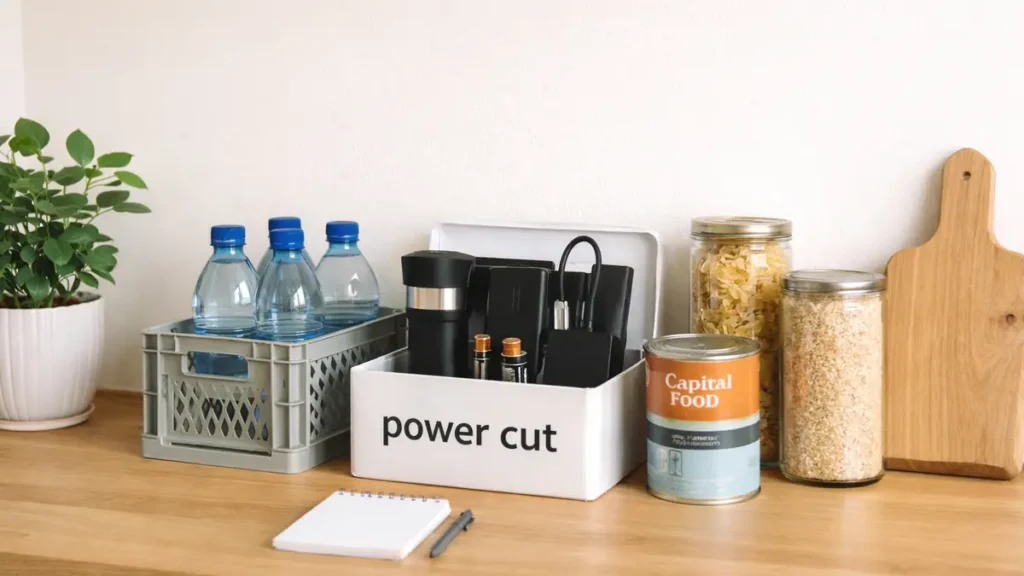
Build a simple power cut box
Put these in one box/bag so everyone can find it:
- 2 torches (or headtorches)
- Spare batteries (or charging cable if rechargeable)
- A small lantern (optional, but nice)
- A fully charged power bank
- Charging cables that match your phones
- Lighter/matches (optional)
Then store it in one obvious place.
Full guide: [UK Power Cut Basics: Lighting and Phone Power].
Step 5: Hygiene and toilets — keep day two feeling normal
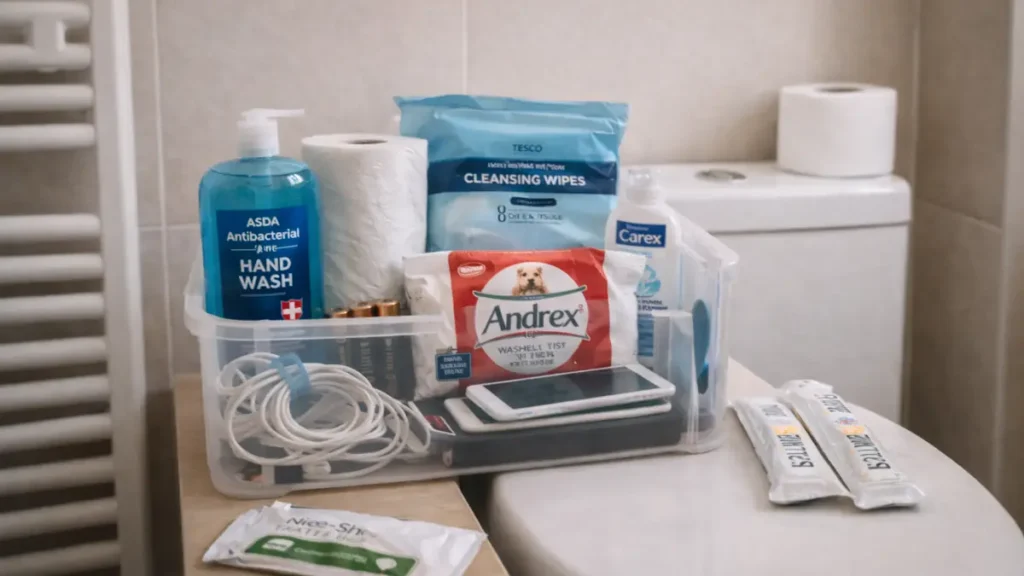
Beginners often overthink this. For 72 hours, you don’t need panic solutions. You need a simple routine that keeps your household feeling human.
Beginner hygiene basics
- Hand sanitiser
- Wet wipes or cleanser + flannel
- Bin bags
- Toilet roll buffer (not a mountain)
- Washing-up bowl for quick handwashing if water is limited
Toilets during water disruption
Keep it calm:
- have bin bags ready
- keep cleaning supplies simple and accessible
- prioritise hand hygiene
Full guide: [Hygiene During Water or Power Disruption UK].
Step 6: First aid and medication — the “sick day box”
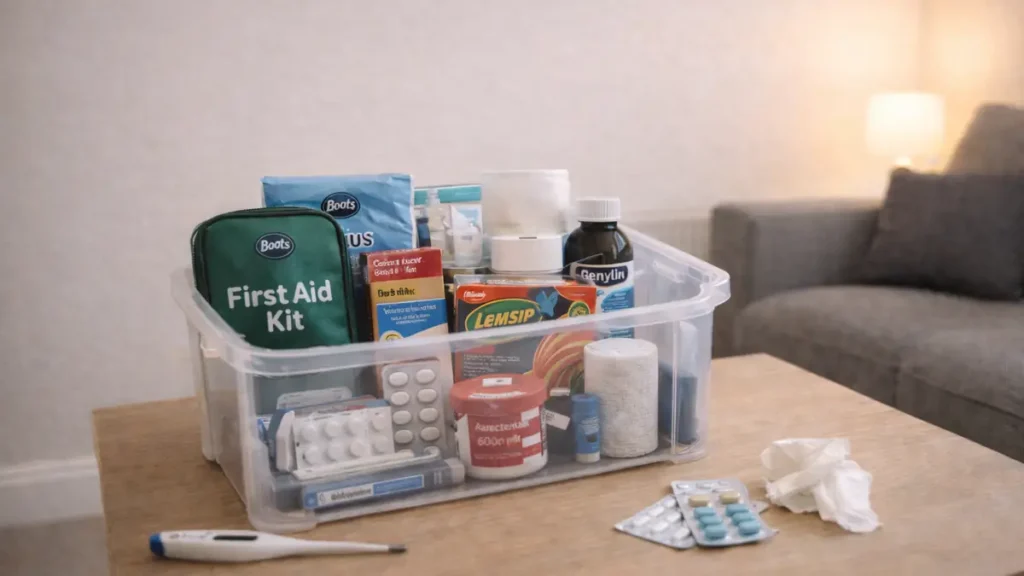
Most household emergencies are boring: headaches, minor injuries, stomach bugs, fevers, “we ran out of the thing.”
That’s why it belongs in prepping for beginners uk.
Sick day essentials
- Digital thermometer
- Pain relief you can take safely
- Oral rehydration salts
- Plasters, dressings, antiseptic wipes
- Tweezers + scissors
For the full, UK-specific list:
- [Basic First Aid Every UK Home Should Have]
- [Emergency Medication Planning UK]
Step 7: Documents, contacts, and money — the boring stuff that lowers stress
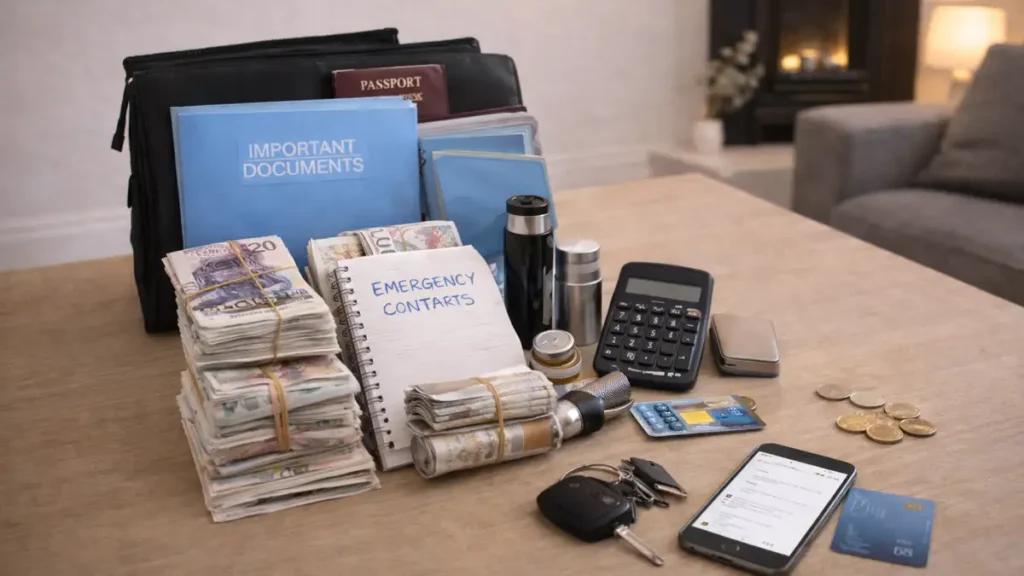
When things go wrong, stress often comes from admin:
- “What’s the policy number?”
- “Who do I call?”
- “Where are the chargers?”
- “Can we still pay for things?”
Build a home emergency folder
Keep a simple folder (paper or digital) with:
- key contacts (family, school, vet, insurance)
- policy numbers
- utility details
- a one-page “what to do first” list
Full guide: [Your Home Emergency Folder UK].
Cash backup
You don’t need a fortune. You need a small buffer for:
- petrol
- a corner shop run
- transport if systems are down
Full guide: [Cash, Cards, and Outages: A UK Backup Plan].
Step 8: Prepping for beginners uk when you have real constraints
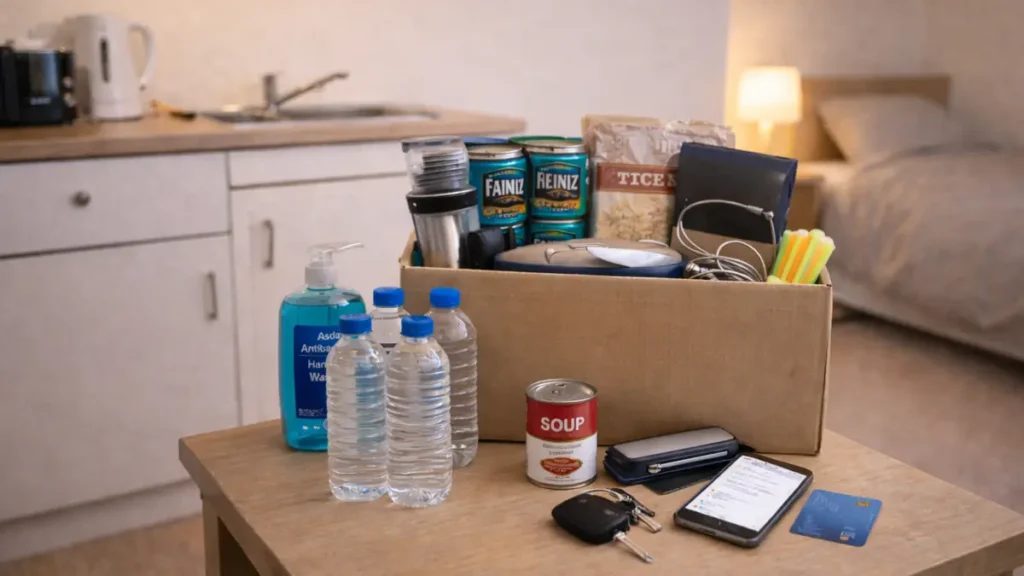
Renters and small flats
You can build an excellent setup with dead space:
- under-bed storage
- wardrobe floor space
- slim boxes behind sofas
- one power cut box everyone can find
Full guide: [Prepping for Renters and Small Flats UK].
Families and pets
Beginner success is routine and comfort:
- familiar snacks + warm drinks
- a simple bedtime plan that still works
- pet food buffer + any meds + cleaning basics
Full guide: [Family and Pets Emergency Plan UK].
The 10-minute weekly routine that makes prepping for beginners uk automatic
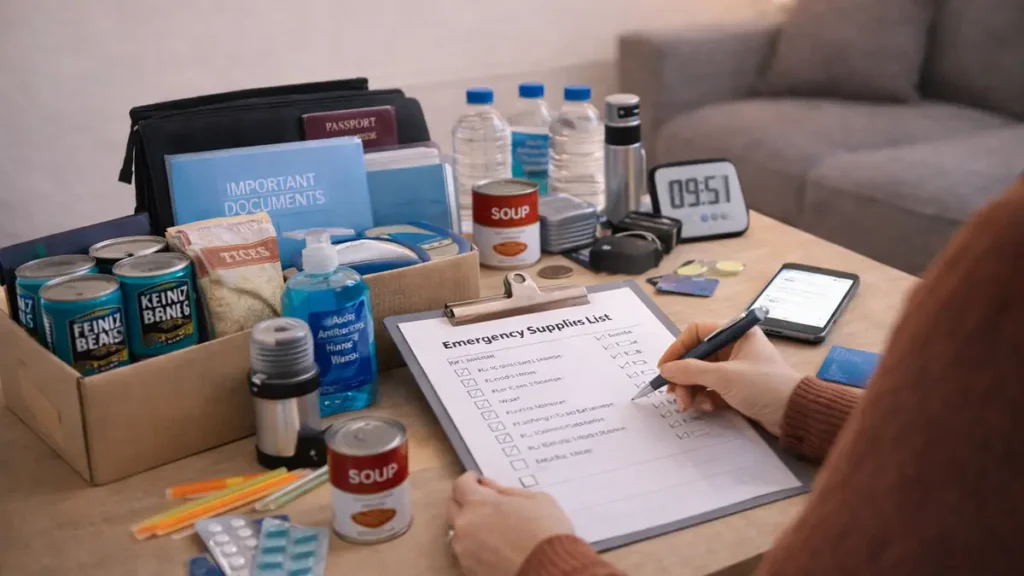
This is the secret: you don’t “do prepping.” You maintain a calm home.
Once a week:
- check torches / recharge batteries
- top up the power bank
- rotate a couple of water bottles
- move near-date food into this week’s meals
- replace one used item (wipes, rehydration, pain relief)
If you want this as a guided checklist: [Prepping Checklists: 30 Minutes, 2 Hours, 1 Weekend].
Common mistakes that break prepping for beginners uk
- Buying gear before water
Water first. Always. - Building a plan you can’t store
If it doesn’t fit your home, it won’t last. - Stocking food you don’t like
If you won’t eat it normally, you won’t eat it stressed. - Treating warmth like a gadget problem
Warmth is layers + warm room + routine. - No maintenance routine
A dead torch and an empty power bank are classic beginner failures.
FAQs
What is the best way to start prepping for beginners uk?
Start with a 72-hour at-home plan: water, simple food, light and phone power, warmth, hygiene, and basic first aid. Use this guide, then follow [UK 72-Hour Home Plan: Beginner Setup You Can Copy].
How much water should I store for prepping for beginners uk?
A calm beginner baseline is roughly 9–12 litres per adult for 72 hours, then adjust for kids/pets and your space. Use [How Much Water Do UK Homes Really Need?] to calculate properly.
Do I need a generator for prepping for beginners uk?
Most beginners don’t. You’ll usually get more value from [UK Power Cut Basics: Lighting and Phone Power] plus a warm room routine from [Stay Warm Safely in a Power Cut UK].
Do I need a bug out bag?
Not to start. For most people, prepping for beginners uk works best when your home plan is solid first. (If you later build a bag, keep it practical—not tactical.)
Where can I find official UK guidance?
Use [GOV.UK Prepare – official UK emergency advice] as your baseline, then build your home system around it.
Next steps (pick one and do it now)
If you want prepping for beginners uk to actually happen (not just stay as a tab you keep meaning to read), do one of these today:
- Store your first 72 hours of water (even if it’s imperfect) → [Emergency Water Storage UK: How Much You Actually Need]
- Build your power cut box → [UK Power Cut Basics: Lighting and Phone Power]
- Add three days of boring meals you already eat → [Emergency Food Storage UK: A Normal Cupboard Plan]
Then follow the guided setup:
- [UK 72-Hour Home Plan: Beginner Setup You Can Copy]
- [Prepping Checklists: 30 Minutes, 2 Hours, 1 Weekend]
- [UK Prepping: The Complete System]