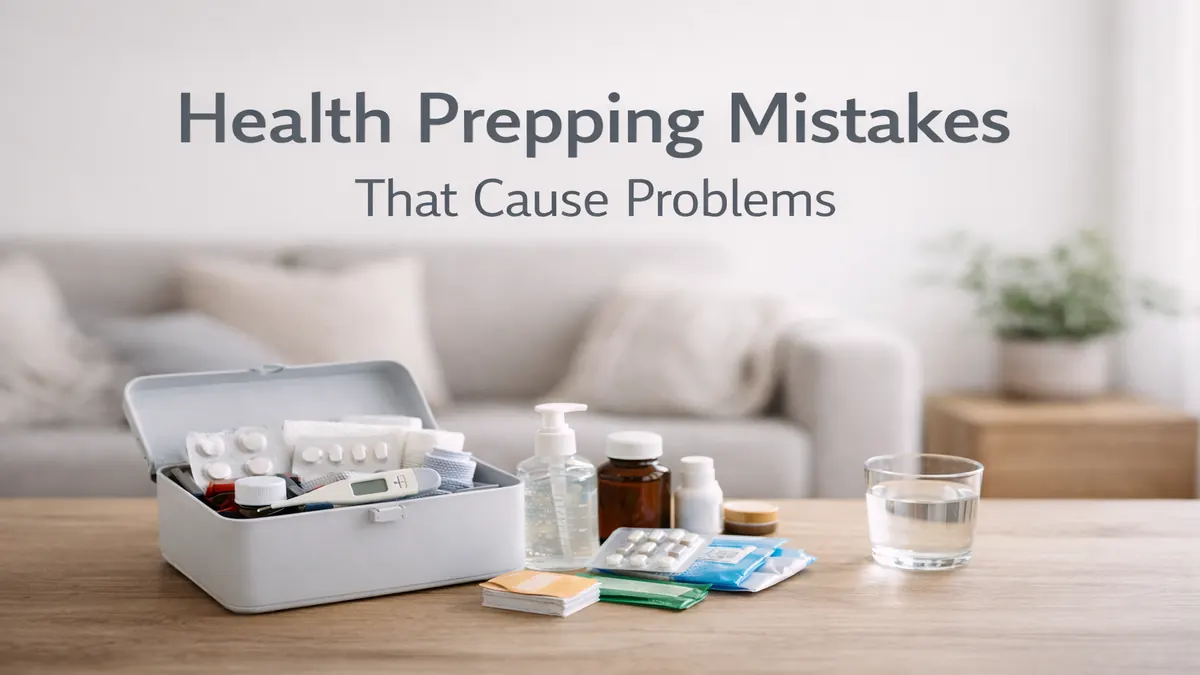
Most health prepping mistakes happen for a boring reason: you buy a few bits, feel “sorted”, then real life turns the kit into a junk drawer you never use.
This guide is about fixing that, calmly. If you want fewer last-minute pharmacy runs, fewer “where is it” moments, and a home setup that actually helps on a rough week, you’re in the right place.
We’ll cover the most common health prepping mistakes UK households make and exactly what to do instead, without turning your home into a bunker. If you want to start at the beginning and go step by step Health & Hygiene Prepping UK
Key takeaways
- Build around real-life problems first, not gear lists
- The biggest risk is running out of everyday essentials, not rare emergencies
- A simple medication system beats a big first-aid box you never open
- Plan for sickness, stress, and disrupted routines, not just injuries
- Label, date-check, and practise once a month so your kit is usable
- Keep it renter-friendly and store it where you’ll actually reach for it
The mindset mistake that causes most health prepping mistakes
Here’s the trap: treating health preparedness like shopping instead of a system.
A system means:
- You know what you have
- You can find it fast
- It’s in date
- You replace what you use
- Everyone in the house knows where it lives
If you do nothing else, do this now: set up one clear home for health items and stop spreading them across cupboards, handbags, bathroom drawers, and “that random box”.
Do this now in 10 minutes
- Pick one main spot: a high shelf in a hall cupboard, bedroom wardrobe top shelf, or kitchen cupboard away from heat
- Add a small pouch or box for “grab first” items
- Put a torch in the same place
- Tell everyone in the home where it is
Health prepping mistakes with medication that cause real problems
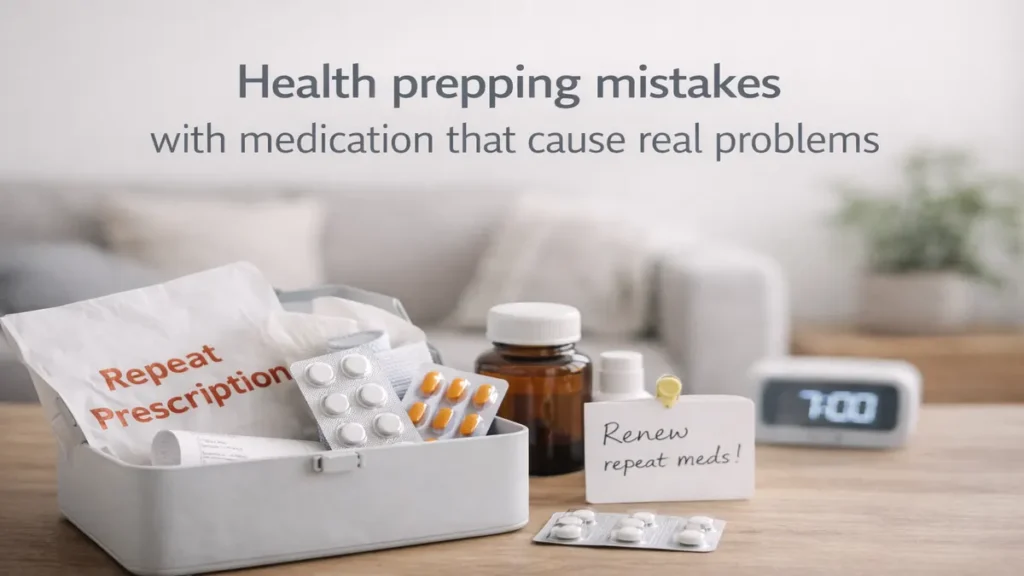
Medication is where small mistakes turn into big hassle fast.
Mistake 1 Not having a repeat prescription buffer
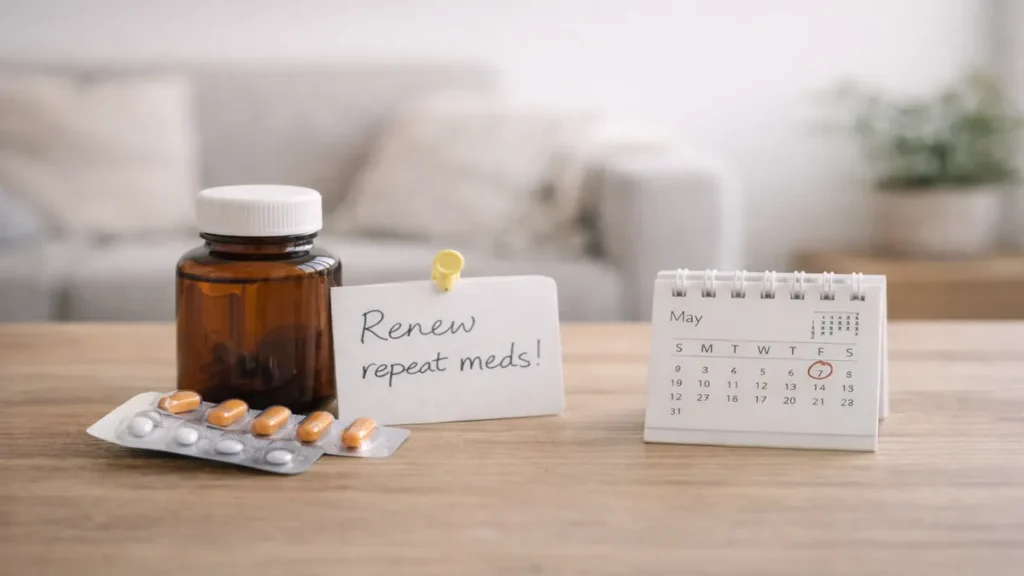
If you rely on repeat prescriptions, disruptions can be as simple as a bank holiday, a missed GP request, or a delivery delay.
What to do instead
- Ask your GP or pharmacist how early you can request repeats
- Aim for a small buffer that suits your situation, not a dramatic stockpile
- Set a monthly reminder to check what’s left
Do this now
- Look at your main repeat meds
- Count how many days you’ve got left
- Put a calendar reminder for 7 days before you’d run out
UK tip: If you use the NHS App, use it to track and reorder repeats, and keep your nominated pharmacy details up to date.
Mistake 2 Keeping medicines in the bathroom
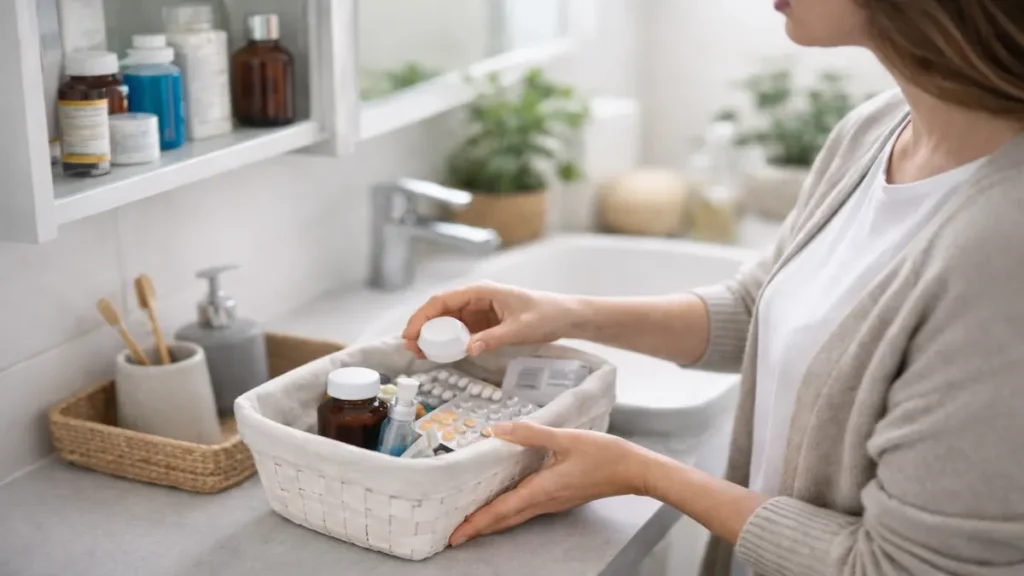
Bathrooms are warm and humid, which can reduce shelf life for some items. It also encourages “out of sight, out of mind”.
What to do instead
- Store most medicines in a cool, dry cupboard away from heat and sunlight
- Keep a small “daily use” pouch elsewhere if needed
- Keep anything that must be refrigerated in a clearly labelled container in the fridge
Do this now
- Move medicines out of the bathroom
- Pick one cupboard and stick to it
- Label a small container: Medicines and health
Mistake 3 No system for children’s medicines
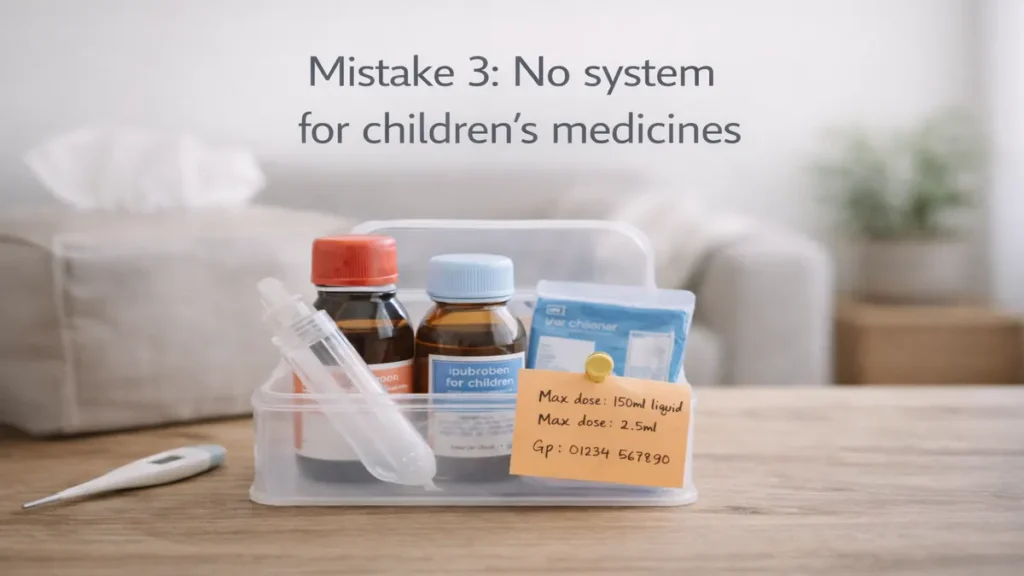
When a child spikes a temperature at 2am, you don’t want to be searching for the right dose syringe.
What to do instead
- Keep children’s medicines together with the dosing syringe
- Add a simple note card: child’s weight, typical dose guidance, and GP number
- Include a digital thermometer that you trust and know how to use
Do this now
- Put children’s paracetamol or ibuprofen in your health box
- Tape the syringe to the bottle so it doesn’t vanish
- Add a spare pack of oral rehydration salts for tummy bugs
Mistake 4 Forgetting common, boring health supplies
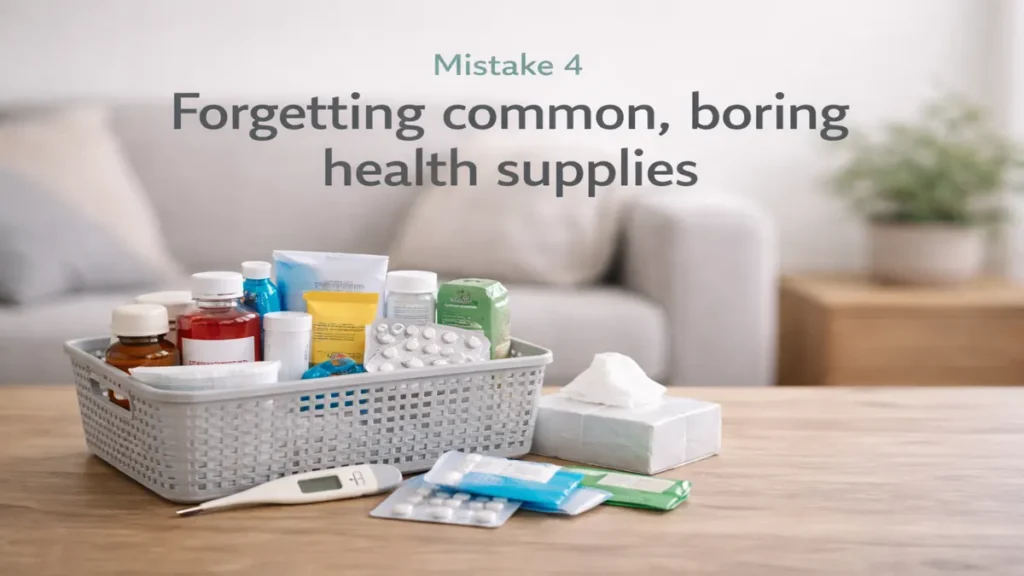
Most households don’t get “caught out” by dramatic injuries. They get caught out by everyday stuff:
- Pain relief
- Plasters
- Antihistamines
- Rehydration
- Thermometer batteries
- Anti-diarrhoea support items
- Tissues, barrier creams, and simple hygiene
What to do instead
Build a small “rough week” kit that covers the most likely scenarios.
Rough week mini-kit checklist
- Digital thermometer
- Plasters and blister plasters
- Antiseptic wipes
- Basic pain relief suitable for your household
- Antihistamines if appropriate for you
- Oral rehydration salts
- A couple of sterile dressings and tape
- Hand sanitiser
- Disposable gloves
- A small notepad and pen
Internal link opportunity: [Internal link: a Preppers Only first aid kit for UK homes post]
Internal link opportunity: [Internal link: medication storage and rotation UK post]
Health prepping mistakes in first aid that waste money
Mistake 5 Buying a huge first aid kit and never opening it
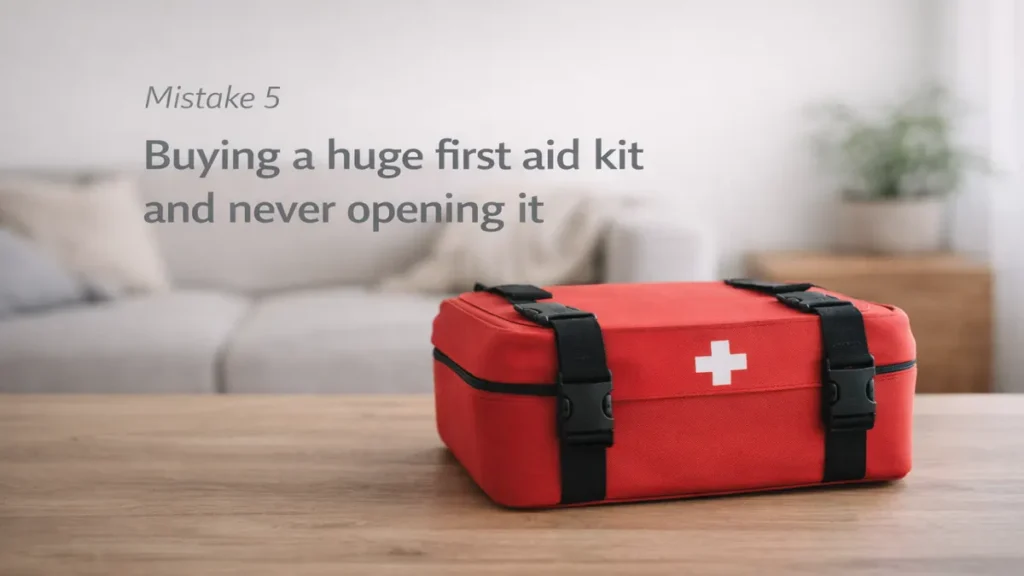
Big kits look reassuring. They’re also easy to ignore, and half the contents end up unfamiliar.
What to do instead
Create two layers:
- Everyday kit: used weekly or monthly
- Bigger kit: for minor injuries and unexpected situations
Everyday kit, keep it easy
- Plasters
- Antiseptic wipes
- Tweezers
- Small scissors
- Pain relief suitable for your household
- Thermometer
- Hand sanitiser
Bigger kit, keep it sensible
- A few larger sterile dressings
- Microporous tape or cohesive bandage
- Triangular bandage
- Burn gel or dressing
- Instant cold pack
- Saline pods for rinsing
- A small booklet or quick reference card
Do this now
- Open your kit
- Remove anything you don’t understand or won’t use
- Replace it with things you know you actually reach for
Mistake 6 Not knowing where anything is
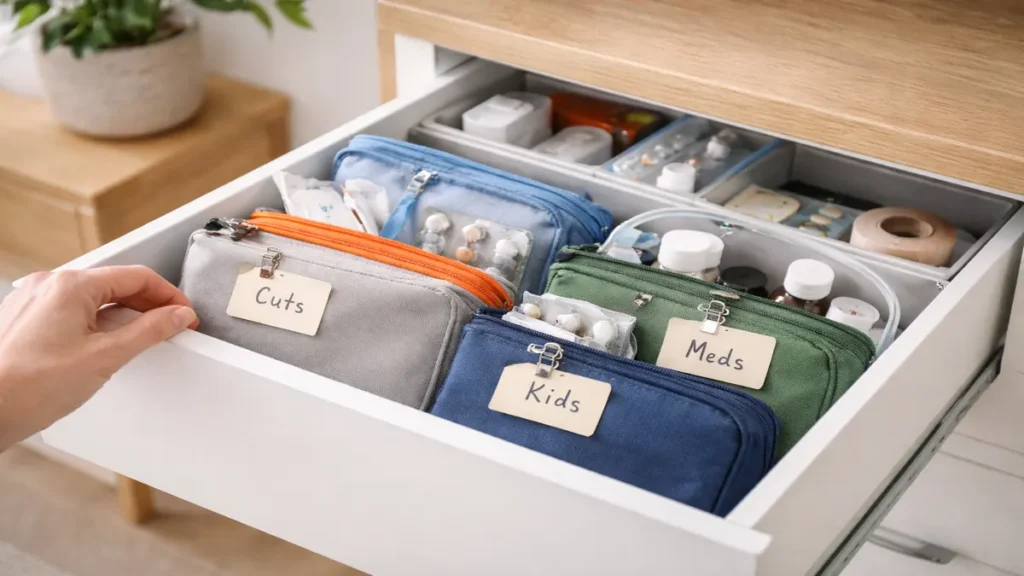
In a stressful moment, searching is the enemy. This is one of the most common health prepping mistakes because it feels “minor” until it isn’t.
What to do instead
- Keep health items in one place
- Use small pouches inside the box: Cuts, Burns, Meds, Kids
- Put a label on the outside
Do this now
- Write four labels on masking tape
- Stick them to pouches or zip bags
- Sort your items in 15 minutes
Health prepping mistakes around illness planning
This is where UK households get the biggest payoff. Planning for illness is basically planning for normal life getting messy.
Mistake 7 Not planning for dehydration and stomach bugs
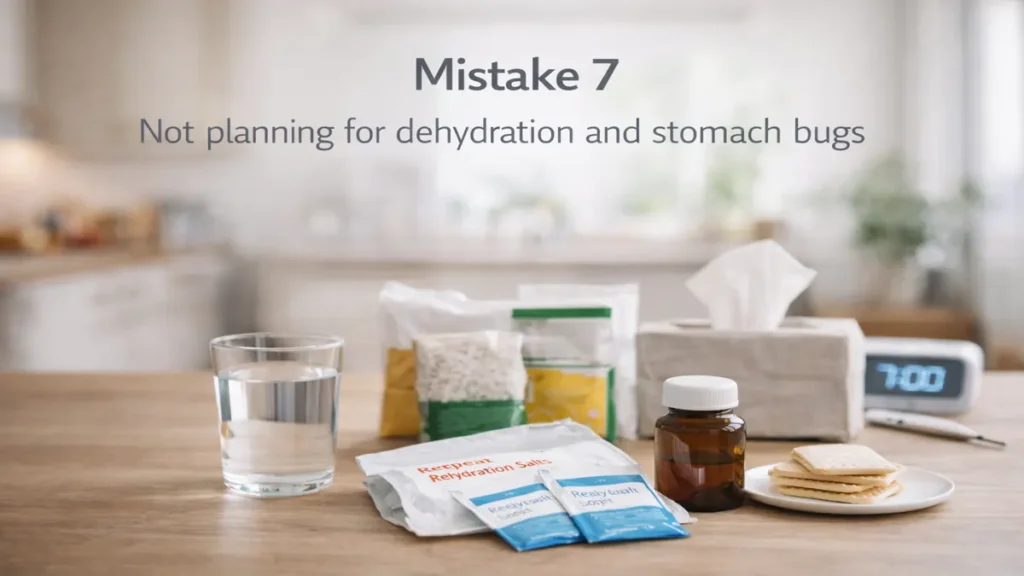
If a tummy bug hits, dehydration becomes the main issue quickly, especially for children and older adults.
What to do instead
- Keep oral rehydration salts in your kit
- Keep bland foods in the cupboard as part of your normal shopping
- Know when to seek advice
A simple “sick day” cupboard list
- Rehydration salts
- Soup, instant mash, plain crackers
- Plain rice or pasta
- Herbal tea
- Tissues and gentle wipes
- Barrier cream
NHS advice pages for vomiting, diarrhoea, dehydration, and when to seek help.
Mistake 8 Forgetting mental health and stress support
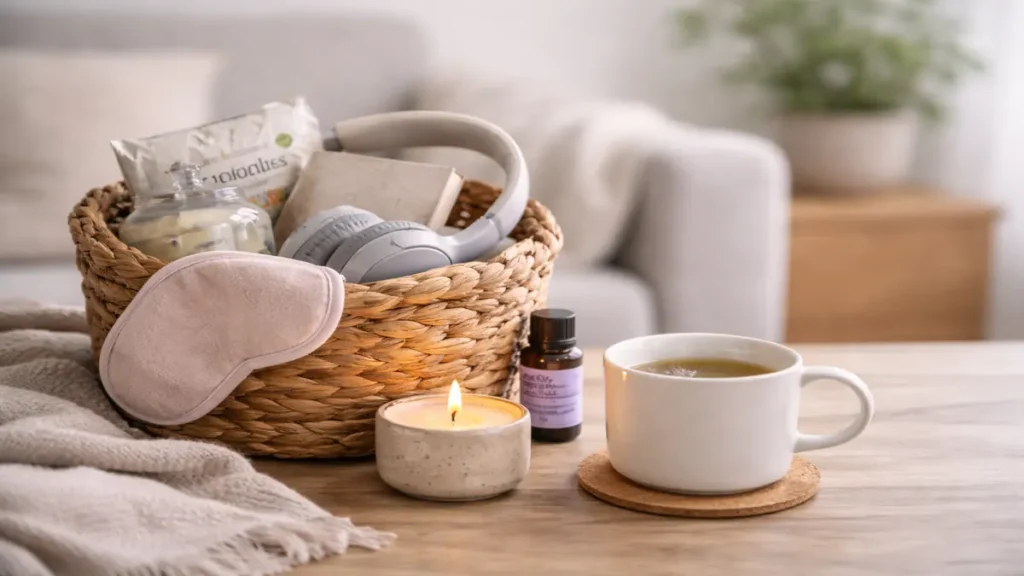
Stress is a health issue. During disruptions, stress can spike, sleep can drop, and tempers can shorten. This is one of the most overlooked health prepping mistakes because it doesn’t look like a “prep”.
What to do instead
Make a calm-down plan that’s practical, not cheesy.
Calm-down plan that works
- A simple bedtime routine you can do even in a chaotic week
- A low-effort meal plan for 2–3 days
- A short list of “reset tasks”: shower, fresh clothes, tidy one surface, drink water
- A small comfort box: tea, snacks, audiobook, earplugs, eye mask
If you want to include a UK support mention, you can naturally reference Mind for mental health resources and Samaritans for listening support.
Mind and Samaritans are two popular UK sites.
Mistake 9 No plan for basic hygiene when someone is ill
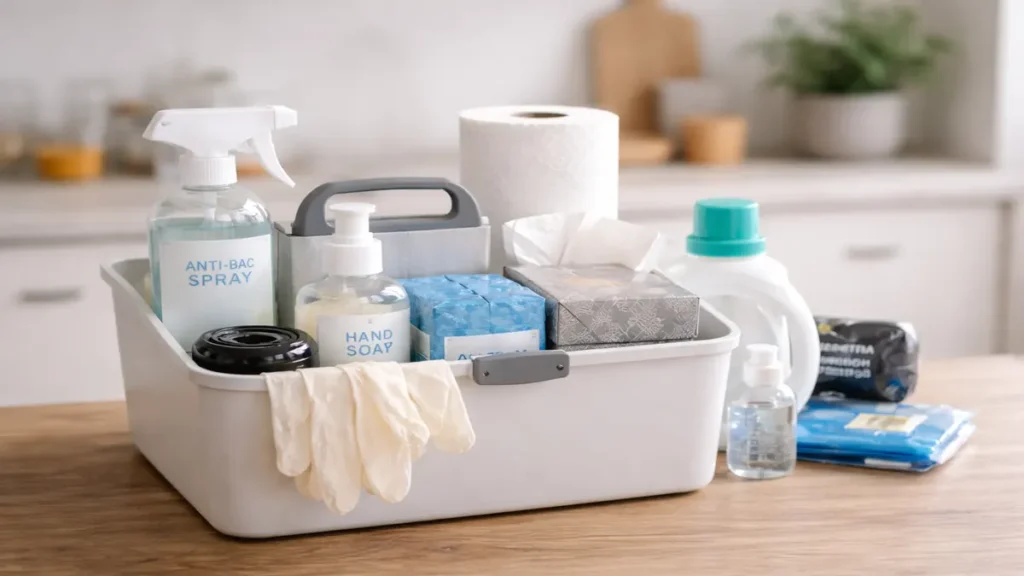
When someone is sick, the house can feel “contaminated” fast, even if it’s just a standard bug.
What to do instead
Keep a small illness hygiene set:
- Anti-bac spray or wipes for surfaces
- Hand soap and hand sanitiser
- Disposable gloves
- Bin bags
- Laundry detergent you trust
Do this now
- Build a small “illness bag” in a shopping bag or zip bag
- Put it with your health kit so it’s easy to grab
Hygiene Prepping for UK Households
The biggest storage and rotation health prepping mistakes
Mistake 10 Letting items expire quietly
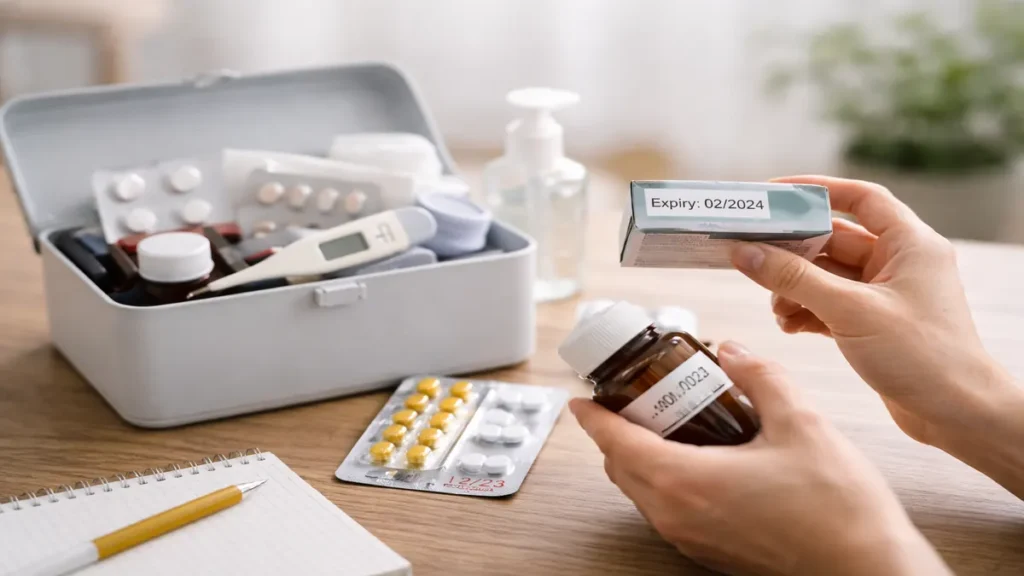
Most people don’t check dates until they need something. Then it’s too late.
What to do instead
Create a monthly 5-minute routine.
Monthly 5-minute health kit routine
- Check anything with expiry dates
- Replace what you used
- Check thermometer batteries
- Top up plasters and wipes
- Make sure the kit is still in the same place
Do this now
- Set a repeating monthly reminder called Health kit check
- Tie it to something you already do, like the first weekend of the month
Mistake 11 Storing everything too high or too hidden
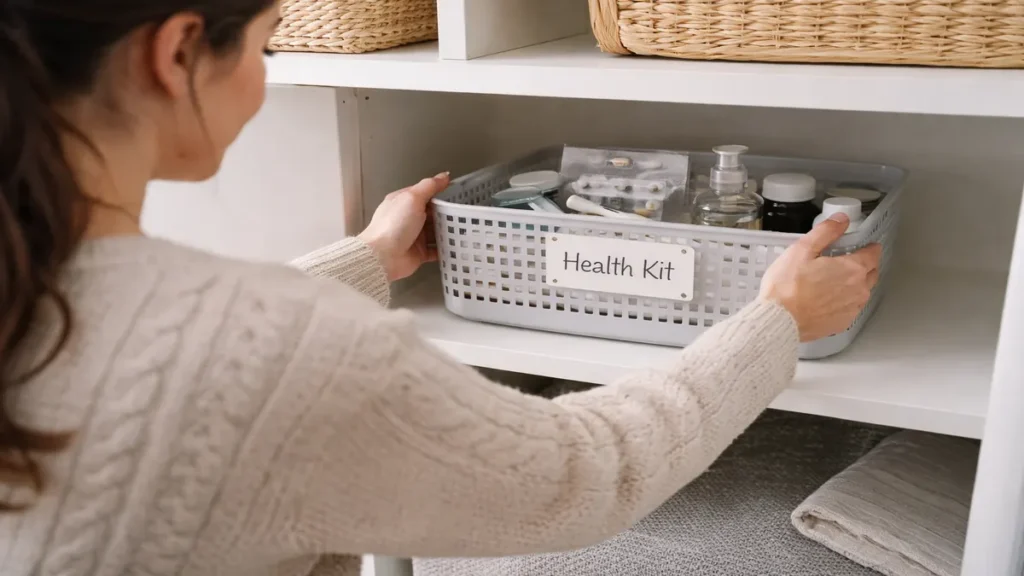
You want it safe from small kids, but still easy for adults to reach quickly.
What to do instead
- Store the main kit in a consistent place
- Keep a small “grab pouch” accessible for adults
- If you have mobility issues, keep essentials lower and clearly labelled
What to buy in the UK without overspending
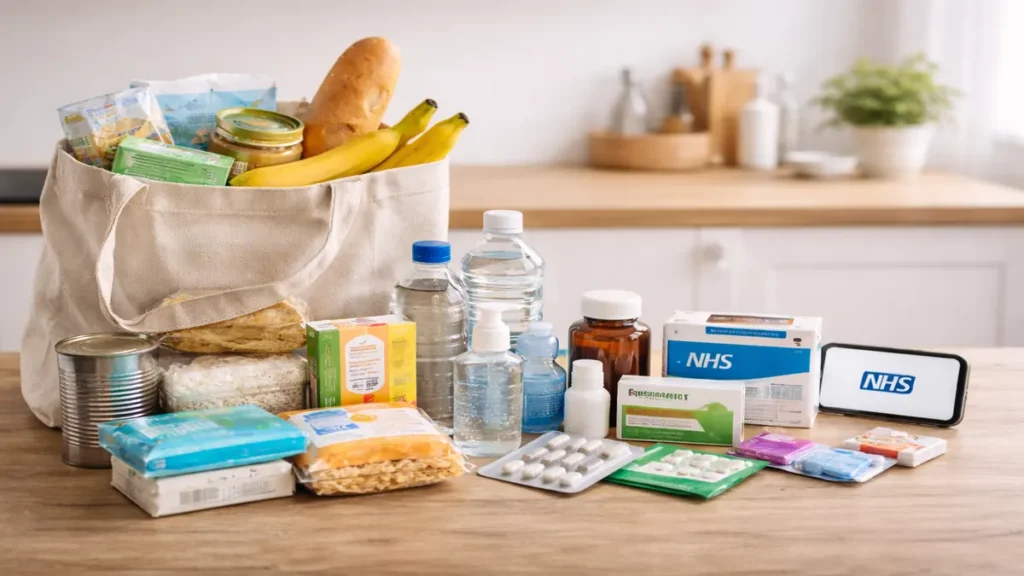
You do not need specialist shops for most of this. UK supermarkets and chemists cover the basics.
Where to shop
- Supermarkets: Tesco, Asda, Sainsbury’s, Morrisons, Aldi, Lidl for basics and pantry sick-day items
- Chemists: Boots, Superdrug, local pharmacies for medicines and higher-quality dressings
- Online: NHS-approved pharmacy services where appropriate
A simple budget approach
- Start with what you already have
- Replace gaps over 2–4 shops
- Prioritise the “rough week” kit first
Quick table common health prepping mistakes and the fix
| Health prepping mistake | What it causes | Better approach |
|---|---|---|
| Big kit, no system | Wasted money, hard to use | Two-layer kit: everyday + bigger |
| Meds stored in bathroom | Reduced shelf life, clutter | Cool, dry cupboard storage |
| No repeat buffer | Panic reorders | Small buffer + reminders |
| No labels | Searching under stress | Pouches by category |
| No rotation routine | Out-of-date supplies | Monthly 5-minute check |
| Ignoring illness planning | Hard week becomes chaos | Sick-day cupboard + hygiene bag |
A simple 30-minute health preparedness setup for UK homes
If you want a clean reset, do this in one go.
Step 1: Choose your kit location
- Cool, dry cupboard
- Not near cooker or boiler
- High enough to be safe from kids
Step 2: Build your everyday pouch
- Plasters, wipes, tweezers, scissors, pain relief, thermometer
Step 3: Add illness support
- Rehydration salts
- Tissues and wipes
- Barrier cream
- Hand sanitiser
Step 4: Add the “admin” card
- NHS number details if relevant
- GP phone number
- Pharmacy details
- Allergies and key conditions for the household
Step 5: Set one reminder
- Monthly: check dates and batteries
- Weekly if needed: check repeat prescription timing
FAQs
What are the most common health prepping mistakes?
The most common health prepping mistakes are buying a big kit without a system, letting medicines expire, storing items in the bathroom, having no repeat prescription buffer, and not planning for common illness days like colds and tummy bugs.
How much should a basic home health kit cost in the UK?
You can build a solid basic kit in the UK without spending loads by starting with essentials and topping up over a few shops. Focus on the items you actually use, like plasters, antiseptic wipes, a thermometer, and rehydration support, rather than buying an oversized kit all at once.
Should I store medicines in the bathroom?
Usually, no. Bathrooms are warm and humid, which is not ideal for many medicines. A cool, dry cupboard away from heat and sunlight is typically a better choice, while following the storage instructions on the packaging.
How do I stay prepared if I rent or live in a small flat?
Use small pouches inside one compact box, label them clearly, and prioritise multi-use items. A slim “rough week” kit fits in a single cupboard and makes a big difference without taking up space.
What’s the easiest routine to keep everything in date?
A monthly 5-minute check works best for most households. Replace what you used, check expiry dates, and test batteries in any devices like thermometers or torches.
Where can I find trustworthy UK health advice during illness?
For general guidance, NHS resources are usually the best starting point. For mental health support, UK charities like Mind and Samaritans are well-known options.
Next step
Pick one: either build your “rough week” mini-kit today, or do the 30-minute full setup above. Then set the monthly reminder. That single reminder is what turns health preparedness from a one-off shop into something that actually works.